With tuition fees rocketing, what are universities doing about access?
The Access Project's Shona McIntosh discusses the measures universities are taking to ensure students from poor backgrounds can continue to attend
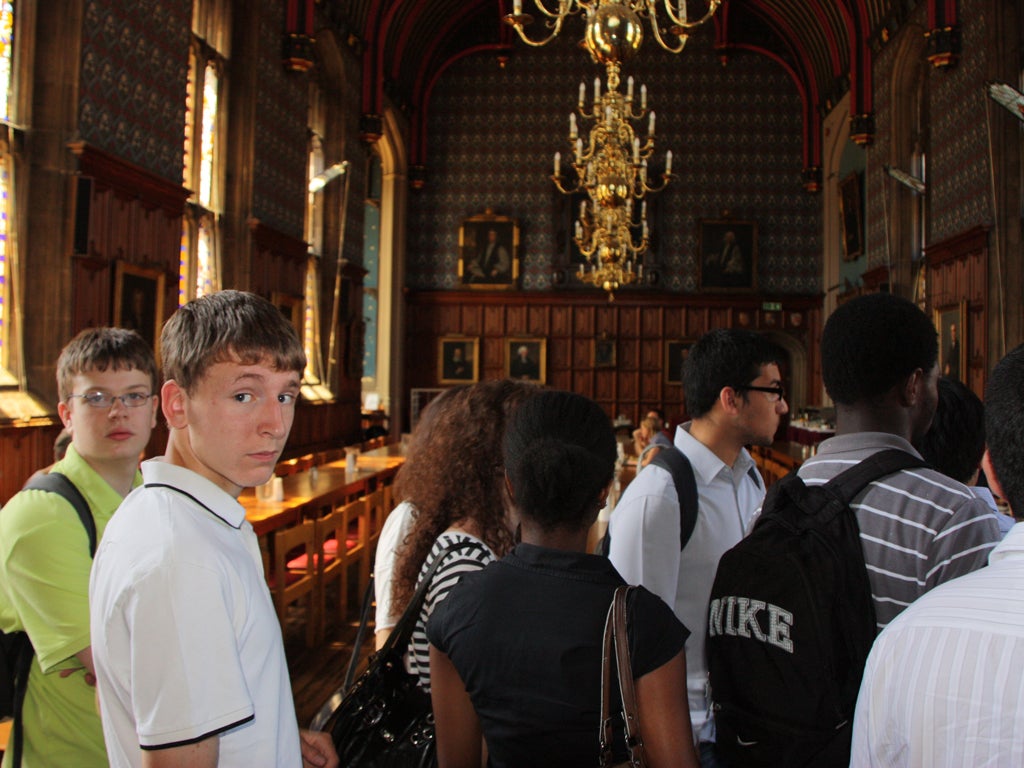
Fair access to university is a hot topic. With the changes to tuition fees and the axing of AimHigher, universities are more responsible than ever before for ensuring that students from poorer backgrounds are represented in their intakes.
University budgets for outreach and access work will be massively increased under the new agreements with OFFA: the University of Oxford, for example, is allocating over £2.5 million extra funding to access measures and student financial support.
So what are universities planning on doing with this money, and, more importantly, does it actually work?
Student financial support.
This is by far the biggest spending commitment under the new agreements. Most of the top universities will be allocating 70-85 per cent of their new budget for widening participation to a package of fee waivers and bursaries for students from poorer backgrounds. Those with a family income of under £16,000 get the most support, although those up to £25,000 will also qualify for significant amounts, and some universities even offer help for those with an income of up to £42,000. The University of Bristol is particularly generous, setting its fee level at £3,500 to those from the lowest-income families, and offering complete fee waivers and full living costs to students on its Access to Bristol programme.
Does it work?
The short answer is, no one knows. One study conducted in 2010 found that bursary levels had no impact on the choice of university among students from low-income backgrounds. However, an internal study by Exeter University showed that 82 per cent of those in receipt of a bursary considered it crucial in enabling them to continue with their studies. It seems that bursaries are valued once a student is enrolled, but they don’t actually do anything to improve the diversity of the intake. This might all change, though, now that the fees have risen so drastically.
Aspiration-raising outreach work.
This is the bread and butter of most outreach programmes. Most commonly, it involves taking schoolchildren onto campuses for a range of activities to explain university life and learning. It can also include sending undergraduate speakers into schools, and having a presence at parents’ evenings. A slightly more imaginative incarnation of this are programmes like UCL’s ‘Museums and Galleries Learning’, which brings school classes into local museums, using the collections as background to a lesson with an academic which is designed to introduce students to university study.
Does it work?
It is hard to measure the impact of these activities as they tend to be one-offs with little follow-up. The Sutton Trust has found that each year, about 3,000 students achieve the grades to win a place at a highly selective university, but don’t go to one. Aspiration-raising activities can certainly help to encourage students in that group (sometimes referred to as ‘most able, least likely’) to aim higher and apply for a more demanding course. However, these can only have an effect on those pupils who have already overcome disadvantage to win excellent grades.
Attainment-raising programmes.
The main reason that students from disadvantaged backgrounds do not enter highly-selective universities is that they tend to get lower grades than their more privileged peers. Of students gaining three As at A-level in 2008, 30 per cent were privately educated, whereas only 0.5 per cent were eligible for Free School Meals. Many universities are now building attainment-raising activities into their outreach work to help address this problem. The London School of Economics offers mentoring and tutoring to state school pupils in deprived areas, while Imperial College London provides laboratory facilities to school classes and sends staff and post-grads into science and maths classrooms across the city. Liverpool University places academics in state school classrooms, teaching Latin and Ancient Greek, with a view to improving English, History, and MFL grades. Summer schools are another way of raising attainment at the same time as aspiration, by providing on-campus training in study skills, often combined with subject-specific coursework.
Does it work?
Many of these schemes are quite new, with not much data on their success rates, but the Sutton Trust found that attending a summer school made pupils from non-traditional backgrounds far more likely to apply to and get in to a top university. As these types of programme expand, and universities evaluate their success over the coming years, we’ll have a much better idea of their impact.
Contextual admissions / foundation year courses.
Perhaps the most controversial aspect of widening participation work (but one that requires little funding), a contextual admissions process takes candidates’ backgrounds into consideration when making offers. Oxford and Cambridge will ‘flag’ a candidate for interview if they meet certain criteria on social background, but only if they are still predicted at least AAA, and once in an interview, all candidates are considered equally. Other universities go further. The Universities of Edinburgh, Leeds, Manchester, Southampton, and Birmingham all have schemes which result in offers being made two grades lower than a typical offer. Many such schemes also require candidates to complete extra courses to develop the skills needed to thrive in a university learning environment.
Does it work?
Oxford University figures show that their flagging system resulted in 71 extra students being offered a place last year. Despite being open to accusations that widening participation means “dumbing down”, in fact, research shows that students from state schools do as well in degree exams as private school pupils with up to two A-level grades higher than them. Birmingham University admitted 236 students through its ‘A2B’ access scheme last year, and its data from previous years suggests those students will do just as well as the rest of the cohort. However, the fact that different universities take different factors into account, and do not widely publicise their criteria for contextual admissions, means there is a lack of transparency about the process. Applicants from all backgrounds could be disadvantaged through lack of clear information.
So what do you think? Is your university involved in any particularly great schemes? Is classroom volunteering something you and your peers might consider? And will big bursaries make a difference? You can see my own thoughts here but let’s see an informed discussion below!
The Access Project is a London-based charity that partners with state schools in disadvantaged areas, harnessing the efforts of volunteers from the professions to help pupils win top grades and progress to university.
Join our commenting forum
Join thought-provoking conversations, follow other Independent readers and see their replies
Comments
Bookmark popover
Removed from bookmarks