Is a degree worth £9,000 per year?
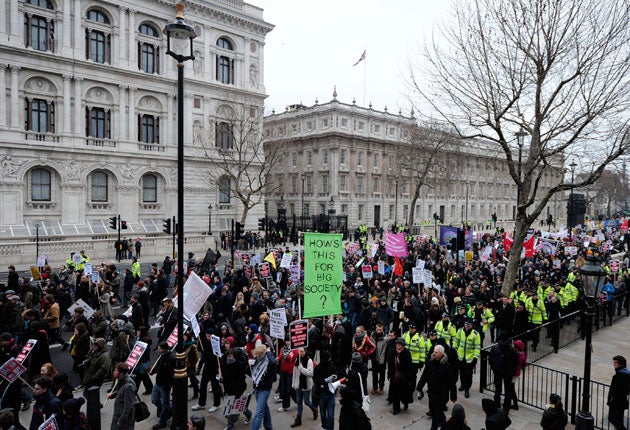
This week Oxford University confirmed that it would raise undergraduate tuition fees to £9,000 per year. The decision came after Cambridge, Imperial College London and Exeter also announced their intentions to charge the maximum allowed by the government’s recent reforms. To say the least, this news puts Nick Clegg’s claims that £9,000 fees would be ‘the exception, not the rule’ in doubt. But is a university degree really worth all that money? We've asked recent graduates and current students what they think.
Luke Martin studied Social and Cultural Studies at the University of Nottingham:
In material terms, access to a library and a few hours of contact time each week might not exactly represent good value for the £3,000 a year I will eventually pay for my social science degree, let alone the £9,000 that others will pay in the future. Similarly, as I find myself six months after graduation working full-time in an unstimulating retail job and keeping my thematic interests alive by doing unpaid work experience in my ‘free time’, it doesn’t immediately seem like a great investment.
Yet the ‘university life’ is a deeply individual one and it’s a shame to imagine it simply as a (very expensive) commodity, when for most it’s an all encompassing and enjoyable lived experience. I suspect that I took a lot out of it that can’t be measured in pounds, through spending time with engaging tutors, being part of a learning atmosphere and gaining a better understanding of my own ambitions.
Tom Woodruff studied Physics at University College London:
I completed my degree last summer, having studied Physics at UCL. I was lucky enough to go to university when tuition fees were only around £3,000 per year. With the maintenance loan I received, which was about £4,500 per year, I left university with about £22,500 of debt. Meanwhile, students who are now preparing to go to university can expect to pay £9,000 in tuition fees, leaving them with approximately £40,500 of debt.
The median graduate starting salary, according the Higher Education Statistics Agency, is £22,000. There are less reliable statistics for non-graduate starting salaries, but a good estimate seems to be around £14,000. So, if a graduate manages to find work, they can expect to earn £8,000 more a year than non-graduates. However, taking into account their debt and the time spent in university not working, students paying £9,000 a year in tuition will have to wait 13.31 years before their net earnings are greater than those of non-graduates. For my peers, it will be more like 11.06 years.
Going to university is, economically speaking, an investment of time and money that takes a decade before one sees a return. Ultimately, however, even with fees of £9,000 per year, it is far more beneficial: by the end of their working lives, graduates will have earned around £400,000 more than non-graduates.
Polly Noble is a first year Medical student at the University of Leicester:
If I had been faced with fees of £9,000 when I was applying for university, I think I would still have thought it was worth it. My course gives me the privilege of knowing that a job will probably be waiting for me at the end of it. As long as I make it through and graduate, I should be able to start paying back my debts relatively quickly. Fees of £9,000 would just have meant paying off debts over a longer period of time. My course lasts five years, so I will be in a huge amount of debt anyway.
At the end of sixth form I couldn’t decide whether to study medicine or geography, but if these increased fees had faced me, I would actually have chosen medicine more quickly. The difficulty of finding a job after doing a geography degree would have made repaying my loan debts much harder.
However, there are lots of people currently on my course (especially graduate students) who would definitely not have been able to study had £9,000 fees been in place. This is what worries me. People who deserve and are fully capable of doing a degree may be denied the opportunity.
Adam White studied English Literature at the University of Oxford
I was an international student, which meant that I (well, my long-suffering father) ended up paying about £13,000 in tuition fees. My education essentially subsidised the tuition of others, which I guess seems okay.
So was this ridiculously expensive degree worth it? Well, I had a fantastic time, met people who will hopefully be famous and important, and I've come out the other side knowing a little bit about an awful lot. But was it £9,000 a year’s worth of knowledge? Or even £13,000? We're left in a world where a degree is just an expensive, bog-standard qualification. And given how many of us recent graduates are sprinting in the direction of M.A.s, I'm starting to feel a lot like some guy who mastered the abacus the day they invented the calculator.
I don’t have a job yet., but if £9,000 is the cost of being employable (and I DO hope that someone will eventually employ me), then that looks like the cost we'll have to pay—at the expense of even more years spent repaying loans. Did I get £13,000 a year’s worth of education? Nah. Was it worth it? Ask again later. It better have been.
Chloe Chittenden is currently doing an Art and Design foundation course at Chesterfield College and plans to go to university next year
I will openly admit that I have never really considered the financial element of university. The cost of uni and the debt I'll have to pay is something I will think about in the future, when I'm earning my own wage and am financially stable. I wouldn’t let the rising costs of tuition put me off going, but I am worried that universities will start charging higher fees as a symbol of their status. This would be highly unfair as university should be for everyone, not just for those who can afford it. I hope that having a degree will further my career and give me an advantage over those who haven't got one. In the long run, the price of higher education will hopefully pay itself off. University is an enriching experience where you live in a new city, meet new people and study a subject that you love... Why let money hold you back from all that?
Daniel Smith studied English Language and Communication at King’s College London
It's difficult to put a valuation on a degree, at least in monetary terms. Each student will have a different experience to the next and just because everyone has a degree does not mean there is an equal starting point when looking to start a career after university. In a fundamental sense though, a degree is worth any amount of money, if it's something you've always wanted to aspire to. This, I think, is definitely the case, when you consider that tuition is paid for through loans and, fair enough, it may burden graduates with massive debts, but they are not the same debts as with commercial and bank loans. It will mean repaying money for longer, but won't realistically have the ability to financially cripple anyone. If tuition fees had been £9,000 when I was at university, I would have coughed up the money - well, the student loans company would have. There is simply so much uproar about it because it is a big change and the students who will face the transition will feel hard done by. In ten years or so, £9,000 will predictably seem the normal going rate.
So, what do you think? Have your say below.
Join our commenting forum
Join thought-provoking conversations, follow other Independent readers and see their replies
Comments
Bookmark popover
Removed from bookmarks