Students seek a responsible angle to their studies
Claire Williams is in many ways typical of a modern-day business school graduate. In contrast to the popular image of the MBA as a sharp-suited individual overly focused on strategy and numbers at the expense of the human aspect, she decided to take an MBA course after a period working with a not-for-profit organisation in East Africa. She opted to study at the Saïd Business School, University of Oxford due to the strong reputation it has built in the social enterprise field since being established in 1996, and in 2008 she became a scholar at the school's Skoll Centre for Social Entrepreneurship.
Williams says she was attracted by the programme at a centre focused on social enterprise – which it defines as "innovative, market-oriented approaches underpinned by a passion for social equity and environmental sustainability" – in a business school centred on entrepreneurs. But on arriving she was "really surprised by the number of people involved in non-profit social innovation".
It is perhaps less surprising to Stephan Chambers, MBA and executive MBA director at Saïd and chairman of the Skoll Centre. He has seen a marked increase in interest among MBA students in social enterprise elements, so that nearly all of them now do some kind of course in this area. In some ways more important, though, is the rise in demand for knowledge and experience of social enterprise from mainstream businesses. Pointing out that they are in the process of bringing social liability into their accounts, he says: "Anybody who wants to run anything has to know about this. Business schools have to meet that need."
Saïd has taken a pioneering role in this trend. But it is not alone. The University of Chicago Booth School of Business, one of the most established business schools in the world, sees the same factors at play. Linda Darragh, director of entrepreneurship programmes at the school's Polsky Center for Entrepreneurship, says there is a "pull" trend, with corporations realising if they are to differentiate themselves and attract "conscious customers" they must consider the social and environmental impacts of their corporate strategy, products and operations. There is also a "push" trend, stemming from the fact that many students at the school have been involved in philanthropic endeavours for many years before they start the programme. "There are a surprising number who have been involved in the education of disadvantaged populations domestically and internationally," she adds.
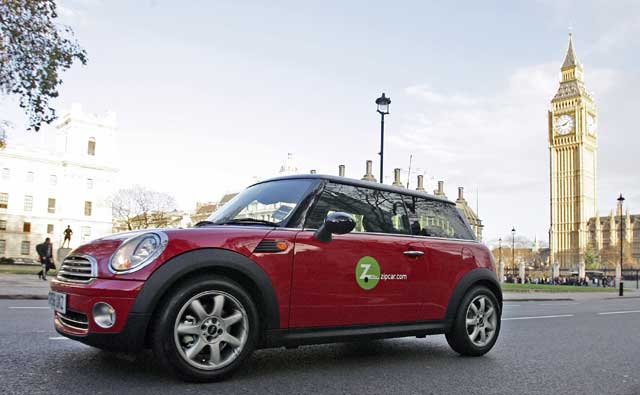
Booth is seeing its "social impact" classes fully subscribed, and is promoting interest in social ventures in its neighbourhood through extracurricular activities and investment. It already points to a lengthy list of former students who have gone on to work in the social enterprise area, including Scott Griffith, chairman and chief executive of the car-share company Zipcar, and Jill Corcoran, director of social impact at Boston Consulting Group.
Although it is not planning a major expansion of courses in specific social enterprise areas such as microfinance and education, it is seeking to equip those interested in the social sector with the same robust training in such areas as marketing, finance and economics as has traditionally been the case.
Jessica Thomas, managing director of the Center for Sustainable Enterprise at the University of North Carolina at Chapel Hill's Kenan-Flagler Business School, says that in the 11 years the operation has been running there has been a steady increase in interest so that now about a fifth of the 300 MBA students graduate with a concentration on sustainable enterprise. There is also an enrichment programme that involves the sustainability approach being taught alongside such subjects as finance, marketing and the rest – part of an effort, says Thomas, to make the school's students more attractive to potential employers.
As she points out, demand for graduates with experience of social enterprise and sustainability does not just come from organisations operating directly in those areas. Major international companies such as Procter & Gamble and Johnson & Johnson want people in management roles who have a perspective on this new approach to business and the sorts of things expected of business by the consumer.
Similar trends are observed within continental Europe. France's Reims Management School has a chair in social economy, and is dedicated to integrating social economics into the curriculum for every management student as well as offering courses dedicated to social enterprise. Last year, these accounted for 10 per cent of all students at the school. This rise in interest reflects the growth in the social economy – which the school says represents 10 per cent of the French jobs market. It also points out that there is a demand for graduates with knowledge of the social economy because even accounting and consulting firms these days have large practices centred on charities and similar organisations.
At the Erasmus Centre for Strategic Philanthropy at Rotterdam School of Management, Professor Lucas Meijs sees the interest in social enterprise as a natural response from business school students, who tend to be "active change-oriented people".
He also believes that the business school environment fits the current enthusiasm for individuals to act to change things rather than waiting for governments to do something. He points to such initiatives as corporate social responsibility and social entrepreneurships as evidence that individuals and businesses can both have an impact and also have plenty of opportunities to make a difference. Moreover, the international profile of the typical business school – Williams says that at Saïd she was with 180 people from 40 different countries – exposes students to global issues.
In common with many of their counterparts elsewhere, Meijs and his colleagues offer a mix of courses where the level of social enterprise, sustainability and corporate social responsibility ranges from a total focus to electives within MSc and MBA programmes.
There is also widespread agreement that this is no fad, more a fundamental part of the development of business schools. This is not to say that there will be no more financial stars passing through their gates and hence no more economic crises like the one that has led to criticism of the role of business schools. But there does seem to be a different mood afoot. Darragh says: "I often hear that 'education' is the civil rights movement of this generation."
Nevertheless, some things do appear to stay the same. Saïd graduate Williams says: "The most valuable part of it was the people." By which she means those studying alongside her and those you meet through being at such a prestigious institution. Indeed, she obtained her current job through meeting the co-founder of Twitter while on the course.
Join our commenting forum
Join thought-provoking conversations, follow other Independent readers and see their replies
Comments
Bookmark popover
Removed from bookmarks