The Independent's journalism is supported by our readers. When you purchase through links on our site, we may earn commission.
Hope for a two-state solution for Israel and Palestine is not the preserve of thoughtless optimists
In fact, a deal to end the struggle is within reach - if both parties have the will for it
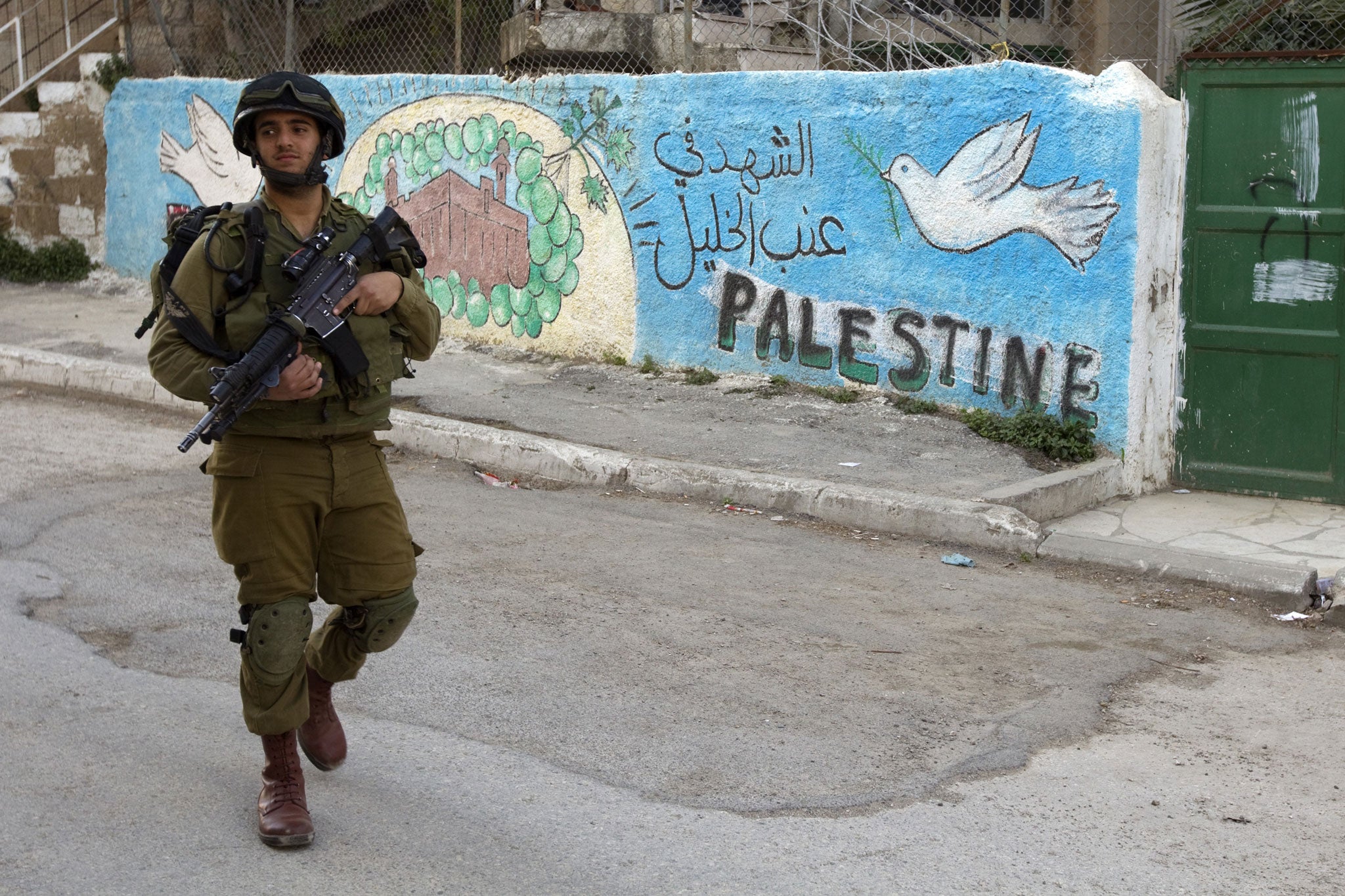
Surprising as it may sound, William Hague is turning out to be the most vocally pro-Palestinian British foreign secretary of recent times. Speaking in Washington this week before a dinner for Hillary Clinton, Hague warned that as a result of Israeli West Bank settlement growth the two-state solution was “in danger of slipping away”.
There’s nothing new about such claims. In ‘ The End of the Peace Process’, the great Palestinian author Edward Said said his people’s dreams of statehood were being buried under a ton of Israeli settlement tarmac – in 1998. But as such prophecies become more common, there's a danger they will become self-fulfilling, causing more and more people to give up on peace altogether.
So we need to say it loud and clear: the two-state solution isn’t dead. In fact, a deal to end the Israel-Palestine struggle is within reach – if only the two sides can will themselves to grasp it.
To be sure, this goes against the conventional wisdom. After all, the barely concealed purpose of Israel’s settlement programme is to cut the West Bank to ribbons, covering it with a mesh of homes and infrastructure no future government could dare erase.
But travel through the West Bank, and the startling fact is how far that vision is from being realised. Most settlements you see are remote towns of a few dozen families, clinging stubbornly to the land like cactus plants. The majority of settlers live in large urban blocks hugging the ‘ 1967 line’, which serve as suburbs of Tel Aviv and Jerusalem for those wanting cheap homes.
A peace deal could see these areas absorbed into Israel, with the Palestinians compensated with land from across the border. A ‘ land swap’ of 5 per cent of the West Bank could allow three quarters of settlers to stay in their homes – leaving a relatively small number to decide whether to return to Israel or become law-abiding residents of Palestine.
Media clichés portray the Israel-Palestine conflict as some kind of fiendish puzzle. But in fact the two sides came agonisingly close to a deal at their last serious talks, which took place in 2008 between Israeli prime minister Ehud Olmert and Palestinian president Mahmoud Abbas. By the time they were cut short by Olmert’s political difficulties, the two leaders had agreed on how to divide up all but some 250km2 of the West Bank. To put this in perspective, that is less than 1 per cent of the land Israelis and Palestinians have been fighting over since near the beginning of the last century.
That’s not to underestimate the obstacles standing in the way of a deal. Any government led by Benjamin Netanyahu is unlikely to show any enthusiasm for talks that could lead to Israel ending the occupation. Meanwhile the Palestinians are chronically divided: between the West Bank and Gaza, Fatah and Hamas, pragmatism and militancy. Opinion polls suggest both publics still support a deal, but increasingly doubt their leaders’ ability to deliver one.
Pessimism may be the order of the day, but a longer view shows how far Israelis and Palestinians have come towards compromise. Where once both sides hoped to close their eyes, click their heels and wake up in a world where the other had vanished, now a two-state outcome is recognised as the only one that could solve the conflict. When Jewish Home leader Naftali Bennett recently proposed Israel abandon the search for peace and settle for peace-and-quiet instead, he was labelled an extremist - but such ideas were mainstream not long ago (Yitzakh Rabin, now remembered as a martyred peacemaker, entertained a similar plan). And the Palestinians, who just a few years ago were waging a bloody Intifada, increasingly recognise the futility of armed struggle – with Fatah disarmed and top figures in Hamas reportedly open to a two-state settlement.
What’s more, today there's a rock-solid international consensus on how to solve the issue: two states with a border along the ‘1967 line’ (with agreed swaps), a shared capital in Jerusalem, and a deal to compensate Palestinians displaced by the conflict. Much of the detail has been filled in by previous talks, like those between Olmert and Abbas. The Palestinian Authority recognises Israel’s right to live in peace and security, and its president has been praised as a ‘ partner for peace’ by his Israeli counterpart Shimon Peres. Moreover, the 22 countries of the Arab League – once Israel’s sworn enemies – have offered it full recognition in return for the creation of a Palestinian state.
Even the hardline Netanyahu was obliged, in 2011, to declare his support for the idea of Palestinian statehood. He may have done it through gritted teeth – but the fact he was required to do so at all shows how unacceptable his stance had become to the international community and, crucially, the Obama administration.
So why, with the Israeli right increasingly on the defensive, is the global left abandoning its support for a two-state solution and reverting to the Dorothy-in-Kansas school of conflict resolution? Many pro-Palestinian authors, and activists in groups such as the BDS (Boycott, Divestment and Sanctions) movement , have stopped campaigning for Palestinian statehood. Instead, they advocate solving the conflict by creating one democratic, secular country for everyone, based on the principle of one person, one vote.
Appealing as this may sound, the ‘ one-state solution’ is like telling a couple in the midst of a messy breakup that, since they can’t agree on how to divide up the CD collection, the answer to their problems is to get married instead. Binational states rarely succeed in practice: just ask the Czechs and the Slovaks, who parted company after 75 years of coexistence; or the Flemish and Walloons, whose differences are causing rich, peaceable Belgium to split at the seams. The one-state solution is a stirring idea - but, even if anyone had a clue how to get there, it would last about as long in this part of the world as a snowman in June.
The two-state solution won’t right every wrong committed in the course of the conflict. It will create two flawed societies, not a utopia. It will be an imperfect, workable compromise between both peoples' hopes and needs. That may disappoint leftist 'radicals' for whom compromise is a dirty word. But as the Israeli author Amos Oz has written, ‘the opposite of compromise is not idealism. The opposite of compromise is fanaticism and death.’
Like an ancient aunt sitting on a pile of money, the two-state solution is surrounded by would-be mourners, eagerly polishing their obituaries. In these circumstances, the most radical – and necessary – stance we can take is one of hope.
Join our commenting forum
Join thought-provoking conversations, follow other Independent readers and see their replies
Comments
Bookmark popover
Removed from bookmarks