How digital petitions are replacing traditional parties as the engine of modern, popular democracy
In the first of a series of articles on digital democracy, our guest contributor looks at the rise of e-petitions - something this website has tapped into with pride
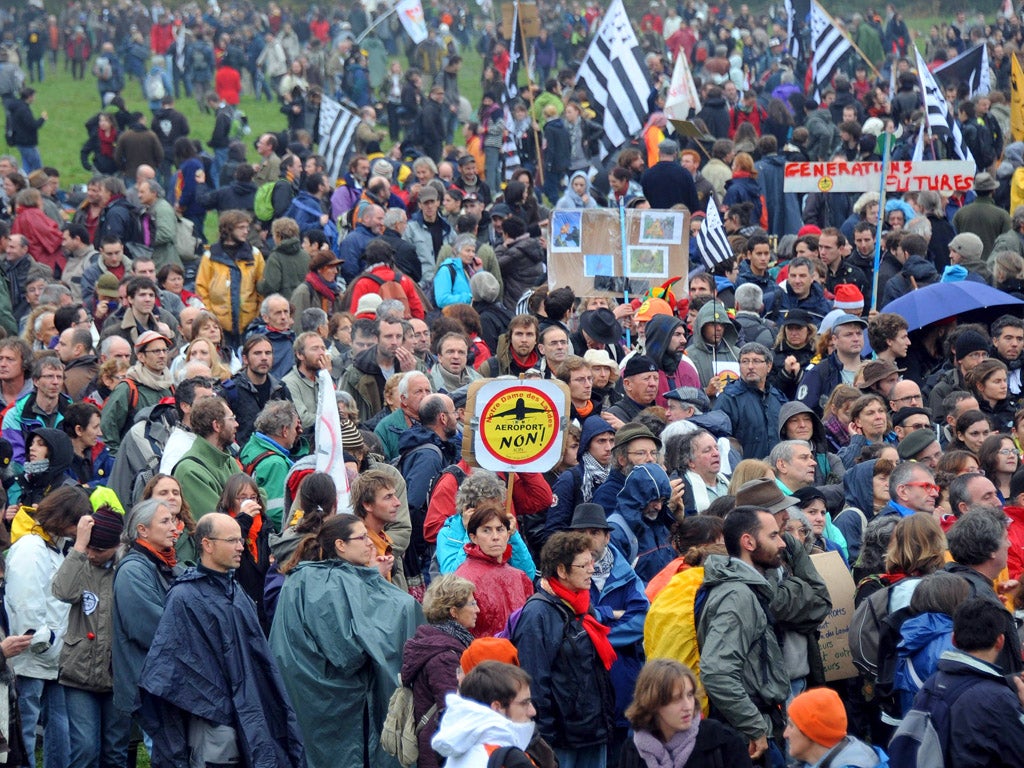
When was the last time you signed a petition? My guess is that it wasn’t so long ago that you can’t remember it. I would also venture that there is a strong chance that you signed some form of digital petition, perhaps by simply firing off a text from your mobile phone. Or perhaps even on this website - such as the Equal Partners campaign to legalise same-sex marriage.
But did you know that the European Commission recently launched a new European Citizens’ Initiative designed to give citizens, in the words of Commission Vice President Maroš Šefčovič, “a direct gateway through which they can make their voices heard in Brussels.”?
Over the last five years, signing petitions has become one of the British public’s favourite forms of political participation. And signing petitions digitally is by far and away the most popular form of online political participation. According to the latest nationally-representative Oxford Internet Survey, in 2009 some 20 percent of British internet users reported that they had signed a paper petition within the previous twelve months (see this). In 2011 this held steady, at 18 percent. But the growth of online petitions has been quite remarkable. Between 2007 and 2009, the rate of online petition signing more than doubled, from seven percent to fifteen percent. Again, in 2011 this held steady at fourteen percent.
The erosion of political parties
This might not seem like earth-shattering news. Like all forms of purposive political participation apart from voting (Britain’s recent police commissioner elections aside), signing petitions is a minority pursuit. But we need to bear in mind two contextual points. First, in an established liberal democracy like Britain’s we rarely see dramatic short-term changes in levels and types of political engagement. And second, we would do well to compare the growth of online petition-signing with the decline of other forms of engagement.
For example, Britain is now a society in which fewer than one per cent of the public are members of a political party. In the early 1980s, this figure was four per cent (see the recent excellent report from House of Commons Library researchers here). If you’re interested in democratic engagement between elections, it might be seen as progress that vast swathes now engages in a form of political participation that did not meaningfully exist just fifteen years ago.
So why have online petitions become so popular? There are all sorts of intuitive explanations to do with convenience and the reduced barriers when compared with other more demanding forms of political action. Also, the big leap between 2007 and 2009 is partly explained by the nationwide protests which saw more than 1.7 million members of the public sign an online petition (bravely hosted on the Downing Street e-petitions site) against the Labour government’s preliminary proposals to introduce road pricing.
But I believe there is a bigger, more complex explanation at work here, though it is difficult to quantify. It is that internet-driven norms of networking, flexibility, spontaneity and ad hoc organizing have started to diffuse into our political culture and these norms are generating new expectations about what counts as effective and worthwhile political action. These new online norms also increasingly mesh with changing practices in the world of older media, particularly television.
New online movements like 38 Degrees are well aware of the value of promoting causes in real space and across all media: print, broadcast, and online. If celebrity chef and lifestyle guru Hugh Fearnley-Whittingstall can lead a movement to change EU policy on fish “discards” — a feat he and the production team at KEO Films achieved through the skillful integration of public education, low-threshold online collective action, and the fostering of exuberant displays of common purpose in social media environments like Facebook and Twitter — can the European Commission itself get in on the act?
After all, Hugh’s Fish Fight petition currently has more than 836,000 signatories and has led to proposals for the abolition of discards being included in the latest round of Common Fisheries Policy reforms. Within the next few months we should know the extent of the campaign’s success.
Cultural shift
The challenge for politicians and officials is how to tap into these cultural shifts and engage in ways people find lively, authentic and compelling in their daily lives. It is for these reasons that we should take a close look at the European Citizens’ Initiative, launched earlier this month on the back of the pro-democracy section of the Lisbon Treaty. As I write, the first thirteen petitions (or “initiatives” as they insist on calling them) are available to view and sign on the European Commission’s website.
These range from the very vague to the very specific. There is a “European Initiative for Media Pluralism” and a campaign for “Higher Quality European Education for All.” These sit alongside those calling for a “Single Communication Tarriff Act” and an EU-wide speed limit of 30 km/h for urban areas. But one of the more interesting and significant petitions — at least for those interested in how institutional design shapes democratic engagement — is the initiative calling for a “Central public online collection platform for the European Citizen Initiative.”
This calls for a more open, transparent, and deliberation-based online system than is currently on offer — one that will make it easier to launch a petition as well as display meaningful information about its progress. It is essentially a critique of the way the current system works, sitting right there on the Commission’s site.
This is interesting because it reminds us just how difficult it is to get these things right. When the UK e-petitions service launched in 2007, many criticized what they saw as its overly-simple and non-deliberative nature. But it was precisely these characteristics, together with the amplification of the road pricing petition through older media reporting, that made it a qualified success. In established liberal democracies, many such forms of democratic experimentation end up bumping into the forces of apathy and inertia and then grind to a halt: this is why they get labelled experiments.
Yet there is always potential for some of them to stick around and evolve. Britain’s e-petitions system continues to adapt and looks like it will end up becoming part of the democratic furniture.
High barriers
This is one of the challenges for the European Commission: how to design a system whose success demands that it continue in some form or other. This is no mean feat for such a complex political entity, but still, the early signs are not promising. Like fine architecture, democratic institutional design is about process: it requires movement, transition, and flow. The Commission’s method for registering a new initiative is cumbersome. The barriers to participation are so high that the system risks losing the logic that makes petitions so popular.
Any initiative must be established by a committee consisting of at least seven EU citizens of voting age, but these must be drawn from at least seven different EU member states. It must then be “registered” with the Commission, in a process that takes up to two months. An initiative committee must then create its own online platform for collecting signatures, which must then be “certified” by the European Commission, and this takes another month.
The Commission provides a free and open source platform for us to download and run on our own server to collect signatories, but installing and maintaining this is likely to be beyond the capability, not to mention the interest, of the vast bulk of European humanity. And one million signatures are required for the Commission to take notice. I could go on (you can read the abstruse regulations for yourself here).
This is hardly the stuff of the supple and fast-moving styles of political engagement that have increased in importance over the past decade. Nor is it easy to imagine this system meshing particularly well with the new hybrid styles of political campaigning, journalism, and entertainment exemplified by 38 Degrees, Hugh Fearnley-Whittingstall and the rest.
What are the chances it will soon be labelled an experiment?
Join our commenting forum
Join thought-provoking conversations, follow other Independent readers and see their replies
Comments
Bookmark popover
Removed from bookmarks