Iran's problems must be solved by its own people. But the West can help
A ranking member of the British Parliamentary Committee for Iran Freedom writes on how to address problems with the Iranian regime
Two news headlines grabbed the attention of Iran-watchers last week. One, a planned trip by a European Parliament delegation to Tehran for “bridge building”. Two, the European Union’s adoption of a slew of new sanctions on Iran targeting several sectors of the country's economy. You could describe the split between these two as an example of the West's “carrot and stick” policy towards Iran - but another way to see it is as indecisiveness.
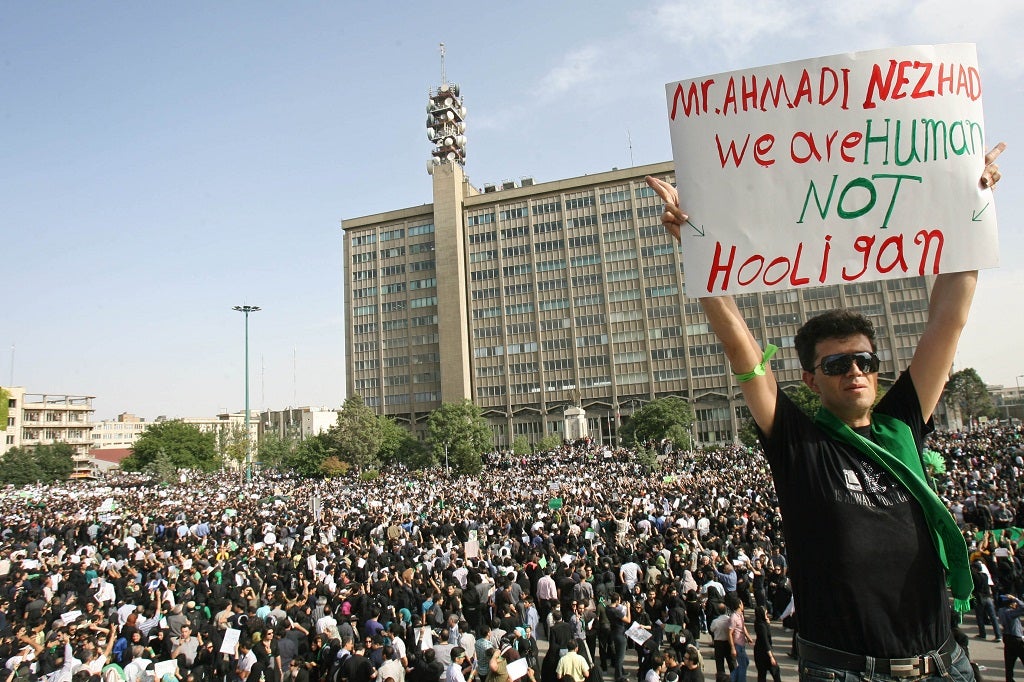
One thing to be certain of is that the noose is tightening around the neck of Iran’s leaders: the currency has been on a free fall; there have been protests over rising prices (especially in the bazaar, traditionally the backbone of the ruling clerics): and the main opposition to the clerical regime was taken off the terrorist list late last month by the United States after a 15 year-long legal and political battle.
The Iranian regime has been in a battle against its own people and the free world for three decades. More recently, Iran has taken this battle to the airwaves and cyberspace. It has been jamming satellite signals to deny the population access to free and unbiased news info, and has been implicated in cyber-attacks against Gulf Arab States.
On the other front, the Iranian regime continues to supply Syrian dictator Bashar Assad with arms, money, and revolutionary guards to suppress its people. The level of support given Assad demonstrates the Iranian rulers' fears of the fall of his regime, its main beneficiary and supporter in the region.
What should the West do?
What to do with Iran and how to respond to Iran’s challenges has been at the forefront of discussions in the Western capitals for many years. It has taken a centre stage in the US Presidential campaign whenever foreign policy was discussed.
This discussion, however, revolves around choosing one of two options: continued negotiations or military action. Continued negotiations have been the path many in the West have advocated and practiced for many years. What they have earned in return has been Iran’s unabated pursuit of nuclear weapons.
On top of that, Iran’s repressive policies against its population have continued and even worsened in some instances since these negotiations not only leave out the issue of human rights, but implicitly legitimize Iran’s harsh suppression of dissidents. Military action, as advocated by many as a means to slow down or stop Iran’s nuclear drive, is a short term remedy at best. It's no solution.
History has shown that rogue regimes never change their behaviour and the only way to rid the world of their menace is by simply ending their existence. The same applies to Iran. The past three decades have shown that the Iranian regime has remained loyal to the ideals of its founder Ruhollah Khomeini in its oppression of public liberties, harsh crackdown on dissenting voices, export of terrorism and fundamentalism, and meddling in other countries’ affairs to exert its own hegemony.
Regime change
Never-ending negotiations and constant threats will not change Iran's behaviour. So the solution to the Iran problem is simply a fundamental change in government, or regime change. This, however, cannot be done by foreign powers. It can only be carried out by the Iranian people themselves - who have shown many times in the past hundred years that they are willing and capable of taking the matters into their own hands.
They do, however, need encouragement and moral support.
And they do need to know that the rest of the world is with them in their struggle against tyranny. The delisting of the main Iranian opposition groups, People’s Mojahedin of Iran (PMOI or MEK) by the United States has finally paved the path for this group to focus its attention on bringing about fundamental change in Iran. So, instead of engaging in endless negotiations, or resorting to continuous threats, the EU, US, and others should engage the Iranian opposition led by Mrs Maryam Rajavi and support it in its stated goal of bringing about fundamental change.
This, of course, will be faced with stiff opposition from Iranian regime’s lobbyists and apologist as well as those who still envision a negotiated settlement with Iran. But the fallacy of what they are advocating is self-evident.
So, going back to the recent news headlines, the expansion of sanctions is a good step to increase the pressure on the Iranian regime - but sending a delegation to Tehran sends the wrong signal. The world must speak with one common voice when it comes to Iran if it wants to grab the attention of the ruling clerics. And it must embrace the “Iranian solution” to the “Iran problem” by engaging and supporting the democratic opposition to the regime. Let's hear this loud and clear.
Join our commenting forum
Join thought-provoking conversations, follow other Independent readers and see their replies
Comments
Bookmark popover
Removed from bookmarks