Politicians of all hues want more local democracy. But do any of them know what it actually means?
What should be a glorious era for councils is anything but. For decades, powers have been switched from the local to the centre by those who promise to do the opposite

Localism is one of the great political fashions of our time, an idea conveniently vague enough to attract near universal support. Yet local government – one precise way of delivering localism – remains distinctly out of fashion. National leaders support robust councils in theory, but rarely in the policies they choose to implement.
This should be a glorious era for councils. In central power at last, the Liberal Democrats are passionate advocates. David Cameron has described the redistribution of power as the Conservatives’ Big Idea and has argued that local government must form part of their attachment to “localism”. Ask Ed Miliband and he will say that local government must be stronger, too. But the powers and responsibilities of councils have been shrinking for decades.
Take the pivotal issue of local taxation. During his party conference speech, George Osborne announced he was freezing the tax next year. The cap is now an annual announcement from the Chancellor, an act of centralisation that exceeds almost any other, a powerful minister in Whitehall telling local authorities they cannot set their own tax rate but must accept a limit imposed from the Treasury.
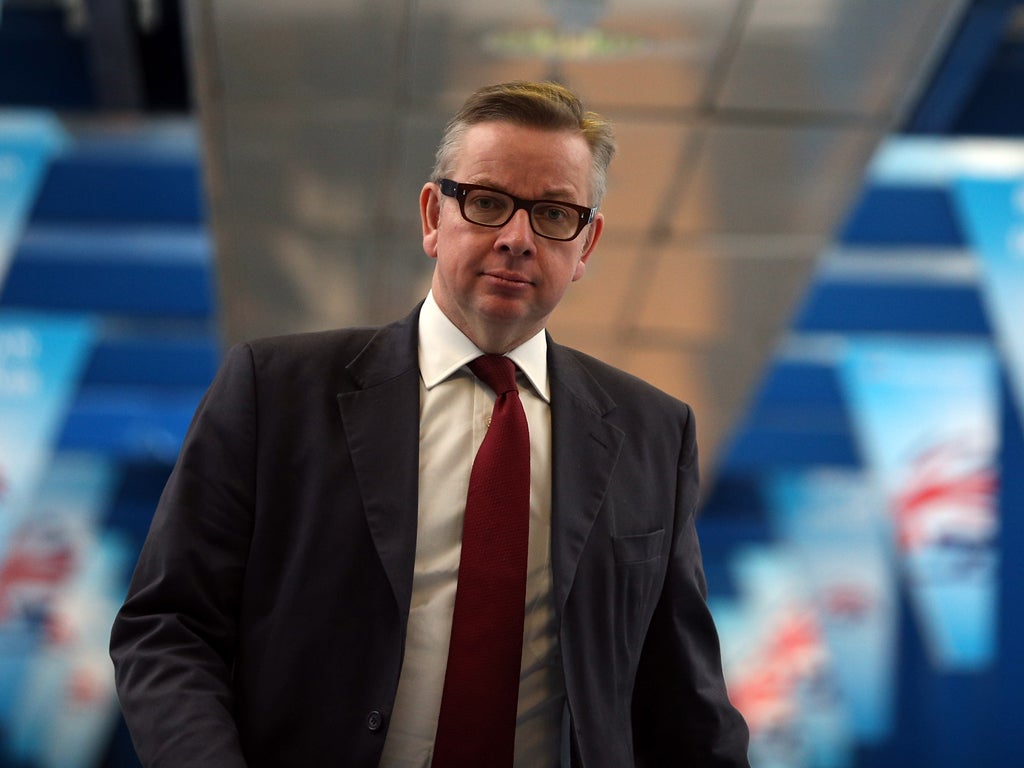
The current centralising momentum is topped by one other policy. The expansion of City Academies is a sweeping transfer of power from councils to the centre. Academies are accountable to the Department of Education and assessed by Ofsted, a quango that must also answer to Michael Gove, above, and his ministers. Once-mighty local education authorities are now responsible for a rapidly diminishing number of schools. Given that one objective of the Government is to give all schools the chance to become Academies and to introduce more so-called Free Schools – institutions that are, in effect, newly established Academies also accountable to the centre – there might come a time when local authorities are directly responsible for no schools at all.
Decline
This follows decades in which other powers have been switched from the local to the centre. Once, mighty councils built thousands of affordable homes a year. Now they build very few and are responsible for even fewer, with the sale of council homes. Housing Associations, ultimately answerable to central government, play a bigger role. Once, councils were directly responsible for cleaning the streets. Now that responsibility lies with private companies. The same applies to quite a lot of social-care responsibilities. Relentlessly, municipal power has narrowed and declined while the three parties proclaimed their support for localism.
I do not chart this pattern of decline in a spirit of unequivocal disapproval. Like a lot of national politicians, I am ambiguous. When I heard Osborne announce the council tax freeze I was fleetingly disturbed about the continuing decline of municipal power, and then relieved that my preposterously high council tax bill was not going to rise. For me, the same conflict applies to schools. The hopes, plans and aspirations of one school are bound to impact on others in the same area. Such a relationship between schools requires and should benefit from local coordination. What better institution than councils accountable to voters?
Then again, councils have had their chance and in some cases have been too complacent. In England at least a more rigorous relationship tends to be formed between local providers and the centre, where ministers are held to account in the media and in the House of Commons. If a free school flopped, Michael Gove would have questions to answer on the Today programme. Under the robust regime of the Speaker, John Bercow, Gove would also be in the Commons responding to an Urgent Question after his Today appearance. There is no equivalent local scrutiny.
Similarly, Ofsted, under its recently appointed chief, Sir Michael Wilshaw, is impressively focused and relentless in its pursuit of high standards, answerable to Gove and a robust national media. The dynamic works. And yet councils are closer to local schools. If they are largely excluded from being responsible for them, there is no locally accountable body that can be challenged by parents and other voters worried about education provision in their area. They could vote to kick out a ruling council and nothing would change in relation to education.
I have not resolved my ambiguity. In the end, there is not much point in electing local councils if they cannot set their own level of tax, and yet I do not want to pay any more. As Leader of the Opposition in the mid-1990s, Tony Blair articulated this conundrum by telling a conference of council leaders: “We will give you the power to decide budgets as long as you use that power responsibly.”
Ambiguity
I note that in other equivalent European countries a robust municipal culture leads to more effective delivery of services, and local leaders who are well known. But I worry about what would happen if my council acquired too many additional powers. I recall having discussions with David Cameron’s allies, Steve Hilton and Oliver Letwin, when they were in opposition about how they were going to redistribute power – which agencies would be responsible. I suggested to them that local government was the only accountable agency. Reflecting the wider ambiguity, they only half-agreed.
Those in national power have resolved their ambiguity in practice even if they do not recognise the scale of the resolution and have a theoretical attachment to an alternative route. On the whole, they do not want to let go of the strings pulled from the centre.
As a result, local government should and could be much smaller, with fewer councillors, fewer tiers and fewer employees. Without overt debate, England at least has become a country where accountability lies in the centre virtually alone. Senior national politicians from across the spectrum have allowed this to happen even if they insist that they seek, in theory, stronger councils.
This insistence is the backdrop to a situation where local government remains fairly big in terms of numbers employed, while other institutions or the private sector run the services. Given what has happened to them, they should become light, nimble bodies. They should make policy to encourage local economic growth and provide a few vital services as efficiently as possible with a new form of local taxation that is free from central government interference. This may not be the best way of delivering local services but it is the only logical consequence of policies implemented over the past 30 years.
Join our commenting forum
Join thought-provoking conversations, follow other Independent readers and see their replies
Comments