'Was the Iraq war worth it?' is a question unworthy of debate - so why are we still asking it?
Fretting that any involvement in a conflict is going to be ‘another Iraq’ is simply a cliché. The world has changed since 2003
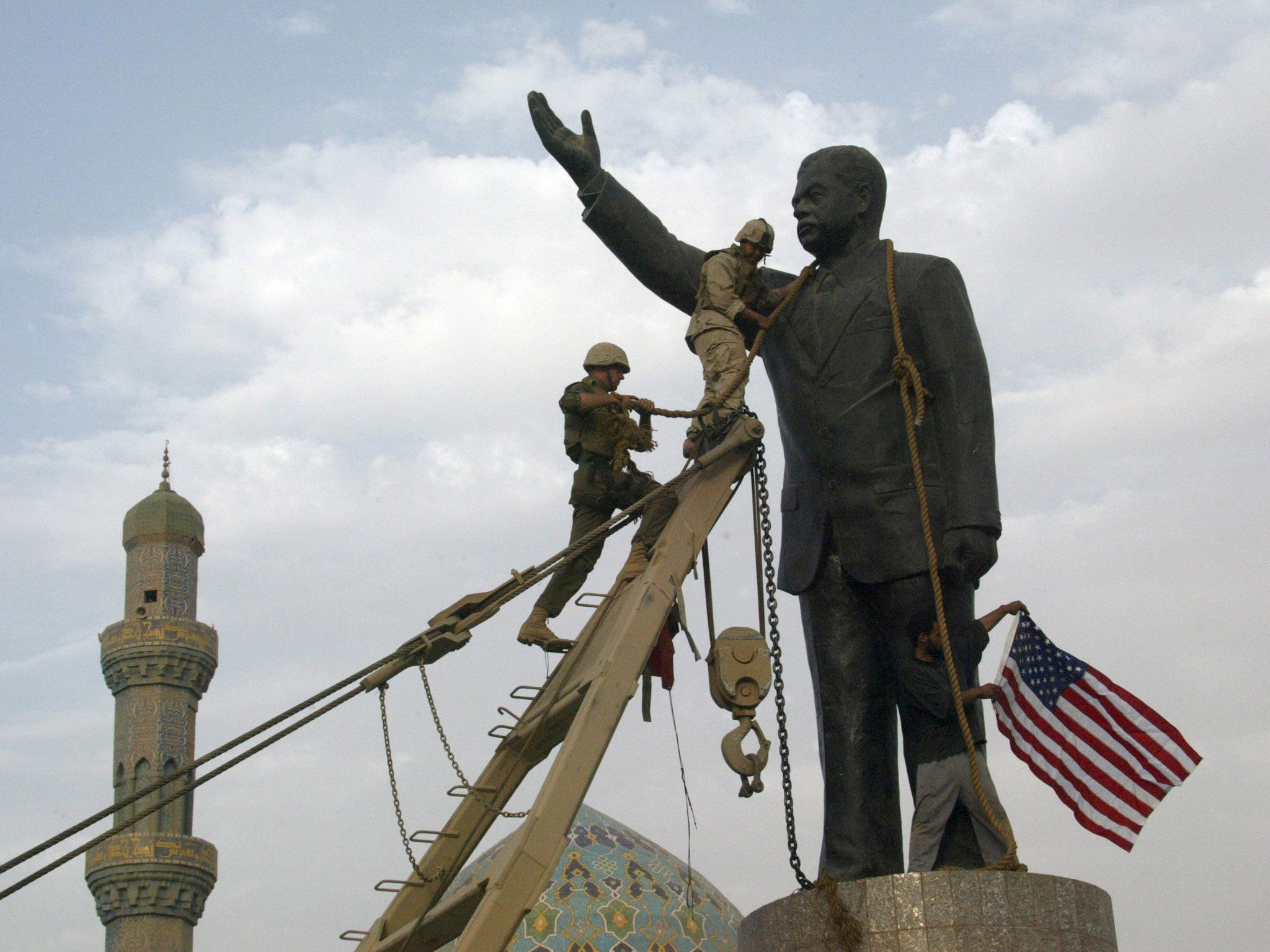
With the tenth anniversary of the invasion of Iraq approaching, a predictable stream of commentary and events asking the familiar question of whether the war was ‘worth it’ is beginning to arise. This trend has so far included a planned debate at Goldsmiths, University of London featuring prominent pro and anti-war commentators like Mehdi Hasan and David Aaronovitch; a conference hosted by the anti-war activist group ‘Stop the War Coalition’; and a few articles in the Huffington Post and the Sunday Sun.
The main justification invoked for debating whether the war was ‘worth it’ is so that we might learn ‘lessons’ for the future. With the Iraq War, however, it is clear that the same old talking points are going to be brought up: ‘Saddam was a brutal dictator!’; ‘Look how much better off the Kurds are!’; ‘Iraq is a democracy today!’; ‘The war has killed up to a million people!’; ‘The war has only fostered more terrorism!’; ‘There were no WMDs!’; ‘It was all about oil!’. Is this familiar debate worth having at all? Not really.
First, the war came about in the very unique circumstances of the immediate aftermath of 9/11, with the idea that ‘pre-emptive’ military action - including full-scale invasions - against perceived rogue regimes was justified to stop them from allowing terrorists to acquire WMDs. Along with this doctrine came the notion that a war against Saddam would be a quick and easy job dealing with ‘unfinished business’ from the First Gulf War.
Further, it was believed that from the overthrow of the dictatorship would arise a self-sustaining Western-style democracy that would serve as an example to other countries in the region.
Yet the Middle East in particular has changed considerably since the invasion of Iraq, and it is quite clear that none of the above concepts guides Western policy towards the region today. There are no situations at the present time- and for the foreseeable future- analogous to Iraq as regards policy debate. Fretting that any involvement in a conflict is going to be ‘another Iraq’ is simply a cliché. This was especially so when it came to the Libyan civil war.
Further, there is nothing to be learnt from the talking points mentioned earlier that have been repeated ad nauseam, for they inevitably lead to cherry-picking narrative. Thus, the pro-war advocates who highlight Iraq’s supposed status as a democracy ignore the fact that as of this year, the non-partisan think-tank Freedom House still classifies Iraq as ‘Not Free’, with scores for civil and political rights downgraded from last year and now equal to those of Iran. While they recognize elsewhere that democracy is not simply about holding free elections, they do not apply this standard to Iraq.
Similarly, in their idealization of the Kurds’ situation, they overlook the authoritarian tendencies of the ruling parties in the autonomous Kurdish government that cracked down on protestors in 2011 and pre-emptively put a stop to further planned demonstrations, rather than addressing the demands for political and anti-corruption reform.
On the other hand, anti-war commentators tend to throw about greatly exaggerated death tolls of 650,000 (the Lancet survey) or over 1 million (Opinion Research Business Survey). In arguing that the war was nothing more than a project to secure Iraq’s oil supplies and impose a neoliberal economic model, they ignore the fact that the West was already buying oil from Iraq before 2003 and that even now, the oil industry and the economy more generally remain centralized and state-run enterprises.
In truth, the question of whether the war was ‘worth it’ is something for Iraqis (including me) to decide among themselves. As for Western observers, real lessons from Iraq are not to be learned by debating this old question.
Instead, what is needed is for researchers, analysts, and historians to write on the history of the decision-making in the build-up to the war, the invasion itself, and subsequent events in the post-Saddam environment, without ideological prejudice. That is, if one reads an account of, say, the aftermath of the invasion, it should not be apparent in any way if the writer in question was for or against the invasion. This does not mean that one cannot have a personal opinion on that matter, but it should not infringe upon one’s work.
It is indeed possible to undertake such an enterprise. In this context I recommend the work of Joel Wing of Musings on Iraq, the U.S. Special Inspector General for Iraq Reconstruction, and the Iraq Body Count.
From objective accounts of the history of the lead-up to and the aftermath of the invasion, there are valuable discussions to be had:. How much of a role did the surge in Iraq really have? Why did no sharp decline in violence similarly accompany the troop surge in Afghanistan? Why was the reconstruction effort generally a failure? When rebuilding the security forces of a country, should the focus be on quality or quantity?
These are all questions worthy of debate, and questions which will continue to go unanswered while we concentrate instead on whether the war was ‘worth it’.
Join our commenting forum
Join thought-provoking conversations, follow other Independent readers and see their replies
Comments
Bookmark popover
Removed from bookmarks