Alex Haxton: The next disaster has already begun
The poor's unsafe housing and insecure food supplies will make future emergencies worse. Relieving long-term poverty is the key
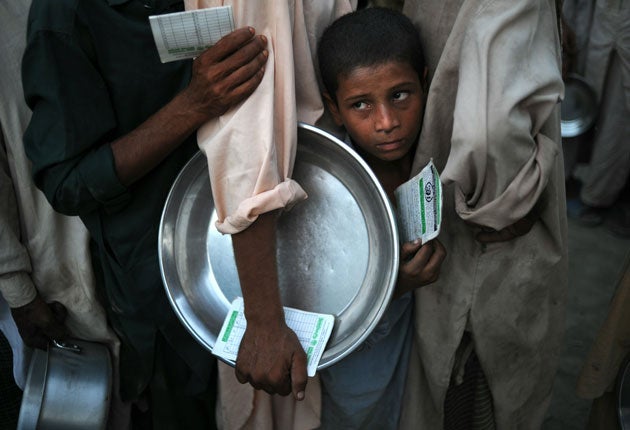
Human suffering on the scale of disasters such as the flooding in Pakistan or the famine and floods in Niger can be beyond comprehension. The figures, like the estimated 230,000 deaths from the Haiti earthquake, defy imagination. It is greatly commendable, then, that the response of ordinary people in the UK to this is compassion and the great sums raised in disaster appeals are a testament to this willingness to give.
There is something about natural disasters that engages with the public. Is it because the victims are suffering through no fault of their own? The immediate and catastrophic devastation wrought by a tsunami, earthquake or flood is an event with which people the world over can sympathise. Although we would hope to never experience such an event ourselves, we can understand what it would be like to lose everything at a stroke.
Aid agencies are quick to launch an appeal and jump into action when a disaster strikes. It is the automatic response. But while it is obviously right that we should help those suffering as a result of a natural disaster, is this the most effective use of the public's generosity?
The reality is that helping once a family's home has been washed away by a flood is too late. It would have been better to help build a solid home away from the flood plain or strengthen flood defences. This would also have been much cheaper.
The places where disasters have the gravest impact are those regions that are the least prepared for them; the poorest of countries, where populations already live on the absolute bread line and where infrastructure is weak.
Today is the fifth anniversary of Hurricane Katrina which devastated New Orleans. Although the US government response was criticised in many quarters there is no doubt that the world's wealthiest nation was much better equipped to help its people than poorer countries like Haiti, Pakistan or Niger.
In many ways poverty itself is the greatest disaster of all. Over 10,000 children a day die of easily treatable illnesses or from malnutrition, a far greater number than die in natural disasters. But addressing poverty is much more challenging, both to do and to raise money for.
Strengthening a region's ability to respond to a crisis or lifting a population out of poverty takes long-term engagement. It involves strengthening local NGOs, funding health clinics, working with local authorities, stimulating the local economy and, above all, providing educational opportunities. Addressing poverty works best if it is done from the ground up. It is the kind of work that is ill-suited to a large-scale operation and indeed is often better delivered by networks of smaller agencies with a better understanding of local needs.
In Pakistan, for example, World Emergency Relief (WER) has for several months before the floods been working with local NGOs to develop an efficient delivery network to get medicines to remote areas in the north such as the Swat valley. Because of this, WER and our partners were in a position to distribute vital aid medicines in response to the floods, and because the network is run by local NGOs it will continue to operate long after the immediate impact of the disaster.
Paradoxically, UK donors' fantastic response to natural disasters may actually be working against the longer-term goal of ending poverty. Disaster appeals are much more immediate and engaging than development work. They offer a simple proposition, "donate £20 and save a life", where development goals can seem more distant.
Disaster appeals risk drawing money away from aid agencies' other work. Donors' gifts are a finite resource, and even though people will give more in an emergency, this means that they will often give less to other areas of work. It isn't, or shouldn't be, a case of doing only one thing or the other.
This is, in part, a failing of aid agencies to get their message right. It is much easier to raise money for a disaster appeal than it is to engage donors with poverty alleviation. It is also down to the news agenda which, by its very nature, focuses on specific, large-scale crises. Poverty is not "news". It is a consistent, wearying and often fatal fact for almost two billion people. But it is an emergency nonetheless, even if it is one that must be faced every day.
With the pressures of population growth and changes to the climate, the incidence of natural disasters will continue to increase. There is a very real danger of donor fatigue, as the problems begin to seem endless and intractable. This makes the message that agencies use to fundraise more important than ever. Many donors and potential donors are already asking questions about the effectiveness of aid. It is up to aid agencies to make the case for comprehensive support that goes far deeper than just disaster relief.
The problems faced by people living in areas prone to disaster or by people living in poverty are not intractable at all. There is great work being done already, but it is time to try and bring this message to the forefront. Aid is at its most effective when it is not merely a reaction to a crisis but is consistent and long-term. This simple fact is well known by all aid agencies, governments and everyone involved with international development.
But the relentless focus on disasters and short-term solutions in both the news and in agencies' own appeals is undermining this important message. People are suffering daily because of poverty and disasters, not only when a story becomes newsworthy. There is a great opportunity for much good to be done if aid agencies and the media could work together to promote awareness of the broader reasons for suffering in the developing world. Through this we could ensure that the generosity of the British public is put to best use.
Alex Haxton is chief executive officer of World Emergency Relief ( wer-uk.org)
Join our commenting forum
Join thought-provoking conversations, follow other Independent readers and see their replies
Comments
Bookmark popover
Removed from bookmarks