Patrick Cockburn: All the evidence points to sectarian civil war in Syria, but no one wants to admit it
World View: Arming the resistance can only increase the blood-letting

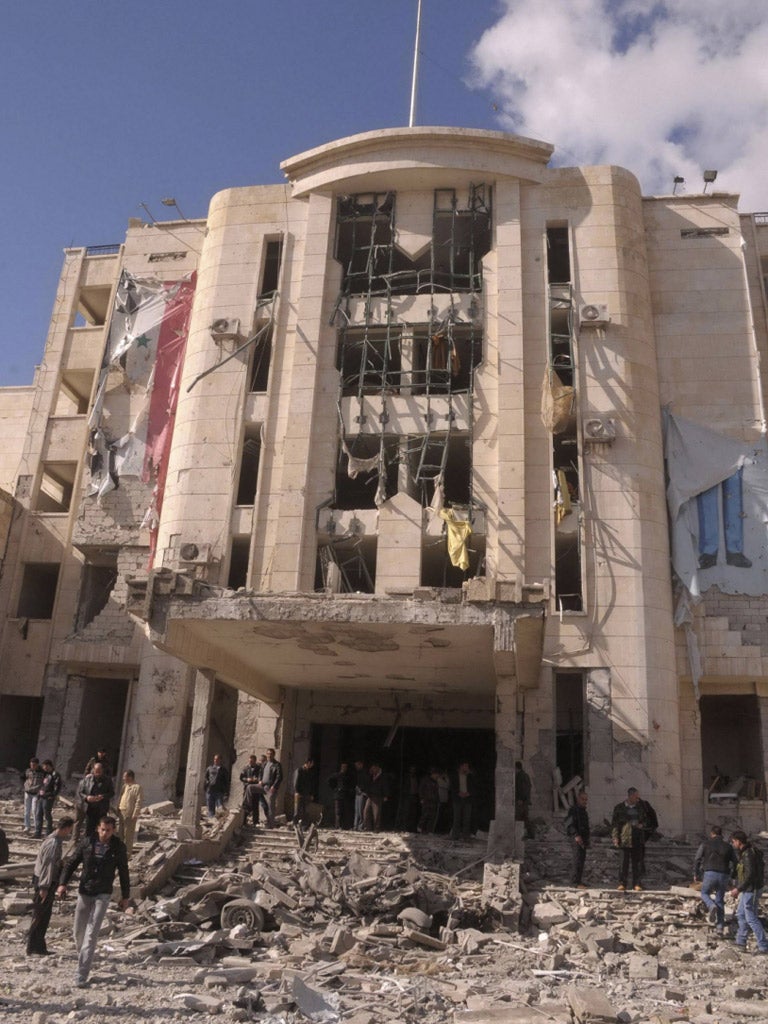
As Syrian army tanks mass around Homs and its artillery pounds Sunni districts of the city, Syria is slipping into the first stages of a sectarian civil war. This conflict could be as bloody as anything seen in Iraq between 2006 and 2007 or as long as the civil war in Lebanon (1975-90). The two words that best describe the current process in Syria are "Lebanisation" and "militarisation"; neither bodes well for Syria's people.
In Homs, death squads from the Sunni and Alawi, the Shia sect that dominates Syria's ruling elite, are starting to seek out victims from each other's communities. Sunni say they are being massacred by shellfire; Alawi demand that their Sunni neighbours be bombarded even more heavily. Syria was never a homogenous country and is becoming less so by the day.
But that alone will not bring down the government of President Bashar al-Assad, so anti-government forces are concluding that the only way to do this is by militarising the resistance. In practice, this is unlikely to do more than increase sectarian blood-letting. Untrained militias and Syrian army deserters cannot stop armoured columns. Most probably insurgent leaders know this and their real intention is to do enough militarily to provide political cover for creeping international intervention on their side. This might be sold as a Nato-protected safe haven for insurgents and refugees in north-west Syria, but in fact would be a declaration of war.
Short of a serious split in the Syrian army, the opposition forces' best chance of success is to lure outside powers into such a venture. They want a repeat performance of what happened in Libya. The rag-tag militiamen who finally captured Tripoli would have been beaten in a few days without close air support from Nato. But Syria is not Libya, its powerful armed forces have not yet disintegrated, and, most importantly, it is not isolated internationally to anything like the same degree as Gaddafi was.
Of course, international leaders know this. Their foreign and intelligence services will have told them how different the two countries are. Yet the example of Libya may have misled them into writing off Assad prematurely. Months ago, the Israeli Defence Minister, Ehud Barak, was saying Syria's regime would go within weeks. King Abdullah II of Jordan said that, if he was Assad, he would step down, but later sounded as if regretted his outspokenness. By December, the US State Department was saying that Assad was "a dead man walking".
But it hasn't happened. By any realistic calculation, Assad might well last into 2014. Glib references to his isolation are exaggerated. The vote on 4 February in the UN Security Council condemning him and asking him to turn over power to his deputy was vetoed by Russia and China. Moscow feels that it was swindled last year when the Security Council vote on protecting the civilians of Benghazi turned into permission for Nato to wage all-out war to overthrow Gaddafi.
What makes the crisis in Syria so intractable is that three crises are wrapped into one. At one level, it is a popular uprising against a brutal, corrupt police state that started in March when security forces tortured children painting anti-regime slogans on a wall in Deraa in the south. The state disastrously misjudged its moment and an atrocity, intended to intimidate would-be protesters into silence, instead provoked them to revolt. Hatred of a despotic regime and fury at repeated massacres still impels great numbers of Syrians to go into the streets to demonstrate despite the dangers.
There is no doubting their courage, but the struggle in which they are taking part has two other dimensions: it is part of the escalating conflict between Sunni and Shia and the 33-year-old battle between Iran and its enemies. The sectarianism of the Syrian opposition is persistently played down by the international media, but power in Syria is distributed along sectarian lines, just as it was in the recent past in Iraq, Lebanon and Ireland. Even supposing an anti-sectarian opposition, democracy in Syria means a loss of power for the Alawites and their allies and a gain for the Sunni.
Given that Sunni make up three-quarters of Syria's 24 million population, their enfranchisement might appear to be no bad thing. Unfortunately, many of the government's most committed opponents evidently have more fundamental changes in mind than a fairer distribution of power between communities. Core areas of the insurgency, where the Sunni are in the overwhelming majority, increasingly see Alawites, Shia and Christians as heretics to be eliminated.
Television reporting and much print journalism is skewed towards portraying an evil government oppressing a heroic people. Evidence that other forces may be at work is ignored. An example of this came on Friday when two suicide bombers struck security compounds in Aleppo, killing 28 people and wounding 235 others. The obvious explanation was that Sunni suicide bombers, mostly operating through al-Qa'ida in Mesopotamia, who have been attacking Shia-dominated security forces in Iraq, are now doing the same in Syria. But, fearing their moderate image might be tarnished, spokesmen for the opposition swiftly said that the suicide bombings were a cunning attempt by the Syrian security forces to discredit the opposition by blowing themselves up. The BBC, Al Jazeera and most newspapers happily gave uncritical coverage to opposition denials of responsibility or said it was an open question as to who was behind the bombings.
As in Libya last year, the rebels invariably get a positive press. The increasingly sectarian nature of the conflict is understated. Syria is rushing headlong into a conflict that will tear the country's communities apart.
Join our commenting forum
Join thought-provoking conversations, follow other Independent readers and see their replies
Comments