Patrick Cockburn: The double threat that hangs over the poor of Kabul
World View
As popular uprisings convulse the Middle East and North Africa, governments across the world wait nervously to see if any other country will experience an explosion of popular rage against despotic rule. In the wake of the Japanese earthquake there is also a more general curiosity about which places are most vulnerable to a similar calamity.
The answer to both questions could well be Afghanistan, and, in particular, Kabul: hitherto an island of calm compared with the turmoil elsewhere in the country. The potential for natural and political disaster in the capital, which exists almost as an independent city state, is seldom realised by the diplomats, intelligence officers, soldiers, aid workers and journalists who live there. They are in Afghanistan only because of the war with the Taliban and focus largely on matters relating to the conflict. Much of the media reporting is taken up with accounts of firefights between embattled US and British patrols and local guerrillas in the mud-brick villages of Helmand and Kandahar provinces.
This means that little attention is given to the fact that Kabul is situated in a geologically unstable zone close to the Chaman Fault and has been shaken by severe tremors in the past. One extension of the fault ends only six miles from the capital. Any sizeable earthquake will be catastrophic because, over the past decade, Kabul has been the fastest-growing city in the world. Its population has tripled from about 1.5 million at the time of the Taliban defeat in 2001 to more than 4.5 million today. The increase is so big because of the return of refugees from Pakistan and Iran, flight from the turmoil in the rest of the country and the naturally high Afghan birth rate.
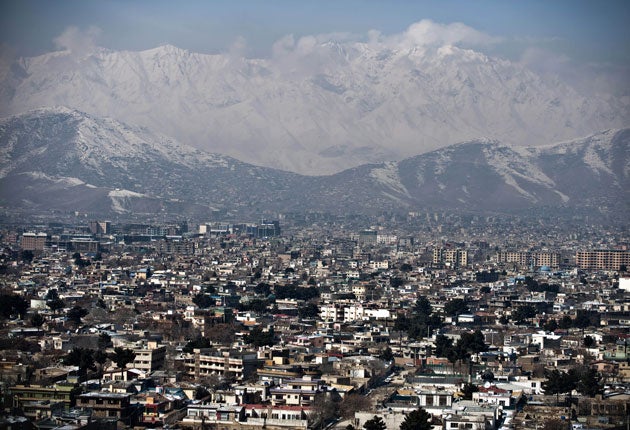
The spectacularly rapid unplanned growth of Kabul means that the Afghan capital is at risk of suffering a disaster that will have nothing to do with the Taliban. Government officials estimate that three-quarters of houses, home to three million people, have been illegally built and are unsafe in the event of an earthquake.
The extent of the problem is visible from much of the capital. The city was built at the bottom of a narrow valley and is overlooked by mountains. These are increasingly covered with new jerry-built houses that cling precariously to steep slopes so close to the vertical as to be almost cliffs. A tremor of any strength would bring them tumbling down. The best parallel here is probably not Japan but the earthquake in Port-au-Prince in Haiti in 2010, where there had also been a surge of people moving from the countryside. When the earthquake struck, the poorly built houses collapsed, killing 250,000 people.
People in Kabul are vaguely aware of the threat from earthquakes, but they are entirely engaged in the struggle to survive from day to day. This is getting more difficult and explains why everywhere in Kabul one finds exactly the same sort of rage against the corruption, incompetence and brutality of the Afghan government as is expressed by Arab protesters.
This detestation of the government is quite different from support for the Taliban, though popular contempt for the authorities gives the insurgents the political oxygen with which to breathe. It was a real estate dealer in Kabul, not a religious fanatic, who told me in a burst of fury: "There is bound to be a revolution if things go on as at present." He explained that for a small, well-connected ruling class Kabul is a gold-rush town where it is easy to make a fortune, but for most of the population it is a polluted, crowded, overpriced shanty town.
The way money is made in Afghanistan is often misunderstood abroad. It does not only come from the opium business or through corruptly obtained foreign-funded government contracts. As foreign money has flooded in since 2001, the Afghan cities, not just Kabul, have expanded rapidly but not enough for the number of people trying to live there. "Rents are five times higher here than in any of the neighbouring capitals such as Islamabad, Dushanbe or Tehran," explained Wahdat Aatifi, the owner of the Zhundun Real Estate company.
The notorious "poppy palaces", supposedly built with the profits of the drugs trade, are frequently cited by journalists as symbols of pervasive corruption. In reality, these hideous mansions are often paid for by the equally obscene profits accruing to the "land mafia", led by former militia commanders and politically well-connected power brokers who have seized control of state property. In addition, they buy luxury villas in Dubai while ordinary people in Kabul live crammed 10 to a room without electricity or fresh water.
In one sense, a natural disaster has already started. Kabul has become one of the most polluted places on earth. Clouds of brown smog are so toxic that the Afghan government has advised people to wear face masks during the rush hours.
Three-quarters of the pollution come from vehicles. As the population has increased so has car ownership, but Afghans own cars of a peculiar kind. Almost all are reconstructed car wrecks from the US and Germany and use a poor grade of petrol, belching out fumes that are trapped in the valley in which Kabul is built.
If life is so bad in Kabul, why do people keep coming there? Many new arrivals say they had no choice; they are fleeing for their lives. Not far from the Intercontinental Hotel in south Kabul I spoke to a group of 870 refugees, Pashtun farmers from Helmand who had fled US air strikes. Several had lost legs, and one man took off his dark glasses to show his mutilated face and sightless eyes. Their leader, Rahmatullah, who like many Afghans uses only one name, said it was too dangerous to go home. "The Afghan government and the Americans rule during the day, and the Taliban by night." If the air strikes did not get them, the insurgents would.
The Taliban is primarily a rural Pashtun insurgency and, aside from Kandahar, never seems at home in the Afghan cities. This is fortunate for the West, oblivious to discontent among Afghans unless it is directly linked to fuelling guerrilla war. Their unconcern may be shortsighted. It would not take much for the poorly housed Afghans to rise up with the same fury as the Arab protesters.
Join our commenting forum
Join thought-provoking conversations, follow other Independent readers and see their replies
Comments
Bookmark popover
Removed from bookmarks