Steve Richards: Ed and Ed won't split – they know there's too much at stake
There will be no repeat of the Blair/Brown rivalry that still traumatises Labour

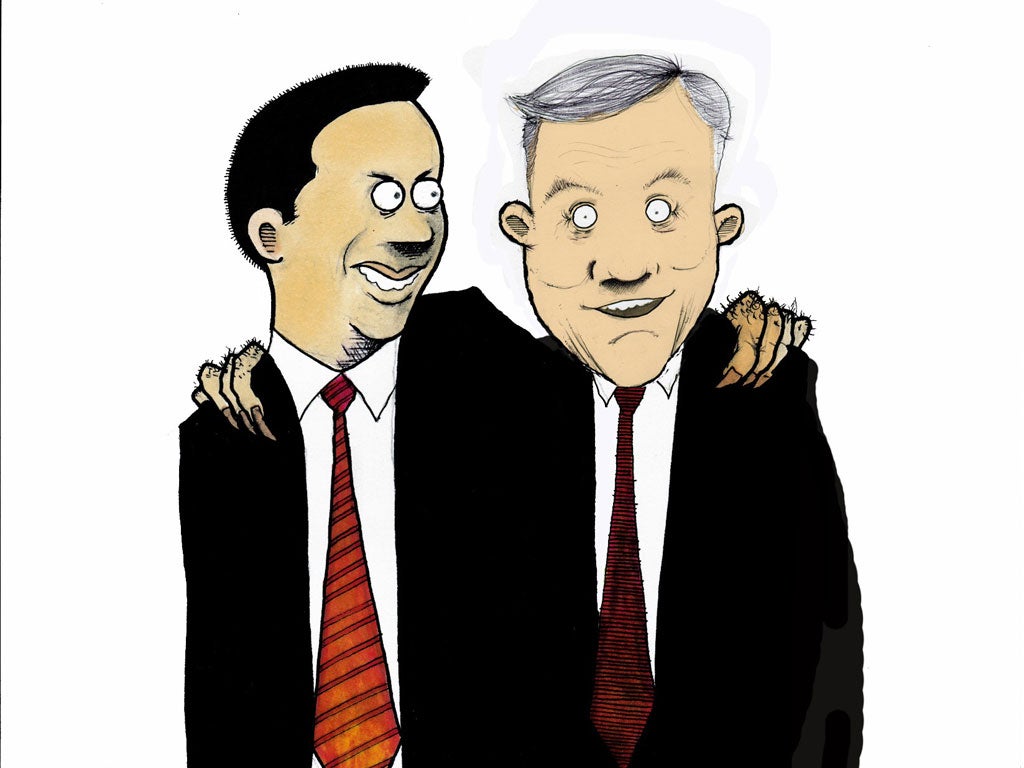
The relationship between Ed Miliband and Ed Balls is the most important in British politics. David Cameron and George Osborne are in power but their relationship is settled and fully formed. As close friends, they have set their course. The more complex and less harmonious relationship between the two Eds evolves with big strategic and policy decisions still to take. If they can make the partnership work, Labour's chances of winning the next election will be high. If they fail to do so, Labour will lose, irrespective of the Coalition's obvious failings.
The media tends to frame the present by what has happened in the immediate past. In the case of Miliband and Balls, the temptation to present the duo as a repeat of the Blair/Brown rivalry is proving irresistible, not least because the parallels are obvious. Like Brown, Balls was the more senior figure when the leadership vacancy arose. Like Blair and Brown, the two Eds are two contrasting personalities.
Miliband is more politically emollient, laid-back and excited by ideas. In the summer of 2011, on the hottest few days of the year, the Labour leader attended a three-day conference on the future of the left of centre in Europe, a shapeless gathering at a windowless hotel in Oslo. I attended, too, and told other journalists that I had great sympathy for Miliband's feeling obliged to come. On the second evening, I had a drink with him during which I had planned to express my sympathy, but his opening gambit to me was: "This conference is such a breath of fresh air." He was loving it in the same way he was authoritatively at ease during yesterday's conference at the Stock Exchange exploring the broad intellectual framework in which Labour would develop its policy ideas.
Although a passionate and committed follower of Keynes, Balls is more excited by the expedient place where ideas and strategy connect with policies. In the leadership contest, he was the only candidate to promote specific policies as a way of making a wider point about values, most famously in his Bloomberg speech on the economy, deeply unfashionable at the time but largely vindicated since. Currently, there are tensions between them over how Miliband's espousal of the need for a new, responsible capitalism will translate into policy in ways that do not appear anti-business or make economic recovery even more challenging.
Unlike Cameron and Osborne, they are not close. When Miliband left the Treasury for a year in the US, he told friends it was to get a break from Balls as much as from Brown. Not surprisingly, given his experience and range, Balls would at some point like to be leader and Prime Minister. Miliband is nervily aware of this and gets worked up when he reads that Balls is the real leader of the Labour Party.
So there are the outlines of a potential collapse of a relationship even before an election is won. For their part, Blair and Brown won three. Yet the parallel is too easy and superficial. It does not stand up to closer scrutiny. The differences between the Blair/Brown relationship and the one between the two Eds are far more marked and significant than the similarities. If I were Cameron and Osborne, I would not count on a major split.
This is partly because they have learnt at first hand the political and personal dangers of intense rivalry. In addition, Miliband beat Balls in a leadership contest, whereas Brown half believed that had he stood against Blair in 1994 he could have won. Balls knows, too, that obsessing about becoming leader would wreck his life and is anyway pointless in that quite often events determine what happens. He has been known to reflect that it is only because Alan Johnson resigned that he finds himself in the job he is amply qualified for, not because he plotted to secure it. And Balls knows that it would be fatal for him to be seen as a plotter given his partly unfair reputation acquired in the Blair/Brown era.
But there are deeper reasons why there will be no repeat of the Blair/Brown rivalry, which to some extent still traumatises the Labour Party. In a way that probably the two of them do not quite accept, they have much in common. Miliband has shown a ruthless agility in detaching himself from the currently unfashionable Brown, but he was as committed to his former boss as Balls was and for the same reasons – a conviction that Blair was moving too far to the right; and a sense that Brown had a more developed and thought-through approach to tax and spend, inequality, and the relationship between markets and state. Whenever I saw them separately when they worked for Brown, both noted – as they reflected on the tensions between Blair and Brown – that "it all comes down to a view of the state, what government can and cannot do".
In theory, Miliband is to the left of Balls in his deeply felt vision of a changed Britain, but he also has a New Labour caution, a hunger to get approval from the largely right-wing media and not to appear anti-business. Conversely, although Balls urges caution in relation to policies for business and public spending, he has been more daring and radical than Miliband has in his Keynesian analysis that Osborne was cutting too far and too fast.
It was Balls who was adamant that under no circumstances should he and Miliband apologise for Labour's spending record in office. Instinctively, Miliband agreed but he worried that dissenting shadow Cabinet ministers might have a point. Balls prevailed and has been proven right. There would be no space for Labour now if it had danced to Osborne's tune when the Chancellor was flavour of the month. It is true that Miliband frets about taking on Balls in their internal discussions, but as leader he can always have the final say. If he defers to Balls, it is because he has concluded that Balls is making the right judgements. But he does not always do so.
In terms of ministerial pasts and proximity to power, the two of them are the most experienced leader of the Opposition and shadow Chancellor for decades. Unlike most such duos, they also have a big chance of winning an election after a single term. Given this benevolent context, they will have only themselves to blame if they give fatal ammunition to malevolent internal briefers who only help Cameron and Osborne, the duo who prove that genuine friendship does not guarantee a smooth political ride.
Join our commenting forum
Join thought-provoking conversations, follow other Independent readers and see their replies
Comments
Bookmark popover
Removed from bookmarks