Tim Lott: There is a solution to class-ridden Britain
Tackling the litany of inequalities highlighted by Alan Milburn last week would benefit the whole country, but still we shun it
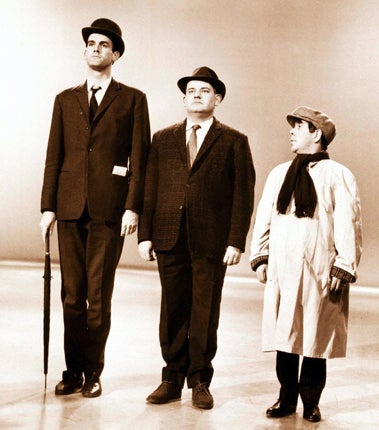
The problems of social mobility highlighted in the all-party report chaired by Alan Milburn last week were genuinely shocking. After 12 years of Labour government, the fact that, for instance, 75 per cent of judges are privately educated, as well as more than 50 per cent of top journalists, when only 7 per cent of the population goes to private schools is a damning picture of inequality in Britain.
The litany of injustice is depressing. The Russell Group of elite universities has only 16 per cent of undergraduates from the poorest economic backgrounds. In contrast, 68 per cent of top barristers went to private schools. Britain is one of the least socially mobile countries in Europe.
Shocking, but no surprise. For a long time, class has been pushed to one side in political debate. Money has been put into improving failing schools – but the idea of excellence, high aspiration and achievement that characterises the best private schools is rarer in the state sector. In short, it is obvious that, on the whole, most kids that go to most private schools get a better education.
Education isn't the only inequality. Any child from a middle-class family will enjoy a huge amount of social capital. Their family will be likely to value education highly. (One of the deep-rooted problems with the working class is that many of them are suspicious of education as simply trying to be "posh".) Crucially, they will be personally connected to other professionals, and will be able to arrange, say, work placements for friends. Furthermore, wealthy families can afford to work for nothing at voluntary internships.
Part of the reason for this continuing underachievement by the Government is that New Labour has had a very particular definition of equality – and one that continues to favours the middle class by default. In September last year, Harriet Harman announced that she was going to press for greater representation of women, ethnic minorities and disabled people at Westminster – a typical box-ticking attitude to "representation". However, she didn't make much of a fuss about the fact that there are only 38 MPs from manual occupations in the Commons – a third of the working population represented by only 6 per cent of MPs.
Political correctness as a substitute for political action is not the only difficulty. There have certainly been improvements over the last generation in state schooling, but they have all too often been about making sure that the most disadvantaged, and possibly thick, kids (yes some kids are thick, in all social classes) are not left behind rather than pushing gifted children to their limit in the way they do in good private schools. Also, deprived children in sink schools can be disruptive and mess up things for kids who want to work hard. Thus there are a lot of very clever kids from poor backgrounds that slip through the net and end up in McJobs.
Realistically, the playing field will never be entirely flat. For a start, there is only a limited number of clever children. And all the gerrymandered university entrances and puffed-up exam results won't change that. Not everyone is, can be, or even wants to be, smart.
However, there is an answer to this problem of continuing inequality. It is simple, and highly effective. It would transform almost overnight a weak public education system into one that would probably be the best in the world. It would save the middle classes a great deal of money, and still retain for them a considerable advantage in the world of work, while enabling the most underprivileged working-class children to succeed. It is a win-win situation. The trouble is, it's taboo.
I'm talking about the abolition of private schools. Such a suggestion is always met with cries of "Jacobin" or "Stalinist". But if we could just put aside our emotional reactions for a moment, the positive consequences would be massive.
First, state schools would improve immeasurably – because the middle classes would have to send their children to them (although a small number might be educated abroad). The schools would be top notch because the middle classes wouldn't be campaigning for better education out of idealism but straightforward self-interest. Also the deadening strictures of the national curriculum could be got rid of – fine for the plebs, but the middle classes wouldn't want to see their children so narrowly and mechanically educated. Second, the middle classes would save themselves tens of thousands of pounds in school fees. Third, middle-class and working-class children would mix, which would erode prejudice on both sides.
For those in the middle classes who would fear losing their privileges under such a system – and that means all of them – plenty of privileges would remain. Connections, wealth and an educated background all represent a major advantage over clever "ordinary" kids and would still do so. Furthermore, the working class would doubtless remain prejudiced against being posh, so the field would still be skewed. The professions would still be packed with the privileged. Just less so. It would, if you like, reduce privilege to a minimum without abolishing it entirely (an impossibility).
Of course this won't happen, because we are not rational in our choices – or about the idea of choice. So the next best thing – in the realms of reality – is remove the absurd charity status from private schools and continue to press them to open up their facilities to state-educated pupils. And above all, push the idea of excellence in state schools rather than just flattening everyone out (an idea that is gaining favour through streaming and gifted-child programmes).
The problem that the Labour Party has is not recognising that intellectual elites really do exist. There is a small number of clever people. But they are not concentrated among the middle classes. They are everywhere, randomly distributed. Thus this is not just a matter of fairness – society will operate far better if all the most able get a chance. And the middle classes will still be on easy street. I'm not sure who came up with the phrase "elitism for everyone". But it's a great political principle, and Labour should waste no time putting it into practice.
Join our commenting forum
Join thought-provoking conversations, follow other Independent readers and see their replies
Comments
Bookmark popover
Removed from bookmarks