The real(ish) science behind horoscopes
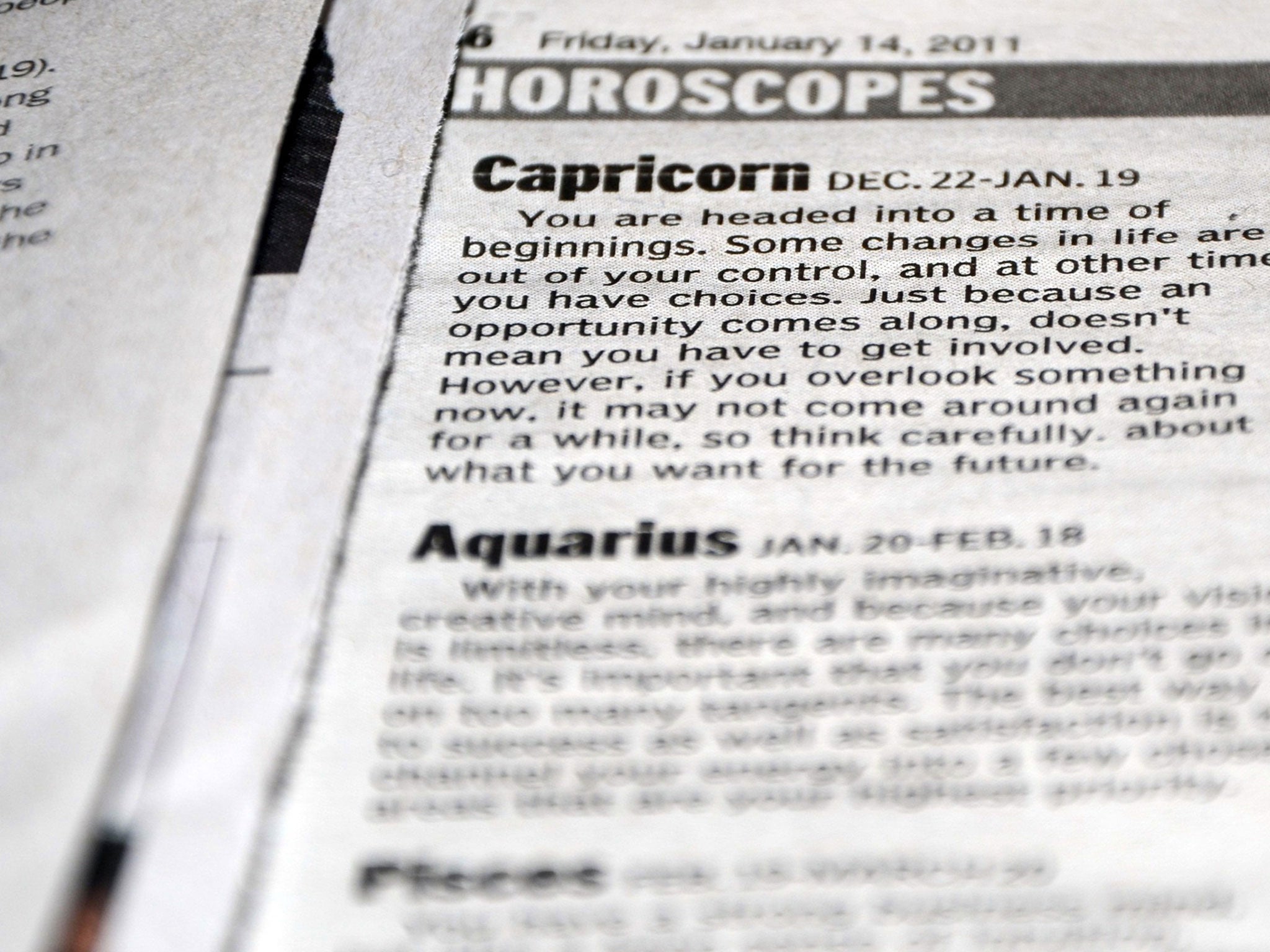
Martha Gill has written a fascinating piece in the New Statesman today, collating the scientific evidence for personality differences based on birth month into a set of alternative horoscopes. And there's plenty more where that came from ...
1. In February 2011, the Bombay High Court ruled that astrology is a science. Government Deputy Drug Controller Dr R Ramakrishna specifically excluded astrology from India's Drugs and Magical Remedies Act (Objectionable Advertisements), 1954 which bans false advertising. He said: "Astrology is a trusted science and is being practised for over 400 years."
2. In the 1950s a scientist called Micel Gauquelin published a study of the "Mars effect" which, he argued, made it more likely that top sports stars would be born when Mars was in certain parts of the sky. His study was widely criticised by his peers.
3. In December 2010, it was reported in the scientific journal Nature Neuroscience that babies born in the summer were more likely to grow up with an optimistic outlook, while winter babies were more likely to suffer depression. Something to do with an exaggerated response to seasonal affective disorder, said Professor Douglas McMahon.
Still not convinced? Typical skeptical Pisces....
Join our commenting forum
Join thought-provoking conversations, follow other Independent readers and see their replies
Comments
Bookmark popover
Removed from bookmarks