Elizabeth Wilbraham, the first lady of architecture
A new book will unveil the extraordinary influence of Britain's earliest female architect on Sir Christopher Wren, says Jay Merrick
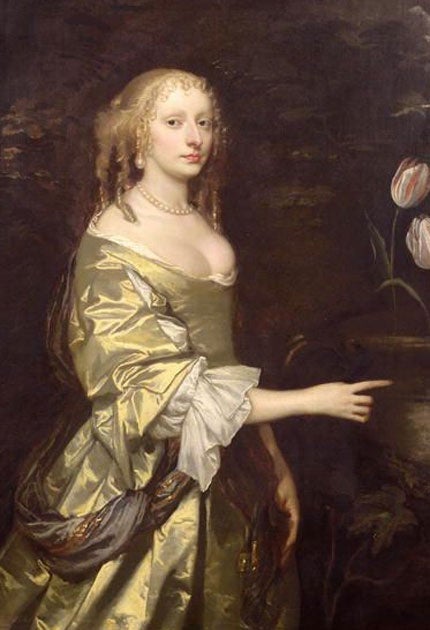
Lady Elizabeth Wilbraham was the first woman architect, and she not only tutored the young genius Christopher Wren, but helped him design 18 of the 52 London churches that were commissioned by him following the Great Fire of London in 1666. This apparently extraordinary claim is due to appear in a book, First Woman Architect, being prepared by the American historian (and ex-Charterhouse public schoolboy) John Millar.
Millar's claims will cause a furore among Wren scholars. "Some," Millar tells me, "have already said I can't be right, simply because they haven't heard of it." Neither, presumably, have Tony and Cherie Blair, who bought the South Pavilion of Wotton House in Buckinghamshire two years ago for £4m – Wotton House being one of Wilbraham's pieces de resistance, according to Millar.
Millar is putting Wilbraham on a pedestal at precisely the moment that British women architects are objecting to being stashed under their professional pedestal: the Royal Institute of British Architects' president-elect, Angela Brady, has launched a campaign to get architectural practices to employ women designers as 50 per cent of their staff; the figure is currently 19 per cent.
But Elizabeth Wilbraham remains a tantalising figure: now you see her, now you don't. She is not mentioned in substantial books about Wren's life and architecture by authors including Paul Jeffrey, Margaret Whinney, Bryan Little, Adrian Tinniswood or, most recently, the slab of research by Lisa Jardine titled On a Grander Scale.
"The Wren connection is problematical, of course," admits Millar. "There is no smoking gun. My book will show what connections there are. Wren had no time to learn architecture until he was 33. Of all the people who could have taught him – and there were very few architects in the UK in the early 1660s – Wilbraham's style is by far the closest to his, based on her documented buildings. The 18 City churches she designed for him share a number of unusual design features with other documented Wilbraham designs – details that don't show up on Wren's other buildings."
In a century when it was inconceivable that any woman should openly pursue a profession, Wilbraham managed to practise architecture more or less secretly, and was centrally involved in the design of up to a dozen houses for her wealthy family. But Millar goes for broke, claiming that she may have strongly influenced the design of 350 others, including 100 buildings that carried the imprint of Wren's style.
Elizabeth Mytton, from an extremely wealthy family, married Thomas Wilbraham in 1651 at the age of 19 – and was, says Millar, already keenly interested in architecture. They embarked on an extended tour of the Netherlands and Italy, where she met the Dutch architect Pieter Post and studied significant buildings.
Millar is on firm ground when referring to Wilbraham's design of grand houses for her family. They include Weston Park, Staffordshire, and the chapel at Woodley, Cheshire. Her involvement in Weston Park is particularly intriguing. Millar notes that unusual architectural details found at Weston Park later appeared in the original Cliveden House in Buckinghamshire; and the floor-plan of Buckingham House – which forms the core of Buckingham Palace – resembles Cliveden's. Furthermore, Buckingham House's construction was surpervised by William Winde, who also built houses for the Wilbrahams.
Elizabeth Wilbraham's social position meant that she could not be seen to be involved in construction, and appointed others to carry out her designs on site. They included men who were considered to be architects – Winde was one – and this is what has veiled Wilbraham's place in architectural history. There seems no doubt that she was effectively an architect, but history simply will not reveal enough detailed evidence to confirm the full extent of her works.
John Millar expects to publish 'First Woman Architect' in 2012
Join our commenting forum
Join thought-provoking conversations, follow other Independent readers and see their replies
Comments
Bookmark popover
Removed from bookmarks