Goering's lost art
Thousands of paintings looted by the Nazi war criminal are at last being documented
As Hitler's right-hand man, Hermann Goering committed some of the most horrific crimes in history. Yet he surrounded himself with beauty, exploiting his power to loot some of the world's most fantastic works of art and using them to to adorn the walls of Carinhall, his country retreat near Berlin.
Now, for the first time, all the paintings have been documented, after a seven-year research project.
Photographs of every painting ever possessed by Goering will be published in April in a book that is expected to become an essential research tool for the world's museums. As well as shedding light on Goering as a historical figure, scholars hope the archive will help in the ongoing battle to return looted art to its rightful owners and their decendants.
The project, by Nancy Yeide, head of curatorial records at the National Gallery of Art in Washington, has already found that Goering amassed around 2,000 looted works of art – at least 700 more than had been previously thought. Ms Yeide scoured wartime archives in the US and Germany, as well as Goering's letters to his dealers and auction catalogues.
"Goering was essentially a black hole," Ms Yeide commented. "No one has ever really looked closely at the collection and tried to reconstruct everything that was ever in it. That has been my goal."
When the Allies closed in on Germany at the end of the Second World War, Goering, who had enriched himself during the Nazi regime by diverting government contracts to his own companies, loaded his art collection into a fleet of private trains and moved it deep into Bavaria, and then to the Austrian border.
It was too late, however. The trains were intercepted by the Allies, sent to Munich and the contents inventoried. Goering was caught in Bavaria, and committed suicide the day before he was due to be hanged for crimes against humanity following the Nuremberg trials in 1946.
Ms Yeide has discovered that the 1945 inventory was far from complete. In the chaotic aftermath of the war, some of the paintings had been left behind and other works had been swapped or bargained away for other more valuable – or less "degenerate" – paintings.
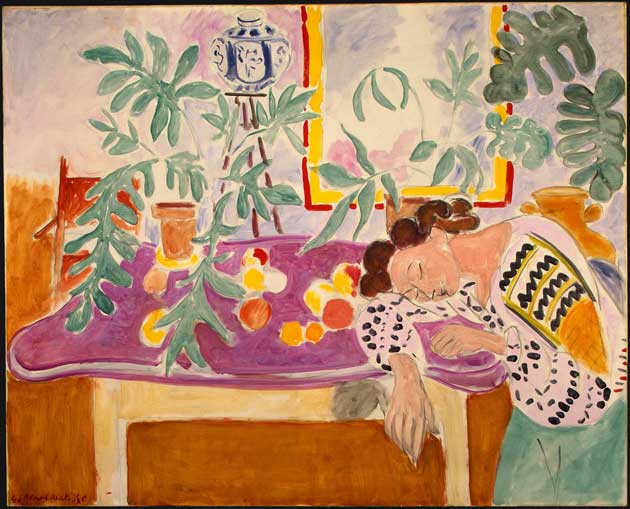
She established that two works stolen by Goering – Matisse's Still Life with Sleeping Woman and Pianist and Checker Players – were traded for Reclining Nude with Cupid by a minor 17th-century Dutch painter called Jan Van Neck. "There were a disproportionate number of nudes in Goering's collection," she added. Both Matisse works, originally looted from the Paris dealer Paul Rosenberg, are now owned legitimately by the National Gallery of Art in Washington.
Other works Goering traded away were, famously, Van Gogh's Portrait of Dr Gachet, which has disappeared since it was auctioned in Tokyo in 1990 for a then record $82.5m, and Degas's Madame Camus, now legitimately in a Zurich art foundation.
The book's publisher, Robert Edsel, an author himself and expert in looted artworks, said the book would be of interest to historians and ordinary readers as well as to art experts. "There have been lots of books about Goering, but this is the first time as far as we know that someone has done this. It will help historians understand whether Goering was a Renaissance
man, as he liked to aggrandise himself, a great collector, or whether he was a buffoon.
"Nancy has been digging and digging," he added. "There are still families looking for stolen art. It is a very timely book. When works surface – which they will do – this book will be an invaluable tool."
'Beyond the Dreams of Avarice: The Hermann Goering Collection' is published by Laurel Publishing in April
Join our commenting forum
Join thought-provoking conversations, follow other Independent readers and see their replies
Comments
Bookmark popover
Removed from bookmarks