Little Sun: Art created to improve lives by Olafur Eliasson
Danish artist will plunge Tate Modern into darkness for his latest piece
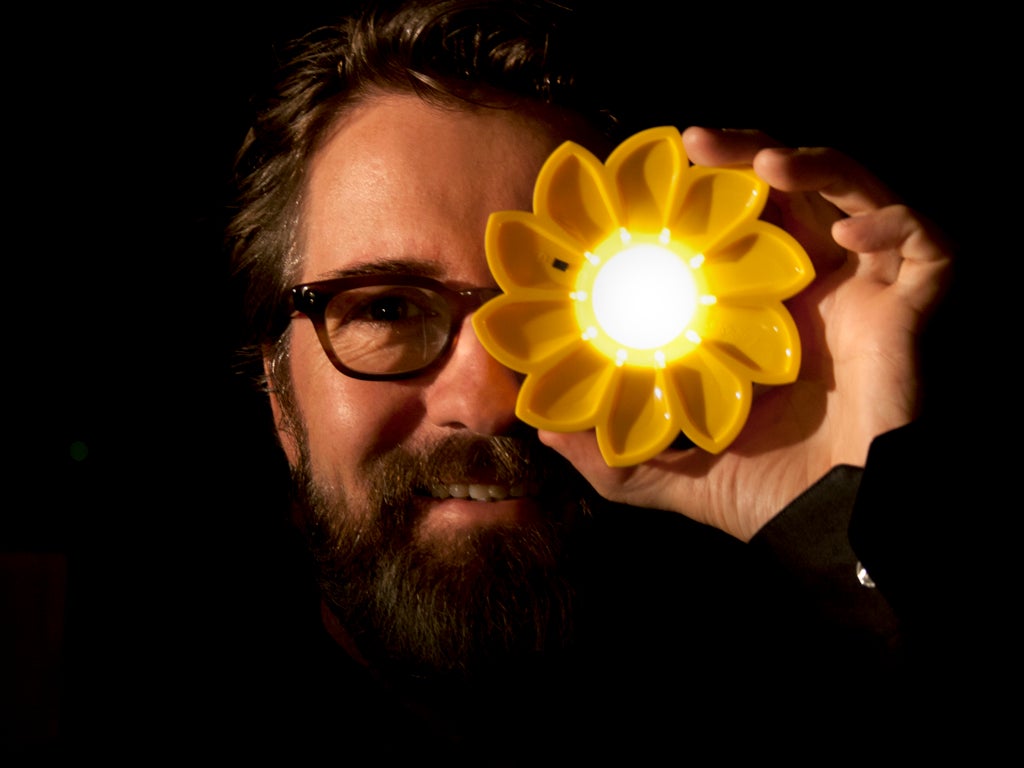
Olafur Eliasson has unveiled a new work that is intended to black out the Tate Modern yet bring light to the lives of millions living without access to mains electricity around the world.
The Nordic artist also used yesterday's launch event to speak out against the media treatment that had prompted him to drop an earlier part of the project saying several papers had "gone after" the work.
The new work Little Sun, backed by the Tate and part of the London 2012 Festival, comprises solar powered lamps shaped like sunflowers. The artist, who is perhaps known for bringing a big sun to the gallery's Turbine Hall in 2003, described the new project as “a work of art that works in life”.
The Tate Modern will switch off the lights in its Surrealist galleries for several hours every Saturday during the festival and invite viewers to look at the works using the lamps. The events will also include a seminar and 16 short films by filmmakers from off-grid areas around the world.
Little Sun was developed with engineer Frederik Ottesen in a bid to create art that could also improve lives. Eliasson said that said 1.6bn people around the world currently live without mains electricity. After five hours of charging in the sun, the lamp can produce light for five hours.
Eliasson believes this could bring light to people who rely on expensive and hazardous kerosene lamps, allowing them to work, cut living costs and improve their quality of life. "Little Sun is a small work of art with a large reach," he said.
The project hit the headlines earlier this year after one part, which focused on recording people breathing, sparked hostility in some areas of the media and spooked its backers.
Mr Eliasson said yesterday that the furore had prompted him to drop Take a Deep Breath, and stressed that it had been his decision. He said: “The Murdoch papers went after that part of it and I decided not to go ahead with it.”
“We went through different stages of the project and I pushed it a lot. It was a good collaboration,” he said, adding: “At the time, I decided not to speak out.”
As well as benefit millions of families, Eliasson hopes it will also help local entrepreneurs who can sell the lamps. He and Ottesen are looking to sell 400,000 lamps in the short term, and predicted sales could hit 1 million in 2013.
When asked why he launched the project at the Tate rather than at a store such as Ikea he said the gallery “is my playground. This is where I come from and the language I speak. I think of it as being a work of art.” He did not exclude commercial partnerships for selling the work, however.
Eliasson said: “Art does drive social change. Obviously this project has a specific social component, but in every room in this gallery you’ll find works addressing social questions.”
Yet he called on the establishment to involve itself more in social change. “The art world sometimes lives in a closed off environment called art institutions. Even though some are reaching out there is still a lot of work to do to show that art can deal with social issues very directly.”
The lamps are solar powered and after charging produce light for five hours. He hopes to set up a series of partnerships with local entrepreneurs who can sell the lamps.
In 2003, the Danish-Icelandic artist drew 2 million people to The weather project, the installation where the focal point was a giant sun in Tate Modern’s Turbine Hall.
The blackouts at the Tate are intended to echo the 1938 International Surrealist Exhibition at the Galerie des Beaux-Arts in Paris, where photographer Man Ray supplied visitors with torches to explore the gallery.
Join our commenting forum
Join thought-provoking conversations, follow other Independent readers and see their replies
Comments