Sculpture deemed too complex for Africa could be real after all
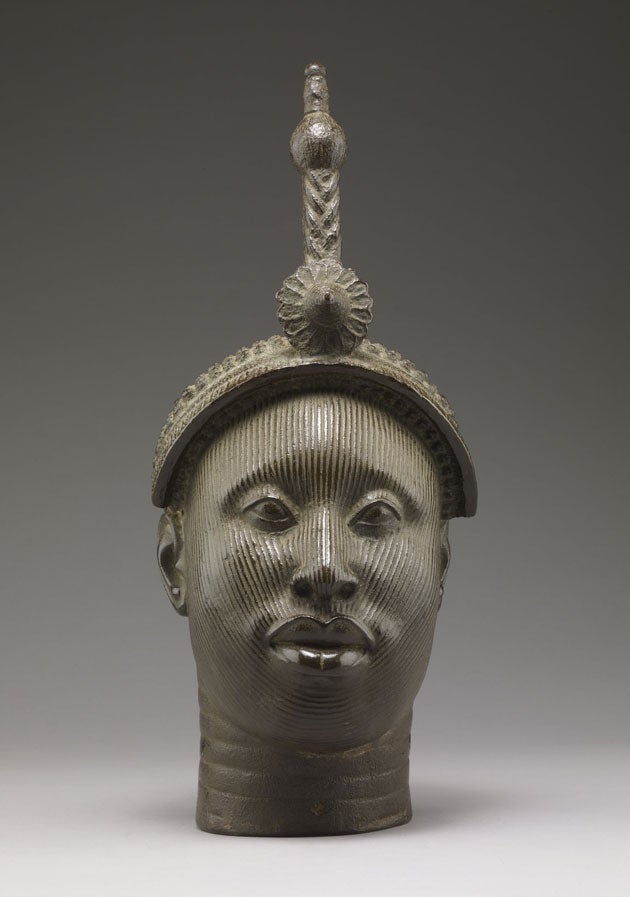
Ever since a pure copper sculpture was found buried in a palm grove near the Nigerian city of Ife, experts from the West have argued that the artefact was a fake that was too sophisticated to have been created by African hands.
Found in 1910, the "Olokun head" left Western curators doubting that such a technically advanced work of art could have been created by indigenous people. Years later, they even began to doubt its authenticity, claiming that the original had been sold illegally and the one which remained in Nigeria was an ingenious copy. But now, new science is set to turn past wisdom on its head. There is a growing belief among contemporary curators that the "counterfeit" sculpture is the real thing, according to The Art Newspaper.
When it first travelled to the British Museum in 1948, it was exhibited as a copy; scholars claimed it was made from a blend of ancient materials that had been melted down, while the real work of art was thought to have been smuggled out of Africa by a European or American collector. The artwork, now on its second visit to the British Museum, where it is currently displayed – again as a "replica" – will undergo a thorough scientific investigation next month to establish the truth, once and for all.
Nigel Barley, a former British Museum curator who briefly examined the head in January, believes it may well be the original. Enid Schildkrout, from New York's Museum for African Art and curator of the current exhibition at the British Museum, agrees. If, she said, the real treasure had in fact been stolen, "it is surprising that the original has never reappeared".
It was first found by Leo Frobenius, a German anthropologist who had heard rumblings of a buried sculpture in a palm grove, just outside Ife, near a shrine dedicated to the goddess of the sea, Olokun. He organised a dig to investigate, and found the artwork.
Some days later, the colonial administration seized the sculpture on the grounds that it was sacred and should be returned to its original site, before it was transferred to the Ife Museum. One theory that emerged was that Frobenius commissioned a replica when he was instructed to hand over the artefact, and smuggled the original out of the country.
At the time of discovery, the head was considered too great a masterpiece to have been created by indigenous African artists – a reflection of prevailing attitudes of the early 20th century. Some Europeans even theorised that the work was a remnant from the lost city of Atlantis. A spokeswoman for the British Museum said when the head travelled to the West, it caused a huge stir because "it flew in the face of Western perceptions" (of African heritage and cultural achievements).
It is now accepted by the curatorial community that the advanced artistic techniques used to create the sculpture were "more advanced than those of Renaissance Italy, and comparable to those of [the artist] Donatello".
Such sculptures, discovered in Nigeria and neighbouring Benin, were sold on the open market for under £100, in some instances, during the 1950s. This particular work was surrounded by various myths and beliefs, but it was not actually examined until 1948, when it left Nigeria and specialists at the British Museum declared it was a replica.
Since then, curators have cast doubt over the idea that Frobenius organised the deceit, not least because it is highly unlikely that such a complicated replica – which was found to be made from authentically ancient materials – could have been made in such a short space of time.
Join our commenting forum
Join thought-provoking conversations, follow other Independent readers and see their replies
Comments