Tate rebuilds installation that left the biggest impression
Gallery's first interactive exhibit – which gave art lovers splinters – is to return after 38 years
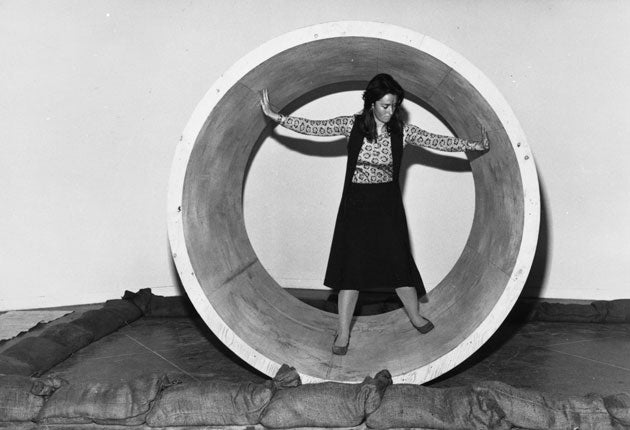
When Robert Morris unveiled the first interactive artwork to be installed at Tate Gallery (now Tate Britain) in 1971, he was convinced that the British public would be too prim to engage with the "rough and tumble" of his piece.
He couldn't have been more wrong. A flood of 2,500 people turned up and participated with such vigour in climbing walls, carrying bricks, balancing on wooden logs and travelling through tunnels that many were injured.
In short, the British public proved they were not nearly as proper as the American artist had supposed. The response to the show was described as "pandemonium" in the press a few days later. Women got splinters stuck in their bottoms from sliding on the rough plywood surfaces and others, utterly "intoxicated" by the work, were "jumping and screaming" around the Tate's Duveen Sculpture Galleries.
The exhibition's keeper, Michael Compton, complained that the public had gone "berserk on the giant see-saws" and "loosened the boards on other exhibits by trampling on them".
Nearly 40 years on, Tate Modern is planning to test the British public once again by recreating Morris's installation in its entirety, this time in the Turbine Hall. Granted, people have had four decades to get accustomed to the thrills of interactive art, including Carsten Höller's slides in the Turbine Hall in 2006 which proved to be one of the gallery's most popular shows, but the Tate is taking no chances this time round.
Health and safety signs will be placed prominently, staff members will be advising visitors on how best to interact with the pieces and all the works will be made with contemporary materials rather than the raw, unfinished wood that Morris used in 1971.
The installation will be brought back in collaboration with Morris for the gallery's annual celebration, UBS Openings: The Long Weekend, from 22 May, and will invite the public to climb, balance and slide around a series of architectural and sculptural pieces. The installation will sit on the east side of the 50m-long hall, exactly recreating the original configuration.
Morris said the piece, called Bodyspacemotionthings, would give people an opportunity to become "more aware of themselves and their own experience rather than more aware of some version of my experience".
The artist first came to public attention in the 1960s when he was closely associated with Minimalism and developed an interest in the viewer's experience of his art. Conservative critics swiftly dismissed Morris's conceptual work as "disconcertingly superficial" and, after the premature closure of the Tate show, said his artwork left no lasting impression (although the women with splinters may have disagreed). During the late 1960s, his work became ever larger. He created the Robert Morris Observatory in the Netherlands, a "modern Stonehenge" which identifies the solstices and the equinoxes.
Kathy Noble, the assistant curator of the recreated installation, said the unforeseen response to the 1971 show lay partly in its novelty factor. This was the first fully interactive show that Tate had ever staged and audiences responded with enthusiasm. "It was a landmark moment in Tate's history. The idea was to encourage viewers to become more aware of their own physicality. Contemporary audiences have changed, so will have very different expectations to those of 1971," she said.
The four-day exhibition is part of a partnership between Tate and UBS. Last year's Long Weekend attracted 100,000 visitors.
Join our commenting forum
Join thought-provoking conversations, follow other Independent readers and see their replies
Comments
Bookmark popover
Removed from bookmarks