Sargent and the Sea, Royal Academy of Arts, London
Shore signs of a fish out of water
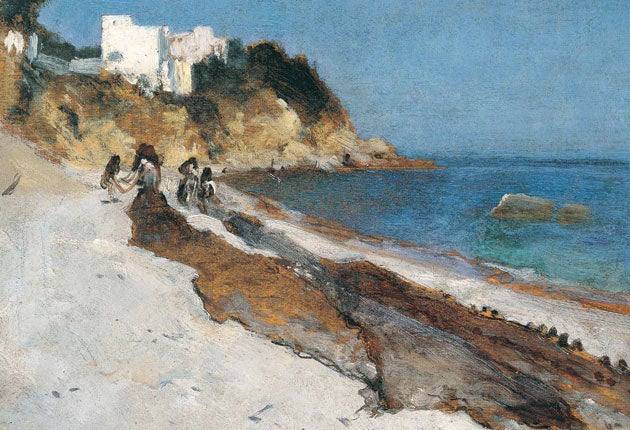
The sea is no longer a fashionable subject for young painters. Nor is the subject particularly saleable. When did you last see a seascape in a group show of work by young artists? When did you last see an easel on Eastbourne beach?
In the last quarter of the 19th century, things were quite otherwise. From about 1860 onwards, sea fever gripped many French painters – the new rail route from Paris made the seaside a fashionable venue for the well-heeled. The painters followed. The sea became a fashionable context for aristocratic clowning in over-heavy frocks. The Impressionists were besotted by the sea for its own sake, because it was so protean. It made light dance. From the point of view of colour, it never stopped changing into something else. It was such a near impossible challenge, imaginatively and technically.
In 1874 the young John Singer Sargent, the 18-year-old, Florence-born son of rich, ex-pat Americans who believed in the inexhaustible marvellousness of the Old World, made his first paintings of the sea off the coast of northern France, and this new show at the Royal Academy shows him trying to get to grips with this subject matter, on and off – in France and Italy – over a period of about a quarter of a century. Generally speaking, it is not a success story. Sargent hugely admired Turner, but he could not paint like him – his sketched copy of a Turner in this show is nothing more than slavish. Turner, unlike Sargent, couldn't paint people. They should have shared their talents.
In spite of the fact that the young Sargent was painting at the same time as the Impressionists, he did not seem to profit by their example. Perhaps he didn't even see their work. They were not well known in those days. His paintings of the sea, from first to last, are rather grey and leaden and slow-moving. He looks as if he is laboring over these waters, that they are forever trickling through his fingers. There is almost nothing which is light and fresh here. What is more, he seems not to know quite how to do it. He keeps on changing his mind. The elemental is simply not his bag.
In Filet et Barque, he pocks and dabs and dibbles around, sometimes using long strokes, sometimes short. There is no consistency here. Perhaps he was dreaming about several different seas simultaneously as he bothered his way across the surface of the canvas. The mood of the show is not helped by the grey walls, which close the paintings in on each other. Or, indeed, by the rather tepid endorsements of the works in the quotations and descriptive panels. There is no real sense of expansiveness here, no feeling that Sargent is positively exhilarated by his subject matter.
Until he includes people. Once that happens, his palette lightens, and things begin to feel fresh and breezily captured on the wing. Look, for example, at the gallery devoted to the time he spent at Cancale. The figure painting is fresh and good. He knows how one bedizened human being works in relation to another. Solid ground at last!
To 26 September (020 7300 8000)
Join our commenting forum
Join thought-provoking conversations, follow other Independent readers and see their replies
Comments