Victoria & Albert: Art & Love, The Queen’s Gallery, Buckingham Palace
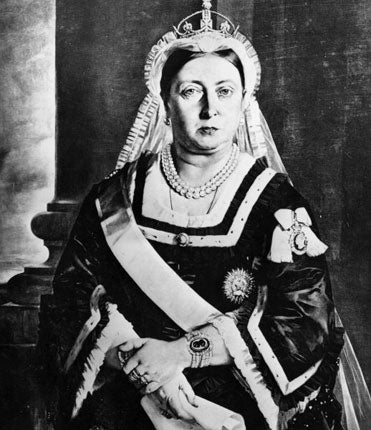
Those with a low tolerance for vulgarity may notice the following before they pass out on the marble floor: a sofa fashioned from antlers, hooves and teeth; an emerald-handled walking stick; an ivory throne with ruby-eyed tiger-faced hand rests. MTV Cribs has come to Buckingham Palace, and the surprise is that the collected bling of Queen Victoria and her Prince Consort tells the story of their marriage with breathtaking clarity. If you can bear to look, that is.
All the exhibits were commissioned by, or presented to, the royal couple. Many were gifts exchanged between them. Through these objects you can read two romantic narratives: one about the relationship between Victoria and Albert, one about the state over which they ruled. For Victoria’s birthday in 1843, Albert produced 12 gilt-bronze statuettes of Ludwig the Rich, Frederick the Wise and 10 other former rulers of Bavaria – a reminder of his own chivalric heritage. In 1857 Victoria presented Albert with a silver model of Lady Godiva – a nude on horseback. The gesture was diplomatic as well as erotic. Godiva is a symbol of English liberty offered to a German prince who was searching for a place in the affections of his adopted country. Each birthday and Christmas, Victoria and Albert added to the iconography of the nation and their marriage, and made them indistinguishable. Nothing in the Queen’s Gallery disrupts this story: it is as if the subjects of the show have curated these rooms from beyond the grave.
Some exhibits do not glitter: a watercolour of Manchester, in which the smokestacks of the industrial revolution are depicted as if they were the spires of Oxford or the towers of Florence; a Lucretia by Cranach the Elder, the blade of a stiletto pressing at her exposed chest; a cluster of medieval devotional paintings. But it is the gaudy and the polychromatic and the gilded that dominate.
I was stopped in my tracks by a table decoration commissioned by Victoria in 1853. Actually, table decoration is too colourless a term. This is a Tracy Island of crumpled gold, fringed with burnished palm trees and silver flamingos, above which rear a dog, three Arab stallions (one rampant), and two human figures in Moorish costume. But these elements are only a decorative flourish on the main attraction – a thick architectural phallus of honeycombed silver and sky-blue enamel, modelled on the Patio de los Leones at the Alhambra Palace in Granada.
As an eccentric efflorescence of regal vulgarity, it is gobsmacking. But this object also had a party trick. It was designed to amuse royal dinner guests by spouting a stream of water, creating the illusion that the horses were about to drink at a desert oasis. Victoria, apparently, had the thing glugging with eau de cologne. If it blew smoke rings and played the Trumpet Voluntary, it could scarcely be more outrageous.
The 19th century is popularly regarded as an era of restraint and repression. An object such as the Alhambra table fountain is glorious proof of the opposite. Modernism discouraged the production of these works by making a preference for whiteness and simplicity seem as much a moral as an aesthetic choice. But it didn’t persuade everyone. Bloomsbury and Ikea and Prince Charles may have rejected the brazen exuberance of Victoria and Albert, but it lives on in the pages of the Argos catalogue, on the screens of QVC and in the bedroom of Jay-Z and Beyoncé. Right now, at Buck House, in this shamelessly pleasurable exhibition, you can see its founding treasures: the personal effects of a couple – and a culture – liberated from the dreary tyranny of good taste.
Until 31 Oct (020 -7766 7301)
Join our commenting forum
Join thought-provoking conversations, follow other Independent readers and see their replies
Comments