Arifa Akbar: Why always write in a room of one's own?
The Week In Books
Are writers born or do they emerge after a year of being 'workshopped' on a creative writing course? There is evidence either way Dickens didn't sit through an MA in the fens, yet the starry alumni graduating from Iowa's Writers' Worshop and the University of East Anglia's Creative Writing MA hint at the fact that writing fiction is not a given birthright, but a learned art.
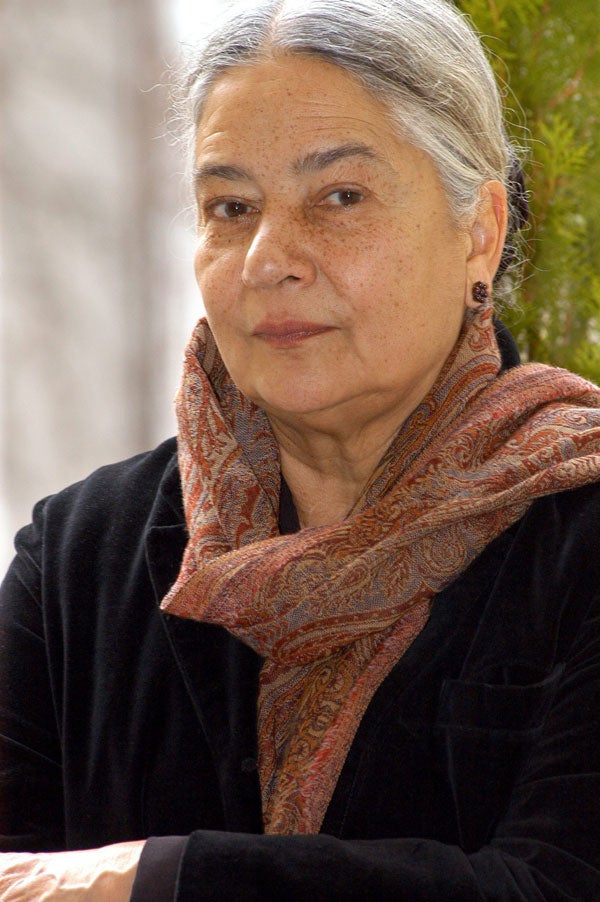
Anita Desai, the acclaimed Indian author and Professor Emeritus of creative writing at MIT, reignited the debate this week when, speaking alongside her daughter, Kiran Desai, she suggested creative writing courses ultimately distract writers from finding their own voices. What is needed is peace and quiet for the alchemical process of storytelling to take place. "Even though I have taught creative writing programmes, they are awful," said Desai. "You have to withdraw into a world you have invented and be alone while you are inventing it. Once you have closed yourself into an inner world, you are truly free. There is no influence, there is no pressure. It's important to say I'm not listening to anyone else..."
The Desais made a charming appearance in London to discuss the various forces that formed their writing careers, and to mark the 25th anniversary of Wasafiri magazine of international contemporary writing. But however beguiling an argument Desai puts forward, most will agree that mother and daughter are - enviably - natural born writers. Desai Elder published her first book aged 26 and continued to write while raising four children, while Desai Younger initially signed up to study sciences at Bennington in Vermont, before tutors spotted her natural aptitude for writing. She went on to become the youngest woman to claim the Booker prize.
Of course, Desai acknowledged that her views were partly born from cultural difference: creative writing programmes were "unheard of in India" when she took Kiran, aged 15, to study in America. There is, comparatively, a lack of romance to the writers who learn their art in a classroom but perhaps it is the last bastion of artistic snobbery to expect ordinary mortals to know how to write fiction without learning it as a formal discipline.
Skye Sherwin, 32, a freelance arts writer doing a creative writing course at Birkbeck, said "In the artworld, it would be almost unheard of for an artist not to have gone through art school, so it didn't seem so outlandish to me that workshops and lectures could enable people writing fiction."
When Ian McEwan signed up for a creative writing course at UEA in 1970, he was the only person on it. Nearly two decades later, when Kazuo Ishiguro won the Booker prize, there was an almighty explosion of applicants to courses across the country. Our appetite has only grown since then. Today, 300 hopefuls battle it out for 24 places at UEA. Andrew Cowan, its course director, said Desai had voiced an ambiguity felt by every writer who was also a teacher of creative writing. But what these courses can do, he said, is to 'ready' a writer for the long years of 'solitary invention' ahead. "We have had writers here who have gone on to win prizes. They were with us for one year, and they didn't write their prize winning books in that year. What students are getting is a schooling in how to be their own best critic." Tracy Chevalier, the acclaimed novelist and UEA alumna, said the course was helpful but "not in the actual mechanics of writing a better sentence."
And it's a myth that writers worked entirely in isolation. she added. "Without an editor, you might think 'I've written the best sentence ever'. It's a rare writer who can't do without outside influence." Yet, she draws a distinction between a good course and a good writer. "A course will only take you so far. The rest of it is down to the spark that certain people have, and other people don't. Courses can't give you that spark."
P.S.Philip Kerr, the Scottish writer who recently won an RBA crime fiction prize for the last of the 'Berlin Noir' series, If the Dead Rise Not, said he returned to the theme of the 1936 Berlin Olympics (central in his debut work, March Violets), because "I hate the Olympic games". He considers his win to be one in the eye for the 2012 Games. Speaking about the novel, he said: "I thought I had unfinished business...When I started doing research into the Olympics, I discovered how much we owe to the Nazis. The running of the Torch from Athens was invented by Goebbels. The thing always reminds me of the Nazis: the huge amphitheatre, people walking in with socking great flags pretending to be friends but not, three weeks running around glorifying a few athletes for billions of pounds." Facism or rather harmless sporting event? Take your pick.
a.akbar@independent.co.uk
Join our commenting forum
Join thought-provoking conversations, follow other Independent readers and see their replies
Comments
Bookmark popover
Removed from bookmarks