Oops, we did it again - Why we make mistakes
Why do we make stupid mistakes? A new book says people have design faults that inevitably lead to slip-ups – but we can train ourselves to avoid them.
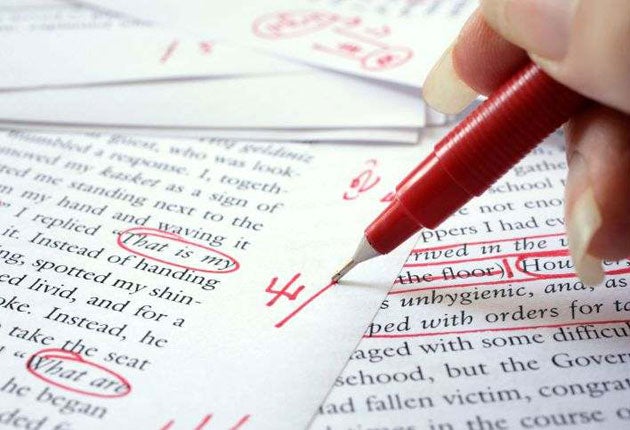
We all make mistakes." That truism is usually meant kindly, but being on the receiving end of it can be downright frustrating. Try as we might, we repeat the same simple, preventable errors every day.
Joseph T Hallinan, an American Pulitzer Prize-winning journalist, thinks he knows why – humans are pre-programmed to make blunders. His book, Why We Make Mistakes, attracted winning reviews on its publication last month, with one critic predicting that it would change the face of mainstream behavioural science. Subtitled "How We Look Without Seeing, Forget Things in Seconds, and Are All Pretty Sure We Are Way Above Average", Hallinan's book is, according to its author, "a field guide to human error. People can look at it and see the mistakes they make, and find some of the reasons behind those mistakes."
The examples he uses are mostly of the forehead-slapping, Homer Simpson variety: why do names and facts escape us at crucial moments, such as in interviews? Why do we forget computer passwords, fall for optical illusions, and stash jewellery in a "safe" place when we go on holiday, only to forget which spice jar holds our rocks?
It's down to human design, not personality or intelligence, Hallinan argues. The very way we think, see and remember sets us up for mistakes. We are subconsciously biased, quick to judge by appearances and overconfident of our own abilities. Most of us believe we are above average at everything – a statistical impossibility that leads to slip-ups.
The former Wall Street Journal reporter began to shape his theory while researching a story on anaesthetists, who, it turns out, have a terrible safety record. Hallinan describes how their statistics were vastly improved by simple change to their equipment that cancelled out human error; the introduction of a valve that could only turn one way to deliver anaesthetic to a patient.
Taking examples from aviation, consumer behaviour, geography and football, Hallinan fuses economics, neuroscience and psychology, an approach that owes an obvious debt to Malcolm Gladwell (The Tipping Point, Blink and Outliers), and Steven Levitt and Stephen Dubner (Freakonomics). When his book is published in the UK this summer, it will be titled Errornomics, a nod to Levitt and Dubner.
All these books use economics and sociology to explain events considered out of our control. The preferred methodology is to then deconstruct common perceptions, revealing human behaviour to be structured and predictable. But Hallinan's book offers the possibility of decoding all that is wrong with our lives, righting the wrongs and scheming to rule the world. He offers solutions. After all, the best way to avoid making mistakes, he says, is to understand why we make them.
So is this just self-help cloaked in statistical analysis and sociology? "I guess [that] depends on your view of self-help and whether you think it's a good or a bad thing," Hallinan says. "I could see how they could fit there, because there's a need in a lot of people to try to help themselves navigate through life, and my book and Freakonomics and Outliers help people navigate through life."
Hallinan went beyond sociology and economics and important nuggets in the areas of marketing and even ophthalmology. "Personally," he says, "one of the most surprising things I learnt was how bad our vision is and how many tricks our eyes play on us." In one Cornell University experiment he cites, subjects were asked to seek directions from a stranger, but a pair of actors carrying a door would pass between the two conversants in the middle of the exchange. As the door passed, the person giving directions would swap with someone else – and their interlocutor rarely noticed that they finished the conversation with a different person.
Even Hallinan is vulnerable to the avoidable mis-step. A reader of his website recently pointed out an inaccuracy missed by the author and his editors. "It was a mistake we cite in the book," Hallinan says. "And a classic proofreaders' error – a dropped word in a sentence. I didn't notice it, my editors didn't notice it, and nobody else looking at the website noticed it, but one reader in Ohio did. The reason this one reader succeeded where others failed is that he is a slow reader and reads word by word, rather than scanning pages as most of us do."
What was the dropped word? "Make," Hallinan says. "The sentence should have read, 'Why do we make mistakes?' A crucial error, in this case."
Join our commenting forum
Join thought-provoking conversations, follow other Independent readers and see their replies
Comments
Bookmark popover
Removed from bookmarks