Steph Swainston: 'I need to return to reality'
Fantasy author Steph Swainston tells David Barnett why she is giving up her day job
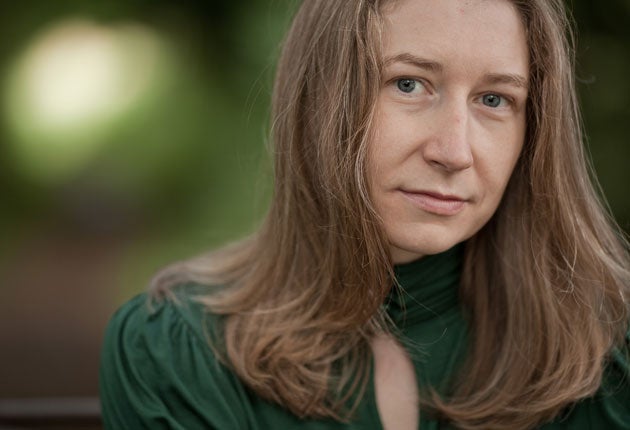
The critically acclaimed novelist Steph Swainston has a dream: to be a chemistry teacher. Yes, you read that correctly.
While there are doubtless many teachers spending their summers writing novels, with an eye on escaping the lesson plans and daily commute, Swainston has been there, done that, and had enough. And now she's throwing in the towel to retrain as an A-level chemistry teacher.
It's a move that will surprise her fans. And she has a lot of those, having had four novels published in a genre – fantasy – that typically generates a vocal and faithful audience. But it's also a move that has surprised her publishers, Gollancz. Swainston decided partway through a two-book deal that she didn't want to carry on, and has instructed her agent to negotiate her way out of the contract. The advice to those dreaming of packing in the nine-to-five to write books, it seems, is be careful what you wish for.
"There's just too much stress on authors," says the 37-year-old Swainston. She lives near Reading now, but grew up in West Yorkshire and she hasn't lost her gentle accent. "The business model seems to be that publishers want a book a year. I wanted to spend time on my novels, but that isn't economically viable."
Perhaps the gestation period of Swainston's first novel in her Castle cycle, The Year of Our War, spoiled her. It was published in 2004 but she had been concocting stories about its imaginary world, the Fourlands, since childhood.
Filtered through the years of adulthood, Swainston's stories resonated with a market that was eager to embrace something different in the genre. The buzz at the time was about "the new weird", exemplified by China Miéville's novels and utilising the recognisable building blocks of fantasy, such as cod-mediaeval settings and non-human races, but with the sensibilities of contemporary fiction, an experimentalism in form and style, perhaps even a certain radicalism.
So while the Fourlands, on the face of it, might look a wee bit like Middle Earth, and Swainston's winged hero Jant can fly, he also has a nasty little drug habit, wears T-shirts, and reads sports reports in the newspaper.
The Year of Our War and its sequels in the Castle series, No Present Like Time and The Modern World, earned sparkling reviews and the thumbs-up from celebrity fans ranging from the aforementioned Miéville to Duran Duran's Simon Le Bon.
But – cautionary tale alert! – the writer's life isn't what it could be. For starters, packing in the day job can be a mistake. Swainston says: "Writers have to have something as well as writing, something which feeds back into their work and makes it meaningful." She references the 19th-century Scottish writer and reformer Samuel Smiles. "He said that if you are going to be an artist, you should have a job as well, so that you're not relying on your art to pay your bills. If we don't have external influences ..." she pauses, "well, look at Stephen King. All his characters seem to be writers."
Then there's the lack of human interaction: "I suffer terribly from isolation while writing. I really need a job where I can be around people and learn to speak again. It's much, much healthier to be around people. Human beings are social animals."
And then there are the fans. I first met Swainston at the World Science Fiction Convention in Glasgow in 2005, when her star was ascendant. She was on a panel discussing the influence of drugs on the genre. (She was speaking from some experience, having once worked for a pharmaceutical company developing medicines from cannabis.) Afterwards, when I spoke to her, she seemed harassed, impatient. She felt that no one was really listening or engaging; that the fans simply wanted to outdo one other with namechecks of books and authors.
"I don't have a problem with fandom," she says. "But I don't think fans realise the pressure they put on authors. The very vocal ones can change an author's next book, even an author's career, by what they say on the internet. And writers are expected to engage and respond." She pauses. "The internet is poison to authors."
Swainston is also unhappy with the "book a year" ethos of modern publishing: "Publishers seem to want to compete with faster forms of media, but the fast turnover leads to poorer books, and publishers shoot themselves in the foot. And it's as if authors have to be celebrities these days. It's expected that authors do loads of self-publicity – Facebook, Twitter, blogs, forum discussions – but it's an author's job to write a book, not do the marketing. Just like celebrities don't make good authors, authors don't really make good celebrities."
All of which, in a roundabout way, is why she's decided to stop. It isn't as if her career's on the wane; the fourth Castle book, Above the Snowline, was published to acclaim, the Finnish edition of The Year of Our War was recently shortlisted for the Tähtifantasia Award for best translated fantasy book, and Swainston is to be a guest of honour at the 2012 Eastercon SF/Fantasy convention, a commitment she's honouring despite withdrawing from the genre.
She says: "I have to get back to real life again. It wasn't an easy decision, because it took a lot to get to the stage of being a published author. But during my teacher training so far, I've dealt with so much – flooded schools, fire alarms going off, children being sick ..." And, after living in her own fantasy worlds for so long, it's this seeming mundanity that Swainston craves. That and "doing something meaningful with my life". But won't she miss the writing? "Chemistry feeds that sense of wonder that made me want to be a writer in the first place," she says. "Besides, I've never said I won't write again, just that if I do write another book, I'll do it on my terms."
UPDATE: Following a temporary spell as a chemistry teacher, Steph has now returned to her primary interest of writing and researching.
From 'The Modern World' (2007) By Steph Swainston (Gollancz, £7.99)
"... From birds I learnt the trick is not to flap all the time but glide as much as possible to save effort. It's a game of wits for me, though. When I was on drugs, I took the overfamiliar countryside for granted; flying around in a daze, delivering letters or failing to. No longer – I was seeing it with new eyes, full of gladness that I'm clean at last."
Join our commenting forum
Join thought-provoking conversations, follow other Independent readers and see their replies
Comments
Bookmark popover
Removed from bookmarks