War and peace...the American version
Only after she'd finished her new novel did Ellen Feldman realise she'd been exploring her own family's history
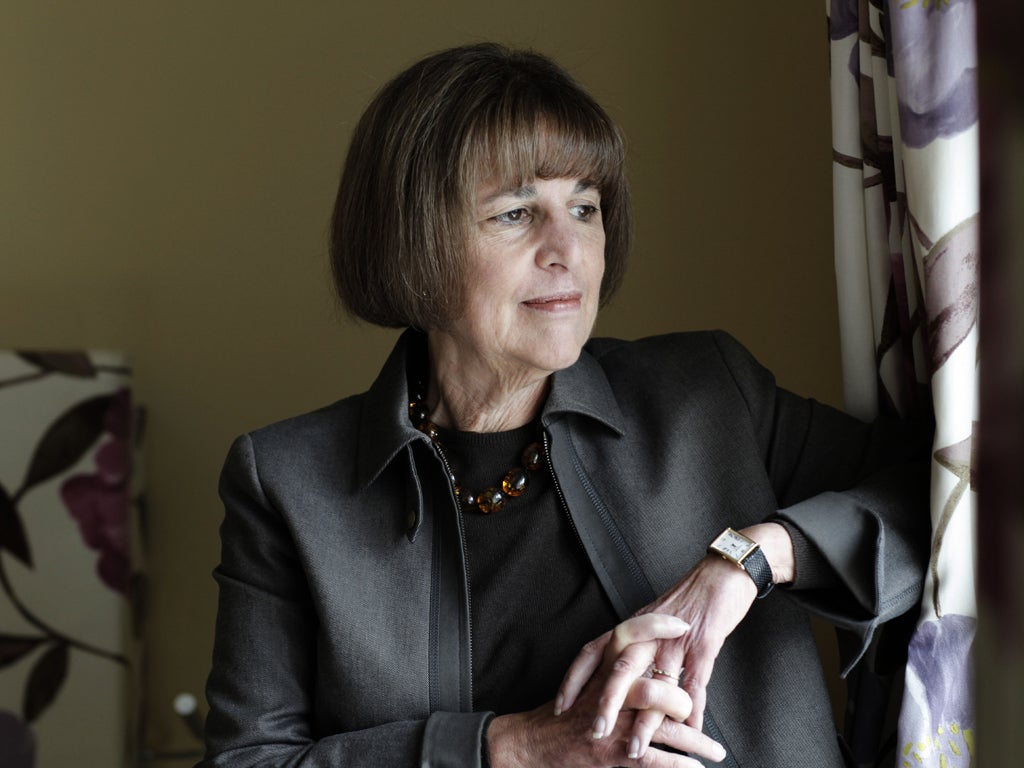
Ellen Feldman is something of a mystery.
Before we meet in London, it proves difficult to learn much about the author. She has no Facebook page, no Twitter account – not even a Wikipedia entry. There is ellenfeld man.com, but that isn't especially obliging. Raised in New Jersey, she worked in publishing, lives in New York and East Hampton and has written several well-received novels – most recently Scottsboro, which was shortlisted for the Orange Prize. But other details – her age, for example – remain tightly-guarded secrets.
In person, Feldman proves a more open proposition. The more she talks, the more I suspect her reticence derives from an old-fashioned sense of refinement, rather than wilful secrecy. She speaks her mind, only drawing the line when she reveals more than she is comfortable with. "My life is very ordinary. My new agent and I met this week. We did business for an hour, and then spent the rest of the time going into our chequered pasts." Feldman laughs and looks me in the eye. "Which I won't do here."
She is as good as her word, although she later drops hints about youthful misdemeanours. Feldman could be referring to her literary past as the author of what she calls "commercial women's fiction": books with such titles as Conjugal Rights written both as Ellen Feldman and under the pseudonym Elizabeth Villars. "They were certainly not literary, but they were a lot darker than romance novels. They dealt with giving a child up for adoption, accidentally running over an adulterous husband, being stalked by a psychiatric patient, and other decidedly unromantic subjects."
These fledgling efforts are clearly something of an embarrassment. At the same time, they served as an invaluable literary apprenticeship. One can sketch a line from these genre pieces to Feldman's mature books: works of serious but accessible historical fiction exploring complex subject matter, often with a focus on women's lives. For Feldman, even this definition tells only part of the story. Proud to have been nominated for the Orange Prize ("Every time I am introduced as having been shortlisted, I sit up a little straighter"), she nevertheless confesses to frustration when she is categorised as a "women's writer".
The title of her excellent new novel Next to Love may make it sound like a sentimental romance, but Feldman is quick to point out that it quotes the eminent lexicographer Eric Partridge: "War ... next to love has most captured the world's imagination." Set in a small US town between 1941 and 1964, the novel traces the enduring impact of the Second World War, mainly on three local women, Babe, Grace and Millie. Each responds differently to the fate of her drafted husband, two of whom die and one of whom returns, albeit profoundly disturbed by experiences on the front. Through these characters Feldman explores grand narratives about the making of mid-20th-century America: race, ethnicity, religion, gender politics, violence and economics.
Babe, for example, finds fulfilment working for Western Union during the war, and is bereft when forced to return to domestic chores. One of the more memorable scenes has her following eight-hour recipes from women's magazines, specifically designed to fill her now emptier days. "It was heart-breaking and infuriating," Feldman says. "Some women were perfectly happy to go home – the official line was that they couldn't wait. But many were very unhappy." Feldman cites a female journalist who worked for a newspaper in Washington DC. "This would have been impossible without the war. When the male reporter returned, she was expected simply to stand aside. She threw her typewriter at him when he walked in the office."
Next to Love draws heavily on Feldman's childhood. The book's small-town setting and chronology coincide with her own childhood and adolescence: it turns out she was born in 1941, the same year the novel begins. "This is my heritage in the sense that I don't remember these things myself, but I grew up with the stories." The novel's two widows were inspired by women who Feldman knew first-hand. "One woman's husband died during the war and she just canonised him. She never got on with her life. The other was the mother of a friend and had the exact opposite response. Her husband died in the war, and she remarried immediately. My friend never knew what her [real] father looked like."
It wasn't until Next to Love was almost completed that Feldman understood just how personal the story was. She realised that the shell-shocked doctor, Morris, who abandons his practice because he cannot bear examining bodies, was based on her own uncle. "He returned from the war and never got past it. He committed suicide 10 years after the war finished. It wasn't until I was writing Next to Love that I really made the connection."
Given the novel's autobiographical elements, I ask if Feldman's chequered past features in any way. "Well, I said it, so I can't blame you for bringing it up," she replies gamely, before admitting that her wild years did influence the character of Grace's rebellious daughter Amy, whose indiscretions include going to university, marrying in haste, divorcing almost as rapidly and wearing proto-hippie clothing.
Happily married and professionally fulfilled, Feldman feels she has learned from her own "chequered past". She is not sure the same can be said of her country. Feldman admires Obama, but worries about the widening income disparity, about new legislation in Alabama empowering police to inspect citizenship papers, and the "crazy right-wingers" that comprise the Tea Party. Can Obama win a second term? "I don't know," Feldman says uncertainly. "My bent is towards history not the future."
Next to Love, By Ellen Feldman (Picador £12.99)
'As soon as Babe walks in to Grace's house that night, she smells the fear. It overpowers the aroma of roasting meat, and the women's perfume, and the Christmas tree that lingers like a broken promise, peace on earth, goodwill to all men, and ten days of leave. Grace greets them with the announcement that Charlie wanted to take the tree down before he left, but she made him leave it up for tonight. She makes it sound as if they are having a party, not staving off panic.'
Join our commenting forum
Join thought-provoking conversations, follow other Independent readers and see their replies
Comments
Bookmark popover
Removed from bookmarks