To note that a particular coach has a philosophy of football is a staple of sports reporting. Suggesting something grander than a mere approach and less technocratic than a theory, a philosophy of sport hints at meanings beyond the winning and losing of games. Touchline philosophy it may be, but our sporting conversation is preoccupied with question of rightness and wrongness, of beauty and ugliness - the core concerns of ethics and aesthetics. For the Ancient Greeks, the relationship between sport and philosophy was obvious. The basis of a classical education was the alphabet plus swimming. The habits and discipline of preparing the mind and body were parallel and complementary. Plato, his name derived from platon or broad-shouldered, was an accomplished wrestler. Aristotle, an avid fan of the beauty of the pentathlete, taught at the Lyceum – itself a gymnasium.
While, as Steven Connor argues, the canon of modern Western philosophy has had its share of sporting thinkers - Jacques Derrida was a goalkeeper, AJ Ayer a decent middle-order batsman – the intellectual encounter has been lacklustre. Sartre wrote on skiing, Wittgenstein mused on games, but after that the line-up is rather bare. In an effort to reinvigorate the debate, Connor has chosen to go continental in his transfer policy. He recruits the concepts of European phenomenology; mixing old hands like Heidegger, Husserl and Merleau-Ponty and surprise packages like Adorno and Deleuze. With a team like this, one is bound to end up playing a very different game.
Where analytical philosophers have tended to use sport as one instance of a bigger problem, the continentals take sport on its own terms. One asks what does a beautiful goal tells us about beauty. The other asks what it is for a goal to be beautiful. In the rigorous if arid halls of analytical philosophy, it is an approach that seems tricksy, driven by sleights of hand rather than conceptual clarity.
This is a certainly mode of philosophising that tends to the circuitous probing of ideas and to linguistic excess. On both these counts A Philosophy of Sport is true to form; it meanders rather than heading straight for goal and is dense to the point of impenetrability. On the other hand, its saving grace – like some of the work it draws upon – is a persistent sense of wonder. Why do human beings seem to need games that consist of invented obstacles? Before we wonder whether what we are doing when we play sport, is ethically dubious, a creative success or a failure – let's just wonder what it is to play and watch sport. In this spirit, Connor asks us to think about how time and space are experienced in the sporting arena; what it is to move and how it moves us. He considers the materiality of sport, its embeddedness in the objects we use to play; and the generic place of rules, chance, cheating and winning.
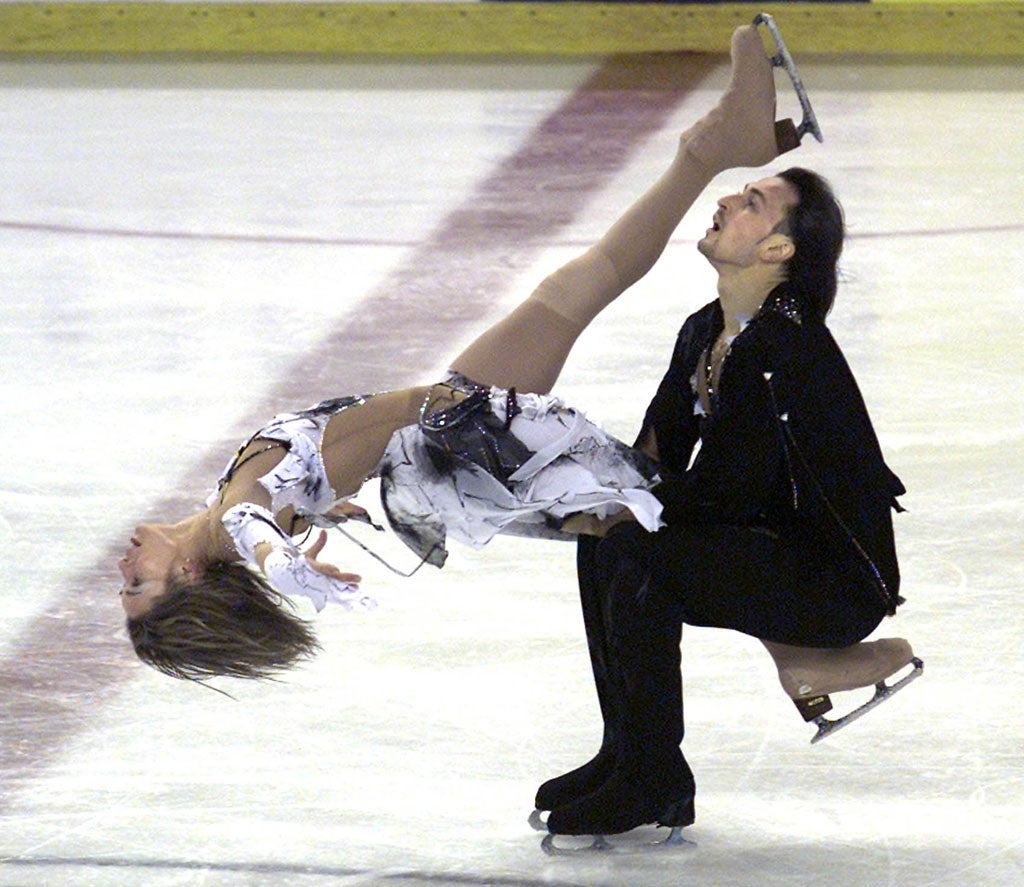
All interesting issues to chew over, but no more so than during an engaging chat down the pub, shorn its philosophical language. However, Connor's discussion of gliding sports – skate- and snowboarding, wind- and wave-surfing - is onto to a good thing. These are games that resist conventional forms of scoring; their relationships to nature and to gravity are less about overcoming and dominating and more about working with them. A glimpse of the future, perhaps? This argument is fine, though hardly startling, and one does have to negotiate an awful lot of invented obstacles to get there.
'How to Watch the Olympics', by David Goldblatt and Jonny Acton, is published by Profile
Join our commenting forum
Join thought-provoking conversations, follow other Independent readers and see their replies
Comments