A Very English Hero: the Making of Frank Thompson, By Peter J Conradi
The brief life of a soldier-poet shows his chivalric idealism - and the sheer waste of war.
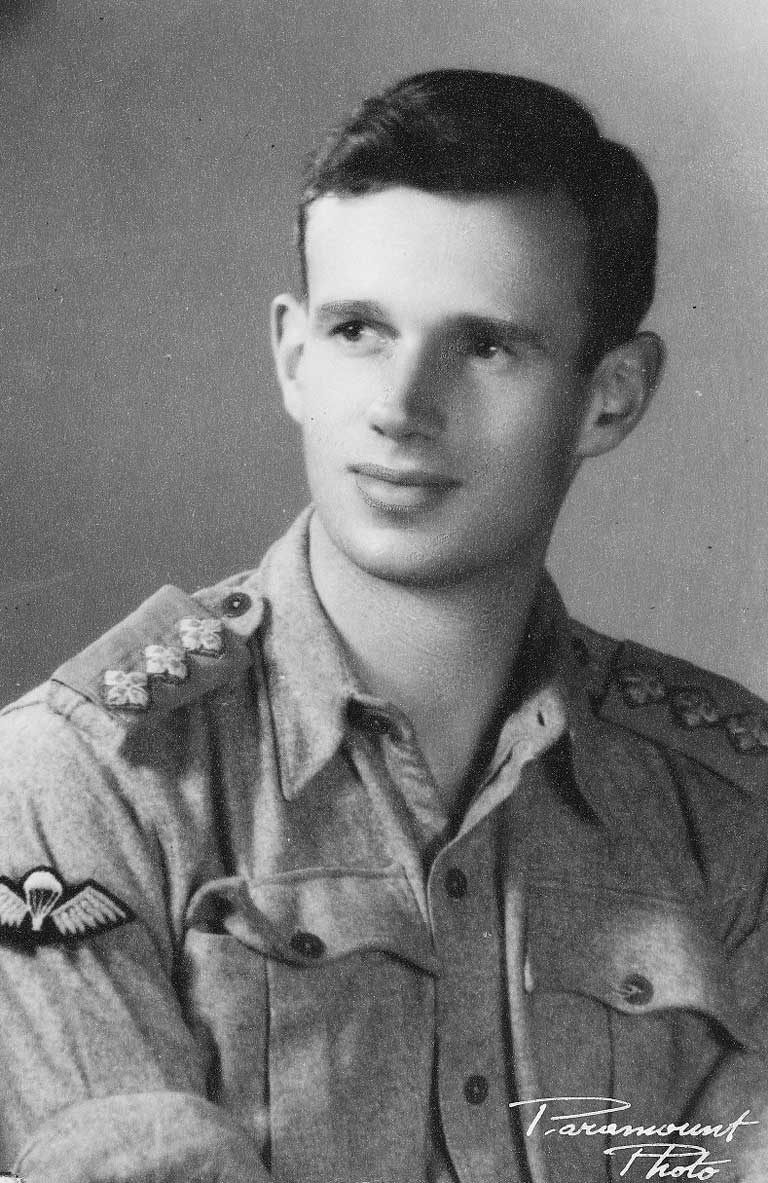
The brief life of Frank Thompson (1920-44) is a case study in the pity of war. His biographer calls him a Popular Front intellectual, an apprentice poet, and a scholar-soldier. His entry in the Oxford Dictionary of National Biography offers "poet and special operations officer" as characteristic of the active and the contemplative in this life well led. His comrade on an archaeological dig in Crete in 1938 identified a strain of "puppyish lunacy" leavening the seriousness, the chivalry, and the sacrifice.
Buy this book from the Independent bookshop
He joined up on 2 September 1939, the day before war was declared. Some friends followed suit. Thompson wrote a poem to one who joined the RAF: "You went, my friend,/ To spread your wings on the morning;/ I to the gun's cold elegance... Did you feel the passing of a shadow/ Between the glasses? – one will not return." The cold elegance meant the Royal Artillery. In July 1940 Thompson was posted to the GHQ Liaison Regiment, codenamed Phantom, trading in intelligence, reconnaissance, and the monitoring of communications across the Middle East. In September 1943 he joined the Special Operations Executive (SOE) in Cairo. In January 1944 he was parachuted into occupied Macedonia, to lead a mission into Bulgaria.
Partisan operations in Bulgaria were cut-throat and chaotic. Harried by the Bulgarian army, and half-starved, they were betrayed in May 1944. Thompson was captured, interrogated, and shot. He was not yet 24.
An exemplary life brutally curtailed – it is difficult to read it any other way – gave place to a glorious afterlife. After stutters of official obfuscation and Cold War-like contention, posterity has been kind to Frank Thompson. In a sense this comes as no surprise. Posterity has been superintended by two of the most formidable representatives of English letters in the post-war period: the novelist and philosopher Iris Murdoch, his inamorata, and by some accounts his betrothed; and the historian and campaigner EP Thompson, another scholar-soldier in the anti-Fascist cause, his younger brother.
Now he is fortunate in his biographer. Peter Conradi, also the biographer of Iris Murdoch, has a profound understanding of his world and his worldview – encapsulated here in character assessments, at once pithy and compelling, that verge on apothegms. "He was an 18-year-old sentimentalist, inexperienced and immature." "He had a nature riche, from which some instinct for self-preservation seems missing." "He was surely the least militant or military of men... His horror of violence was real." "Intimacy could only be snatched at. Yet in some ways the nomadism of war suited him."
Conradi is excellent on his fatalism and his laughter, and marvellously acute on his "devout internationalism". Thompson was a brilliant linguist. In February 1940, on Home Defence, he had time each night to study an hour's Russian, and to write a poem about Gogol, not to mention reading Gogol's Inspector-General in the original, translating Lermontov's poem "Youth's Testament", and revelling in Latin verse. "He belongs to that remote age when all gentlemen were presumed to share familiarity with the classical canon, and other languages too," Conradi notes. "His internationalism was one way of demonstrating anti-Fascism."
"The making of Frank Thompson" is in every sense an apt sub-title. "A very English hero" is perhaps more disputable. The product of the Dragon School, Winchester, and New College, Oxford, may indeed have had "a conventional mind formed along Wykehamical lines", as he told Iris Murdoch; but he was also a notable cosmopolitan, and above all a passionate European. "How wonderful it would be to call Europe one's fatherland," he wrote, "and think of Krakow, Munich, Rome, Arles, Madrid as one's own cities. My eyes very quickly fill with tears when I think of what a splendid Europe we shall build." He penned his own epitaph, published in The Times on VJ Day, 15 August 1945: "Write on the stones no words of sadness –/ Only the gladness due,/ That we, who asked the most of living,/ Knew how to give it, too."
Alex Danchev is professor of international relations at the University of Nottingham. His new biography of Cézanne is forthcoming
Join our commenting forum
Join thought-provoking conversations, follow other Independent readers and see their replies
Comments