Here On Earth, By Tim Flannery
This past 150 years are widely seen as the golden age of biology – when it began to seem that all life is understandable and will soon be understood; and that what can be understood can and should be controlled for our own benefit. In 1859, in the Origin of Species, Charles Darwin first explained the mechanism of evolution "by means of natural selection". Then Gregor Mendel described the units of heredity now known as genes; then, in the early decades of the 20th century, Darwin's notions were fused with Mendel's to create "neodarwinism" – evolution conceived as a shift in the content of gene pools of populations.
In the mid 20th century, genes were shown to be made of DNA, and then a new generation of biologists in the 1960s showed (or seemed to show) how all of life could be explained by the interactions of what Richard Dawkins called "selfish" genes, as they battled, Darwinianly, for supremacy. The piece de resistance is genetic engineering: bits of DNA (genes) are shuffled and reconstructed to make brand new organisms.
Yet some felt right from the outset that the Darwinian analysis was flawed. It is rooted in excellent science – Darwin was one of the greatest field naturalists of all time – but it was also coloured, as all science is, by the zeitgeist. The prevailing theme of the early 19th century was of strife: social upheaval; the building of empires. Darwin was a gentle man, a liberal in the old sense and a humanitarian who railed against slavery, but the mechanism of natural selection that he saw as nature's great creative force is rooted in the perceived need for competition, implying conflict.
Origin of Species reflects Tennyson's ultimately bleak diagnosis from the 1830s - of "nature red in tooth and claw". Herbert Spencer, who in his day was probably more popular than Darwin, made things worse in the 1860s when he summarised natural selection as "survival of the fittest" - an expression that Darwin later adopted. "Fittest" simply meant "most apt" but it has often been construed to mean "strong", so that it's "natural" for the strong to bash the weak.
Others feel that Dawkins's reduction of life to a battle of selfish genes is at best simplistic, and that the attempts to create new forms of life by genetic "engineering" and then to release them is hubris writ large. It has undertones of blasphemy and, more practically, the feel of fools rushing in where the wise would surely fear to tread.
Truly, the world needs a paradigm shift. Darwin must be seen and revered as one of the great figures in the history of science – but we should stress history. It's time to stop extrapolating along neodarwinian lines, explaining away the world as one long punch-up, albeit dressed up as molecular biology and made respectable by big business.
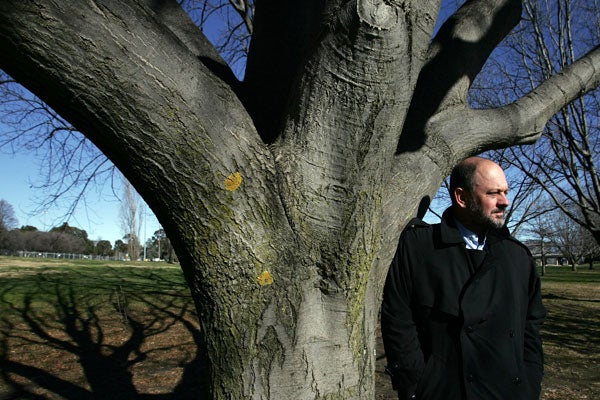
For as the Australian zoologist, ecologist and environmental activist Tim Flannery points out in his excellent Here on Earth, there is a quite different way of looking at life and the interactions between living creatures, just as plausible and just as valid. Darwin himself recognised "the contented face of nature" and perceived too, because he was a fine naturalist, that animals are commonly cooperative. Indeed, they often seem to behave altruistically.
He was puzzled by these observations, for he was sure that life, at bottom, must be a punch-up – but he did not quite have a monopoly on the idea of evolution, or even on the idea of evolution by natural selection. For the lower-middle-class, emphatically non-establishment naturalist-cum-collector Alfred Russel Wallace independently conceived of natural selection at about the same time as Darwin. Yet he saw nature as a whole, not as a punch-up but as a great interactive cooperative.
Wallace has his successors, too. What Flannery sees as the great Wallacean theory of modern times is the Gaia hypothesis, first conceived by James Lovelock in the 1960s. This acknowledges that nature as a whole is wonderfully interactive – simply the core thesis of ecology. But Gaia says more than that. It says that living creatures do not merely camp on the surface of this Earth – they profoundly and absolutely affect its fabric: its chemistry and its physical structure.
Very obviously, our atmosphere would contain no oxygen gas if it weren't for organisms that photosynthesise – it would just be carbon dioxide and methane and hydrogen cyanide and suchlike noxiousness. Less obviously, the relatively lightweight rocks of the continents were perhaps made by living organisms; so without life there would be no land – or not, at least, in a form that we would recognise.
Overall, says the theory of Gaia, life manipulates the Earth in ways that make it more hospitable to life. The Earth as a whole is homeostatic: it maintains its own internal conditions, the central aim of all living organisms. So why not see the Earth as an organism (called Gaia)? And can an organism truly function if it is nothing but an elaborated punch-up?
The neodarwinian, Dawkinsian view of the world has had deeply pernicious consequences. It is invoked to support neoliberalism, encapsulated in Gordon Gecko's chilling line from Wall Street – "Greed is good". Budding business people go on courses to learn that this is good Darwinism, and is therefore natural, and therefore good. The thesis is flawed at every stage but I know people nonetheless who teach such courses. So it was that Enron's CEO Jeff Skilling, who siphoned off millions of investors' loot and is now in jail for his pains, declared himself to be a keen student of Dawkins. He was merely competing, which is, he maintains, both natural and necessary.
On all counts, we need a paradigm shift, away not from Darwin but from the crude extrapolation of his ideas. Flannery excellently and entertainingly explains the science that is needed to achieve this. Here on Earth deserves to be widely read, and it will be good for the world if it is.
Yet I have a quibble – quite a large one. Flannery is a scientist through and through and like so many professional scientists, he really believes in science. He implies that if only humanity at large saw what the new, Gaia-style biology is saying, then all would be well.
But the paradigm shift requires more than that. We need to begin to acknowledge, formally, that science itself is seriously limited in what it can tell us about the world. Its findings are always uncertain (for if they were not so, there would be no controversies). It is always partial, too. In the end science can deal only with what can be seen and measured and there is no good reason to assume that this is all there is.
Neither, of course, pace Jeff Skilling, does science tell us what is right. If we truly aspire to be wise we need to embed the narrative of science in a broader view of life, one that is properly called metaphysical. The necessary paradigm shift will happen only when we re-engage with metaphysics – which some scientists are beginning to do, and some never lost sight of. But right now, alas, that is not the norm.
Colin Tudge's new book, 'Good Food for Everyone Forever', is out next month from Pari Publishing
Join our commenting forum
Join thought-provoking conversations, follow other Independent readers and see their replies
Comments
Bookmark popover
Removed from bookmarks