More Money Than God by Sebastian Mallaby
The long and the short of cash in a hedge

For free real time breaking news alerts sent straight to your inbox sign up to our breaking news emails
Sign up to our free breaking news emails
Sixty years after Alfred Winslow Jones founded his pioneering "hedged fund", the hedgies remain a little known, much misunderstood, and obscenely rich bunch, hanging out in Connecticut and Mayfair. Only one – George Soros – is famous; the rest still live up to this description given them in the first newspaper feature on them, in the 1960s: "Wall Street's last bastions of secrecy, mystery, exclusivity and privilege...the parlour cars of the new gravy train".
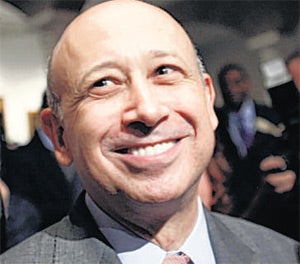
Gravy train is right. No one else – not bankers, private equity buccaneers, Alan Sugar, newsreaders, not even the chief executives of British local authorities – comes close. When he died in 1913, John Pierpont Morgan, a God among financiers and one of the wealthiest men in the history of the world, was worth $1.4bn in today's terms. Lloyd Blankfein, chef executive of the "great vampire squid", Goldman Sachs, took home $240 million in pay and bonuses in 2006. By comparison, the top three US hedge fund managers were reported to have earned, if that's the right word, more than $1billion each that year. No wonder they are feared and resented.
Apart from envy, one of the main reasons for this hostility is "short selling", just because we don't understand it. Not all hedge funds go short, and not all short sellers are hedge funds. But that's how they started, and got their name, shorting being a way of hedging a bet. I have witnessed seasoned financial journalists boil their brains trying to get their tiny minds around the concept of selling something you don't actually own, which is what short selling is.
In fact, the asset – shares, say, or a bond – is simply borrowed from elsewhere and then sold in the hope of buying it back again when the price has plummeted: something you, the hedgie, may or may not have precipitated. Then you repay the stock you borrowed, and pocket the profit. A more dangerous technique is "naked" short selling, but that's enough brain boiling for now.
In any case, shorting is used by hedge funds to maximise returns, just as they use "leverage", that is borrowed money, for their most exciting bets. Hedge funds also like to "go for the jugular" to borrow a Soros phrase, and bet the ranch on their strategies, including partners' personal capital. They will follow an irrational bubble, like the dotcom boom or the mortgage-backed securities craze, but turn on a sixpence and go massively short, ready to profit from the crash they knew was inevitable.
This is what Soros styles "reflexivity"; but even he did not always get it right. He saw the 1987 crash approaching, but when he tried to offload his stocks in Hong Kong the authorities shut the exchange. The ERM debacle in 1992 – when $10 billion went straight for sterling's jugular – helped him make $1bn. Reading about the episode from the hedgies' point of view is a little like reading a German account of Dunkirk.
Skill or luck? There's an account in Sebastian Mallaby's entertaining book of an argument between Warren Buffett, not a hedgie but sympathetic, and Michael Jensen, an academic of the "efficient markets" school and hedge-sceptic. Jensen asked his audience to imagine a giant coin-flipping contest. Everyone in America flips a coin, and those who came up tails withdraw.
After ten rounds only 220,000 flippers would be left, and then they'd start to get cocky, going on TV, giving lectures and writing books on the "art of flipping". After 20 rounds an "elite" of 215 flippers would emerge, fabulously wealthy, with gorgeous wives, thanks to their scarce "skill". But what, Jensen asked, if 225,000 orang-utans had a coin flipping contest? The results would be identical, if hairier. Buffett countered "what if the 215 orang-utans came from the same zoo?" Buffet pointed to fund managers from the same firm with records far ahead of any random distribution.
Like spider plants, legendary hedge fund mentors such as AW Jones, Soros or Julian Robertson spawned new managers and firms in their own image. Some were, literally, rocket scientists; one pair won a Nobel Prize for economics, most just follow instinct.
Their backgrounds are heterogeneous. What the hedge funds have in common is that, unlike the banks, no fund's failure has cost the taxpayer a penny - not even the notorious collapse of Long Term Capital Management in 1998, though that helped exacerbate a financial crisis in East Asia and Russia. The hedgies just want to carry on making and losing tens of billions without anyone else noticing. If I were them, I'd hedge my bets on that one.
Subscribe to Independent Premium to bookmark this article
Want to bookmark your favourite articles and stories to read or reference later? Start your Independent Premium subscription today.
Join our commenting forum
Join thought-provoking conversations, follow other Independent readers and see their replies