State of Wonder, By Ann Patchett
This modern-day 'Heart of Darkness' investigates the activity of pharmaceutical companies in the Amazon rainforest
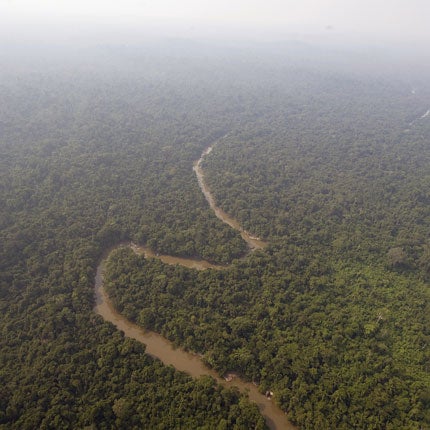
The heroine of Ann Patchett's latest novel, which is set in the Amazon rainforest, knows that "it was somehow less humiliating, less disrespectful, to dance with the natives than it was to simply stand there watching them".
In that respect, the more modern and open-minded Marina Singh, and her journey to the heart of darkness that is modern-day South America rather than colonial Africa, is a distinct improvement on Conrad's imperial, racist Marlow. But Patchett is not afraid to keep the parallels with that troubling early 20th-century classic in play: Marina even has a Kurtz, in the shape of the mysterious and incommunicative scientist Dr Annick Swenson. Swenson has written a rare letter, to inform Marina's boss, Mr Fox, that the employee he previously sent to Brazil to find and report on her has died. Marina, Mr Fox has therefore decided, must now follow on, and report on Swenson instead.
In place of the colonialism of imperial governments, we have the giganticism of today's pharmaceutical industry. Dr Swenson is researching an Amazonian tribe whose women still give birth in their seventies. Vogel, the sponsors of her research, are desperate for whatever chemical compound she might be able to manufacture so that women in the West can enjoy the same reproductive miracle. But Swenson has been there for decades – when are they going to get a return on their money? Marina's colleague, Anders Eckman, sent from Vogel's base in Minnesota to hurry her along, winds up dead from a tropical fever. As Marina finds out when she arrives in Manaus, it's not just rainforest conditions that are the problem.
Delayed by Dr Swenson's irritatingly bohemian house-sitters, Jackie and Barbara Bovender, Marina first falls seriously ill, then is further waylaid by Dr Swenson who suddenly arrives in the town, only to tell Marina to go home. Marina's affair with Mr Fox is not panning out the way she had once hoped it would, so she feels no urge to run back to the man who has sent her on this perilous mission, and instead insists on travelling down the Amazon with Swenson. Easter, a young deaf boy from another tribe, assists in their journey to the research laboratory in the middle of the home of the Lakashi tribe.
Marina's arrival causes great excitement. Her bags, and later her clothes, are stolen, but she adapts to the camp fairly quickly, and is more set on finding out what happened to Anders than checking up on Swenson. Marina is plagued by nightmares – one of her Indian father, who died when she was young, and one of a memory of a botched delivery of a baby many years previously, when she was a young medical student of Dr Swenson's – but these ease during her stay in the camp.
The doctor doesn't appear to remember either Marina or the medical calamity – indeed, the brutally efficient and dedicated scientist would probably remember very little of anyone. Patchett's depiction of such a single-minded individual, who lies and deceives the better to protect her work, stays just the right side of caricature. She is rarely menacing but she is cold, and it's only by accident that Marina discovers it's not only a reproductive miracle she's researching, but also a vaccine for malaria.
Reproduction increasingly preoccupies Marina the longer she stays in the rainforest. She is 42, and never thought much about having children before. Now, she sleeps each night with Easter in her arms, to calm his own nightmares, and wonders if the bark on the trees, which the women eat regularly and which seems to contain whatever ingredient it is that keeps them fertile, is something she, too, should ingest.
From the might of pharmaceutical control to tribeswomen chewing bark: the mystery of the creation of life underpins it all.
Heart of Darkness is a tale of racial alienation whose references to "unhappy savages" can make modern readers feel uncomfortable. But Conrad's tale was told by an unreliable narrator who lied to the fiancée of the dead Captain of his trading company while at the same time maintaining that he never told a lie; how much were we ever meant to trust or identify with him?
Patchett, on the other hand, doesn't want us to mistrust Marina. Patchett's sympathetic instinct, the magical trick she performs which ensures that every novel she writes is a work to be embraced, is always to pull the reader in, not to alienate her. She will not risk losing the compassion that permeates her stories, but the image of a scrawny, bearded white man running and shouting among the neighbouring cannibalistic Hummocca tribe is an image straight out of Conrad. The man's fate, and that of the boy, Easter, linger long in the mind after this story is over, and suggest that Patchett, too, understands our deepest, darkest, unvoiceable fears.
To order any of these books at a reduced price, including free UK p&p, call Independent Books Direct on 08700 798 897 or visit independentbooksdirect.co.uk
Join our commenting forum
Join thought-provoking conversations, follow other Independent readers and see their replies
Comments