The Arab Awakening, By Tariq Ramadan
A Muslim reformer looks at the mixed blessings of the uprisings that overthrew clichés about Arab culture and society.
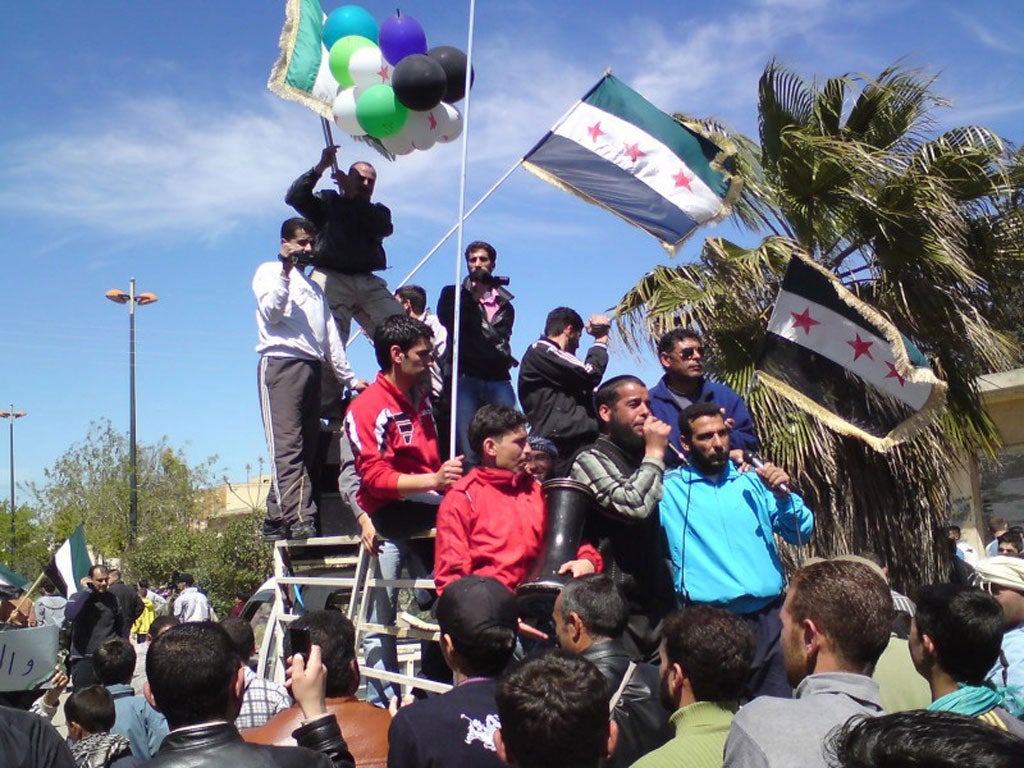
What is happening in the Middle East? Tariq Ramadan, one of the foremost Muslim intellectuals, calls the events "uprisings", more permanent than "revolts" but still short of thoroughgoing "revolutions". So far, Tunisia is the only clear democratising success, and there it remains unclear if the new dispensation will be fundamentally more just than the last.
Half of this slim volume is spent examining whether the uprisings were staged or spontaneous. Ramadan counsels against both the naive view that outside powers are passive observers of events, and the contrary belief that Arab revolutionaries have been mere pawns in the hands of cunning foreign players. Certainly the US and its allies helped to guide events by collaborating with the military hierarchies which removed presidents in Tunisia and Egypt, and by full-scale intervention in Libya – for a variety of obvious reasons. An agreement signed by Libya's NTC last year, for instance, guaranteed France 3 per cent of future oil exports.
There's been Gulf and Western hypocrisy over Bahrain, home to Formula One and the US Fifth Fleet, and al-Jazeera's coverage has been tailored to reflect its Qatari host's strategic concerns. Then, less convincingly, the social media conspiracy: trainees from 37 countries learned non-violent cyberactivism in Serbia. Google provided satellite access codes to Egyptian activists, but not their Syrian counterparts.
Ramadan pays too much attention to the foreign conspiracy red herring, in part because the "conspiratorial paranoia of those who have lost their faith in the ability of human beings" to make their history necessitates it, but also because, like the media he criticises, he focuses too much on cyberactivists and not on organised labour. Strike actions in Tunisia and Egypt were finally more effective than mass demonstrations.
Ramadan comes into his own as a historian and provoker of ideas. He notes how, in their Western representation, Muslim Arabs have shifted from the benighted, terrorist "other" to the "alter ego of the Western Universal". He is worried by the Arab internalisation of this false universalism, and of the Orientalist opposition of Islamism and secularism.
Both schools of thought are in crisis. Secularists lack mass support; indeed, "secularism" has become a dirty word in Arabic. Islamism has support but no coherent programme. Its proponents are divided by contentious issues from the rights of women to attitudes to sharia and statehood. Political Islam may be as diverse as political Judaism or Christianity, but is unified by its failure even to claim answers to pressing economic and social crises.
Ramadan blames the ideological void on "the deadening weight of dictatorship" which impoverished "the life of ideas in society". "Critical, creative economic thinking appears to have deserted the Arab political debate". Rejecting the superficiality of "Islamic finance", he calls for a fuller critique of capitalism's unethical content. More than that: he wants the Arab Muslims to draw upon "cultural ... capital" to produce "something new, something original". He calls for social justice based on the Quranic verse "We have conferred dignity on human beings," and for an all-encompassing cultural and "intellectual jihad". He calls for revolution, in other words.
Robin Yassin-Kassab is co-editor of the journal 'Critical Muslim'
Join our commenting forum
Join thought-provoking conversations, follow other Independent readers and see their replies
Comments