The Independent's journalism is supported by our readers. When you purchase through links on our site, we may earn commission.
The Children of Lovers, By Judy Golding
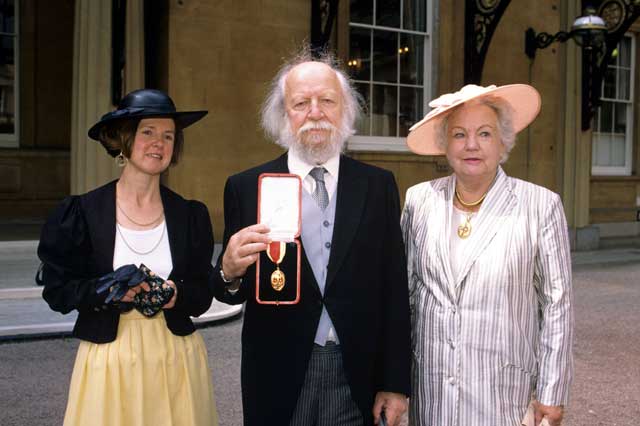
There is renewed critical interest in novelist William Golding (1911-1993). Following the acclaim for John Carey's definitive biography in 2009, Faber have produced centenary editions of Lord of the Flies (1954) and The Inheritors (1955), featuring new introductions by Stephen King and Carey. Later this year, the Bodleian Library will display manuscripts (Golding was an Oxford graduate). In Cornwall, the county where he was born and died, the William Golding Centenary Conference will be held in September at the University of Exeter campus, Penryn. Faber has also published his daughter Judy's memoir, The Children of Lovers.
Golding was that rare creature, a bestselling novelist who was critically acclaimed and rewarded in his lifetime – receiving the Nobel Prize in Literature and a knighthood, as well as the Booker for Rites of Passage, and being pursued by the great, good and glittering. Lord Snowdon photographed him, though praised him for writing The Lord of the Rings.
The early years were unpromising. While working as a schoolteacher, Golding had his first three novels rejected, and Lord of the Flies was thrown on the slush pile. It got into print only by the intervention of a percipient Faber newcomer, Charles Monteith, who edited it rigorously and enabled it to become the huge success that made Golding's fame and fortune. This novel – adopted as a school set text and made into Peter Brook's 1963 film – transformed the way childhood was represented. As Peter Conrad argued, it warped RM Ballantyne's naïve The Coral Island into an allegory of the wickedness of our species, and showed the devil flourishing in English public schools.
In 1983, Ursula Owen compiled a collection, Fathers: reflections by daughters. She commented on how little had been published on that subject and how the topic is generally understood through Freudian psychoanalysis or writings about patriarchy and the father's institutionalised power. "In our culture, mothering is a job and fathering is a hobby," she claims, and yet for many intellectual women the father's attention as mentor is crucial.
To date, Judy Golding's memoir is one of a mere handful of autobiographical accounts by writers' and artists' daughters, often describing troubled, violent or sexually predatory figures – such as Daphne du Maurier's Gerald du Maurier: A Portrait, Susan Cheever's Home Before Dark, Angelica Garnett's Deceived With Kindness, and Julia Blackburn's The Three of Us.
Judy Golding is a sophisticated and self-conscious memoirist, flagging delicate evasions and yet having the courage to explore the cruelties, inconsistencies and conflicts within her father as they impacted on family life and her own psyche. Golding called himself a "monster", and there is plenty of evidence in his own journal and papers of sexual violence, fascist tendencies (the Second World War obsessed him), and alcoholic destructiveness and self-loathing. But he is also a wonderful guide to his own passions of music, Greek literature and adventurous holidays (despite his hair-raising driving and sailing).
The title quotes a proverb, "The children of lovers are orphans", and the author claims that her father's marriage was the central focus of his life. However, we see her own intense and passionate relationship with "Bill" as being at least as central (and the fiction reflects a considerable preoccupation with incest). He can be devastating – calling her "a political slot machine. You put your penny in... and out came a cliché" – but also devoted.
Just before his sudden death, in the Cornwall house full of his children and grandchildren, he pledges "love... Just love" to his beloved daughter, who describes this as a "perfect ending" – for her, though not for her brother David. King Lear is invoked a couple of times, and one cannot but think of Judy as brave, dignified Cordelia standing up against, and constantly forgiving, her father's insatiable demands, contempt and pig-headedness.
The two children experience breakdowns: David through a series of psychotic episodes, Judy herself in a nervous collapse and suicide attempt. Separation from their parents clearly cost both children dearly, and Golding seems to have drawn them back into a web of dependency that threatened both of their lives and adult relationships. For Judy, as for many favoured daughters of brilliant men, this intimacy produced a distanced and jealous maternal bond, and confused her own burgeoning sexual identity. She contrasts the girly dresses of "lollipop suggestiveness" that her mother made her with the "warm, exciting world of tweed jackets and tobacco" of a masculine world she found seductive. She also describes with great subtlety an evolving perception of her father from frightening, omnipotent and omniscient companion to drunken depressive of flawed and brittle vulnerability: in one instance, recalling William's quietly devastated reaction to a radio critic describing his novel The Spire as "wuthering depths". Golding was a large figure – physically, intellectually and emotionally – and he emerges from this memoir with clarity and complexity. It is of great credit to Judy Golding that the reader concludes by being just as interested in his daughter.
Helen Taylor will be discussing the memoir with Judy Golding at the Daphne du Maurier Festival, Fowey, Cornwall, on Saturday 14 May. For details of the Centenary Conference see http://golding2011.blogspot.com
Join our commenting forum
Join thought-provoking conversations, follow other Independent readers and see their replies
Comments