The Road, By Vasily Grossman, trans. Robert and Elizabeth Chandler

For free real time breaking news alerts sent straight to your inbox sign up to our breaking news emails
Sign up to our free breaking news emails
The Road is a fascinating collection of short stories, letters and articles by Vasily Grossman, and the latest works from this extraordinary writer to be translated by Robert and Elizabeth Chandler. Central to the book is "The Hell of Treblinka", one of the earliest accounts of a Nazi death camp. Entering the charred remains as a Soviet war correspondent in 1944, Grossman describes it as "an executioner's block such as the human race has never seen". He recreates in chilling detail the cruelty of the oppressors, their calculated efficiency, the blatant disregard for human life and the same "look of superiority with which a living beast surveys a dead human being".
At the same time, the dignity of the victims is relayed with great care. Grossman's boundless compassion enables him vividly to convey the terror of hundreds of thousands, "young and old faces... dark and fair-haired beauties... bald and hunch-backed old men... caught up in a single flood, a flood that swallowed up reason."
"The Hell of Treblinka" is infinitely painful to read. Grossman leads us into the heart of darkness and yet his empathy ensures we are never merely spectators looking into the abyss. He makes us feel something of the horror. Despite some factual errors (probably inevitable given the time), Grossman's attention to detail and the immediacy of the prose is that of a journalist; his ability to recreate scenes is the skill of a novelist.
Recognising the power of words he insists, "It is the writer's duty to tell the terrible truth, and it is a reader's civic duty to learn this truth." Given his own personal tragedy, Grossman showed particular courage in tackling such a harrowing subject. Not surprisingly, he had a nervous breakdown shortly after visiting the camp.
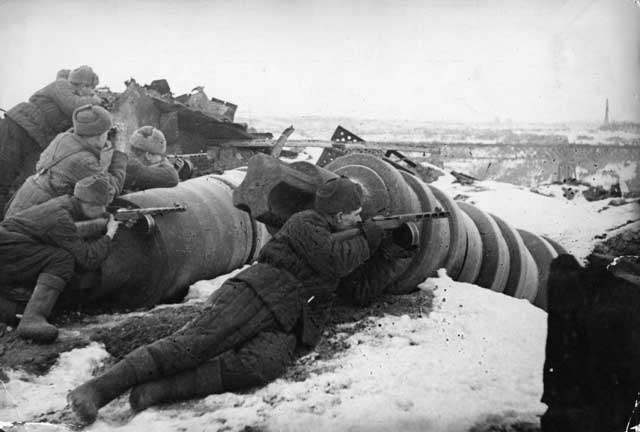
The 11 stories in the collection span almost 30 years and serve to illustrate Grossman's development as a writer as well as his growing disillusionment with his homeland. In his first published success, "In the Town of Berdichev", set during the 1919-1921 Polish-Soviet war, a woman commissar has to choose between the love of her country and her new-born baby. In the title story, Grossman explores war from the perspective of a down-trodden mule that ends up as one of the few survivors of the Battle of Stalingrad. A later story, "Living Space", is a poignant response to the release of thousands of prisoners from Stalin's gulags following his death.
The book is ordered chronologically and each section is preceded by a helpful introduction and relevant biographical details. Chandler, surely one of the best translators in the business, is also a fine editor – the detailed notes he provides are phenomenal. At the same time, he allows us the space to draw our own conclusions.
The collection includes two heartbreaking letters Grossman wrote to his mother on the ninth and 20th anniversary of her death: she died in 1941 in the first of the Einsatzgruppen massacres in Ukraine. Grossman's last letter provides a valuable insight into what drove him to write and also explains something of his enduring appeal: "I have been thinking of you... almost all these last ten years that I have been working; the love and devotion I feel for people is central to this work, and that is why it is dedicated to you. To me you represent all that is human, and your terrible fate is the fate of humanity in an inhuman time."
Subscribe to Independent Premium to bookmark this article
Want to bookmark your favourite articles and stories to read or reference later? Start your Independent Premium subscription today.
Join our commenting forum
Join thought-provoking conversations, follow other Independent readers and see their replies