Tubes: behind the scenes at the Internet, By Andrew Blum
Where is the web? The child's question is a profound one – answered in this illuminating book.
In common with every other online behemoth, Google warmly entreats us to dump our "stuff" – correspondence, documents, photos, our entire recorded life – in their cloud for safe keeping. But where is Google's cloud? Geeks might scoff at the question as the naïve equivalent of those children's posers about where the wind goes when it's not blowing.
Reframe those innocent inquiries, as every good teacher knows, and true enlightenment begins. Brooklyn journalist Andrew Blum has done exactly that. He asked: where is the Internet (Blum prefers the capitalised form), and what does it look like? In the course of compiling the year's most original and stimulating "travel" book, he even went to visit Google's cloud.
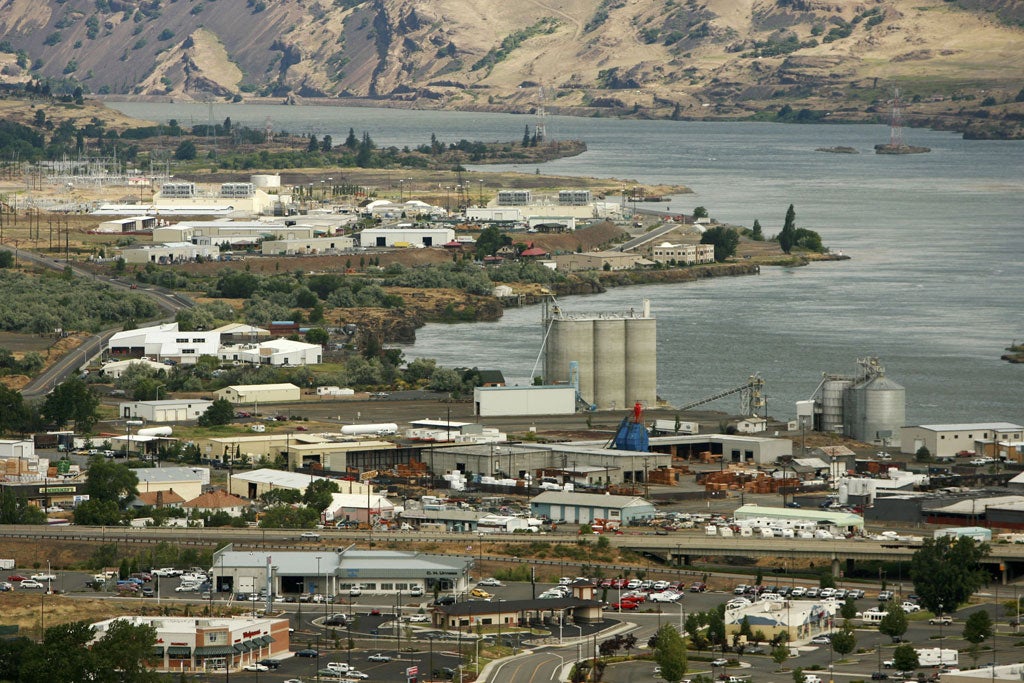
It (or a substantial chunk of it, anyway) lives outside The Dalles, Oregon. Strategically sited in the Columbia River Gorge, this rocky waterside city served two centuries ago as the principal gathering place for Native American peoples in the region. By the 1930s, and Roosevelt's New Deal, public investment transformed it into a hydroelectric capital, pumping power from the mighty waters down to thirsty California.
Then, in the 1990s, the federal Bonneville Power Adminsitration foresaw the digital future. It began to run fibre-optic cables along its lines, "an amazing network that... came together in The Dalles". The city council, eager for a hi-tech exit from industrial decline, ploughed tax dollars into the local "Q-Life" broadband network. They built it, and the people came. The Dalles rose to become "the de facto capital of a whole region devoted to storing our online selves".
That includes Google's data centre, which looked to Blum "like a prison", with its blank beige huts, "towering security lights" and forbidding perimeter fence. Mostly, he met delighted openness on his visits to the hot, humming but nondescript buildings where our data either sleeps, or else moves. But Google sullenly stonewalled in Iron Curtain style: "the company that arguably knows the most about us... was being the most secretive bout itself". On a fence near the centre, some wag has placed a sign that reads: "Voldemort Industries".
Should we rejoice that Blum saw so little inside cagy Google's concrete cloud, with its "Orwellian atmosphere"? In contrast, Facebook – which runs a data warehouse at nearby Prineville – opened nearly every door. That figures. The former, as befits its rep, jealously guarded its (and our) online secrets; the latter kept more of an open house.
The growth of The Dalles into the Kathmandu of data, a "storehouse for the digital soul", brings into focus some core insights from this utterly engrossing book. First, for all the airy "poets' metaphors" about online networks, the main players have real homes: a physical infrastructure scattered around the world but linked in the irreducibly physical form of fibre-optic strands in plastic and rubber cabling. "Everything you do online travels through a tube".
Crucially, those tubes compose a "hub-and-spoke" system with clear cores and peripheries. A relatively few locations still receive, switch and transmit a vast proportion of the planet's communication. And those locations stand where they do because of wholly material causes determined by geography, history – and money. Blum's adventures show him that the "new geography" of data transmission and collection "was traced entirely upon the outlines of the old". Cyberspace plants its roots in ancient rock.
From the Virginia suburbs of Washington DC to the Ballard-like cityscape of Docklands in London, Blum's trips involve a lot of time spent in scruffy rooms in boring blocks, gazing at banal tangles of cable or chunky metal boxes. Inevitably, we wonder how easy it would be to take a physical axe to this very physical grid. Blum's quest, indeed, began when "the buckteeth of a Brooklyn squirrel" chewed through his broadband lifeline. Elsewhere, we learn that an elderly lady digging her garden once unwired all Armenia.
In truth, the book confirms the internet's resilience, its "legendary robustness", rather than highlighting its vulnerability. Blum shows that, when it finds one route blocked, data seeks another: the essence of the net, and the drive behind the grisly-sounding "peering" conventions at which network engineers "date" in order to match and marry their systems, and so maximise the traffic lanes. Again, real locations – real people – underlie nebulous abstractions, as "the queries and messages of an entire hemisphere could be understood in the clink of beer bottles in a bar in Texas".
That said, Tubes does expose a global digital divide. The book feels light on history - apart from the history of the internet itself, which he traces back to Leonard Kleinrock and his aboriginal machine at UCLA in 1969. But he does glance at the pre-existing patterns of power, of trade and empire, that still mould the material net. In Manhattan, vast quantities of traffic still flow through 60 Hudson Street and 32 Avenue of the Americas – addresses with century-old histories as telecoms HQs. In Amsterdam, the pioneers of the Dutch free market in information saw the net as "only the latest in a five-hundred year lineage of technologies that could be exploited for national gain". London, the "hinge between east and west", still occupies that role in the tube-world, with the Telehouse centre at East India Quay "one of the most connected buildings on the planet".
At the other end of Britain, undersea fibre-optic cables converge on the same spot, at Porthcurno near Land's End, as their telegraphic ancestors in the age of Brunel. In general, Tubes offers an bracing antidote to cyber-guff, and Blum shuns most digital mysticism. He is, though, susceptible to the romance of technology. Like some Kipling or Conrad of new-wave globalisation, he relishes the windblown, sea-dog style of the cable-layers in Cornwall and Portugal. South of Lisbon, he sees West Africa's connectivity improve thanks to the niftiness with which engineer Matt from Greenwich fuses the tubes, "first like a butcher, then a fisherman, then a sous-chef, now finally a jeweller". The internet has furnished a new religion for many hardened sceptics. Here even Blum, usually the most secular of guides, reaches for a loaded analogy. Two optical fibres line up "like the hand of God in Michelangelo's fresco".
Those tied tubes grant us online life. What we do with it remains a strictly human choice. Blum's book, which really does make the world more "legible", opens a channel to many other lines of inquiry. In Africa, how will the bandwidth boost supplied by the WACS cable (operational only since 11 May) change social life in Cameroon, Ghana or Cape Verde? In China (absent from Blum's book), how will politics intertwine with place as the state endeavours to keep the net under surveillance and control? Tubes leaves loose, but buzzing, ends for others to join. In the meantime, even the most geek-wary of readers will enjoy its high-definition snapshots from the borderlands between fluid data and fixed locations; those eerie liminal sites right on "the seam between the global brain and the geologic crust".
Join our commenting forum
Join thought-provoking conversations, follow other Independent readers and see their replies
Comments