New dawn of the dead: the great zombie takeover
The lumbering monsters were once artistic outsiders. Now, they're rising from the dead to infect Hollywood, TV and fiction, says Arifa Akbar
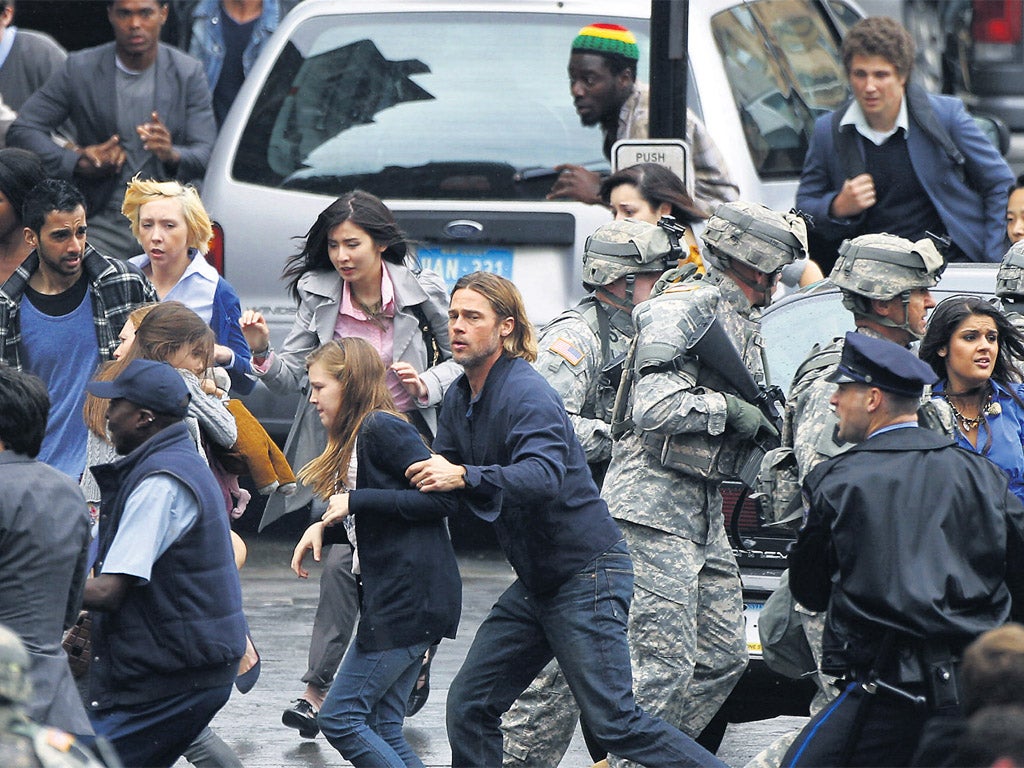
They have been the stuff of grainy B-movie nightmares for almost a century; ghoulish hordes of the undead who walk the Earth with outstretched arms in search of human prey. Now, zombies are bursting into the mainstream – and being hailed as the new vampire for the post-Twilight generation.
Brad Pitt is currently filming World War Z, based on Max Brooks's bestselling 2006 novel set in the aftermath of a war between humans and zombies. Fêted American novelist Colson Whitehead's Zone One, billed as "a zombie novel with brains", is published this month. Meanwhile, the second series of the television drama The Walking Dead is currently airing to prime-time Friday night audience and Seth Grahame-Smith's mash-up novel, Pride and Prejudice and Zombies, which has sold more than 700,000 copies, is set to be made into a film.
The cinematic zombie is most associated with George A Romero and his cult movies of the 1960s and 1970s. Of late, Hollywood has eschewed the monsters. Just under a decade ago, directors began to recast the zombie, combining the sub-genre with action or apocalypse movie tropes as in 2007's I Am Legend, (where the "Darkseekers" threaten the human race with extinction). Others such as 2009's Zombieland, starring Woody Harrelson, drew on the genre's black-comedy aspects (a sequel is now rumoured to be under way).
The 21st-century zombie is a very different creature from its original incarnation. The cloddish, barely sentient beings of early films such as White Zombie (1932), starring Bela Lugosi, or the somnambulistic menaces of Romero's oeuvre have been replaced by faster, cleverer hybrids. Hovering in the uncertain space between human and immortal, today's living dead have either an evil intelligence or a tortured humanity, rounding them out.
Pitt's World War Z has a cast of over 1,000 zombies, Matrix-style androids who are capable of running after prey. The new breed brings with them not only the threat of an assault on human life, as their forefathers did, but also the prospect of total annihilation via biological contagion – think Danny Boyle's 28 Days Later and 28 Weeks Later, or Slither (2006), which featured zombies infected by alien parasites.
Brooks, whose book became a near instant New York Times bestseller, has previously said that zombies tap into our most primal fears: "Other monsters may threaten individual humans, but the living dead threaten the entire human race... Zombies are slate-wipers."
His view supports the thesis that the rise of the zombie film reflects a sense of destabilisation amid rising global conflict and economic crisis. Professor Arnold Blumberg, author of Zombiemania, and who teaches Zombie Studies at Baltimore University, believes this renaissance represents our "anxiety over the breakdown of social order."
"Zombies are potent icons for our culture's beliefs and fears, since they are the monsters closest to us in appearance and behaviour. Humans robbed of free will or personality, dark carnival mirrors of ourselves, our own families and friends turned against us.
"The way zombies have now spread to all corners of the globe, even countries that had never before produced a zombie story, does speak to a growing sense of global despair and disorder that's finding its way out through entertainment and expressing itself best through the form of the zombie."

Watch Apple TV+ free for 7 day
New subscribers only. £8.99/mo. after free trial. Plan auto-renews until cancelled.
ADVERTISEMENT. If you sign up to this service we will earn commission. This revenue helps to fund journalism across The Independent.
Watch Apple TV+ free for 7 day
New subscribers only. £8.99/mo. after free trial. Plan auto-renews until cancelled.
ADVERTISEMENT. If you sign up to this service we will earn commission. This revenue helps to fund journalism across The Independent.
John Landis, director of An American Werewolf in London (1981) and Michael Jackson's Thriller video, believes the movies provide an imaginative channel to explore collective insecurities – an end of the world fantasy underpinned by real-life anxiety.
"The most frightening thing for social order is anarchy and that is what the zombie apocalypse movie represents. One of my favourite movie moments of the last ten years is in Shaun of the Dead when [Simon Pegg] goes out of the house, turns the corner, goes into a shop and back again. There are bloody handprints on the wall, signs of the undead everywhere, society crumbling all around him, and he is totally unaware. What does that say to you?"
Whitehead's Zone One says as much about contemporary New York as a zombie-infested one, its smoking landscape hauntingly resonant of the 11 September attacks and the post-Apocalyptic Stress Disorder suffered by survivors. A reviewer for Booklist comments: "This diabolically smart... zombie nightmare prods us to think about how we dehumanise others, how society tramples and consumes individuals, how flimsy our notions of law and order are, and how easily deluded and profoundly vulnerable humankind is."
The original concept of the zombie arose from Western misconceptions about West Indian Voodoo traditions at the turn of the 20th century, according to Professor Blumberg. Occultist and explorer William Seabrook visited Haiti and developed an interest in voodoo, described at length in his 1929 book, The Magic Island. Numerous articles began to appear, breathing life into zombie mythology, says Blumberg: "People were frightened and fascinated by this 'primitive' culture that believed in the subjugation of living human beings, and perhaps even the dead, through some unknown narcotic and supernatural influences."
Novelists HP Lovecraft and HG Wells further explored ideas of the undead, which were developed in film, culminating in Romero's groundbreaking Night of the Living Dead in 1968. Romero later explained that, with a black lead character, he used the zombie genre as a way to critique real world ills such as racism, slavery and bio-engineering.
Filmmakers of the 1970s went further, making schlock-horrors with obvious subtexts. One film featured German Nazi zombies rising from an underwater grave. James Blackford, from the British Film Institute, says that during this time, the genre became a way in which to "attack the establishment" and authoritarian regimes. Latterly, Blackford has noticed a softening towards the zombie figure who now inspires sympathy as often as terror. "Recently, fans have been organising zombie walks, where they dress up as zombies, and they speak of their affection towards them," he says. "In the early days, the zombie was the scary 'other'. Nowadays, there's a new kind of adoration."
Join our commenting forum
Join thought-provoking conversations, follow other Independent readers and see their replies
Comments