Preview: Sundance London
The heyday of American indie cinema is long gone – but as the Sundance Festival visits these shores, Jonathan Romney detects life in the old dog yet ...
Later this month, the legendary Sundance Film Festival comes to Britain for the first time, with a four-day jamboree of film and music at London's O2 arena. Cynics might say it's two decades too late. For years the words "American indie" carried an almost magical charm in film circles; today many feel that the US independent scene is a demure shadow of its once pugnacious self.
In its glory period, from the mid-1980s to the early 1990s, American independent cinema bubbled with energy and innovation, its history a succession of startling breakthroughs and emergent movements. That history was for a long time virtually synonymous with Sundance, a history that properly began when Robert Redford's Sundance Institute took over the management of the US Film Festival in Park City, Utah, in 1985 (the festival was officially renamed Sundance in 1991). What we now think of as the independent spirit in US film-making goes back decades – at least as far as John Cassavetes's Shadows in 1959 – but the film-makers who emerged at Sundance really defined the US independent style of the late 20th century. Theirs is a history of sudden revelations and surprise breakthroughs, taking in names such as the Coen brothers, Steven Soderbergh, Spike Lee, Todd Haynes, Quentin Tarantino. The Sundance era brought movements and generational trends: the birth of New Queer Cinema, the rise of popular documentary, several waves of women film-makers (most enduringly, Kelly Reichardt and Lisa Cholodenko), a short-lived but powerful explosion of African-American talent. And there was the occasional genre-bending one-off (Brick, Donnie Darko ...).
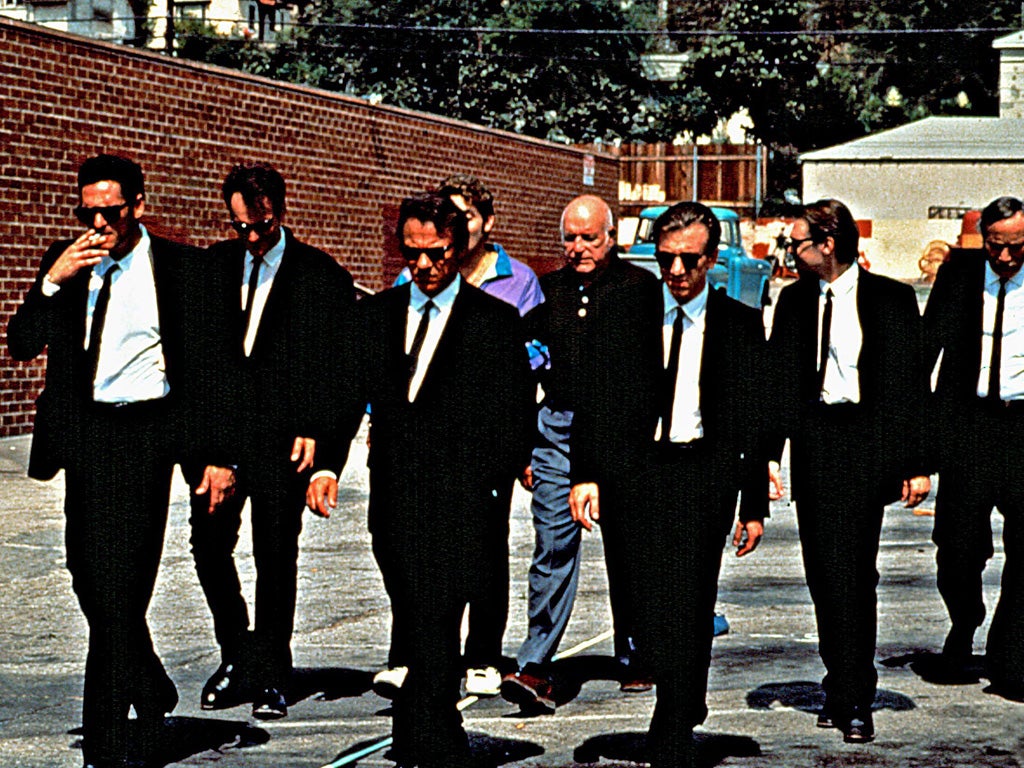
A series of critical and popular hits helped put Sundance on the map: the Coens' Blood Simple in 1985, Lee's She's Gotta Have It (1986), Soderbergh's Sex, Lies and Videotape (1989), and, in 1992, Reservoir Dogs, the film that reshaped the audience's, and the industry's, ideas of what indie genre films could be. More than just showing films, Sundance cemented a reputation as a meeting place for film- makers, audiences and industry people; it also played a key part in developing films and nurturing careers through its labs. Its reputation may fluctuate, but, says US critic Amy Taubin, a regular visitor since 1989, it's still an essential date: "Sundance doesn't always make the right calls, but it does seem absolutely necessary, in the way Cannes is necessary, if you're going to be aware of the state of American independent film."
Today there are still discoveries, but the breakthroughs aren't coming thick and fast as they once did. It's been a while since we saw a new US film-maker as challenging as social satirist Todd Solondz (Happiness), as individual as the Andersons (Wes and Paul Thomas), as politically challenging as Spike Lee. In fiction, too much is simply good-natured or passive-aggressive. The big news (in a small way) in the last decade was the strain of diffident micro-budget fiction known as "mumblecore" (particularly associated with the South by Southwest festival in Austin, Texas). Some names associated with this trend have established themselves in the mainstream. The Duplass brothers' imminent Jeff, Who Lives at Home, starring Jason Segel, has its charm but is almost militantly insubstantial. Then there's hyphenate of the moment, writer-director-actress Lena Dunham, whose likeable if hardly revelatory comedy, Tiny Furniture, is released here this week; she's now made a TV series for HBO, Girls, under the aegis of Judd Apatow.
It's natural that the best talents should be absorbed by the mainstream. Everyone, sooner or later, wants to work on more than a pittance: Steven Soderbergh once commented: "What we should all want is for the smartest directors around to have the resources that the dumb directors have." But the days may be gone when the smartest turned instinctively to film. Once, everyone fresh out of high school wanted to make the next Pulp Fiction. Now, says Amy Taubin: "If you were 18 years old and an enormously creative person, you would be interested in other media, not the movies. The people who still want to be film directors think, 'I'll make Hollywood lite – then I'll be able to make Hollywood heave'."
The people behind Sundance beg to differ: they believe the US indie scene is as strong as ever. John Cooper, the festival's director since 2009, feels American fiction film is in rude health: "I've seen the bar raised in the past 10 years. I've seen independent film-makers become better in general – better storytellers, more inventive with craft."
While critics lament a dearth of innovation in fiction, it's generally agreed that the documentary scene is consistently strong. One title widely tipped as unmissable – you can catch it at Sundance London – is Eugene Jarecki's The House I Live In, by all accounts a politically radical and hugely provocative analysis of the US "war on drugs". Cooper says documentarists are raising their game: "With documentaries, we haven't even got there yet, we're on the verge of an important movement."
Fiction features continue to yield excitement, but in bursts rather than entire waves. Last year, Sundance brought us Sean Durkin's extraordinary Martha Marcy May Marlene, and now Durkin's production partner, Antonio Campos, has made Simon Killer: like Durkin's film, it's said to be very Euro-flavoured. And this year's winner of Sundance's Grand Jury Prize for drama is reportedly as eye-opening a debut as we've seen in some time: Behn Zeitlin's Beasts of the Southern Wild, about the world as seen by a small girl living in the Louisiana marshes.
You'll have to wait till other UK festivals bring us Beasts; meanwhile Sundance London offers a diverse taster menu. Even if it's only to take a sceptical reading of the indie sector's vital signs, Sundance London will be worth a visit – and you won't need parkas against the Utah snow.

Watch Apple TV+ free for 7 day
New subscribers only. £8.99/mo. after free trial. Plan auto-renews until cancelled.
ADVERTISEMENT. If you sign up to this service we will earn commission. This revenue helps to fund journalism across The Independent.
Watch Apple TV+ free for 7 day
New subscribers only. £8.99/mo. after free trial. Plan auto-renews until cancelled.
ADVERTISEMENT. If you sign up to this service we will earn commission. This revenue helps to fund journalism across The Independent.
The Sundance kids
African American cinema
Spike Lee started an explosion with She's Gotta Have It in 1986. But the often-overlooked godfather of new African-American cinema is Charles Burnett (1977's black-and-white realist study Killer of Sheep). Female directors made epoch-marking features such as Julie Dash's Daughters of the Dust (1991), for one.
Signs of life: Hipster-experimentalist Terence Nance is in Sundance London with his freewheeling, self-reflexive, animation-laden An Oversimplif-ication of Her Beauty.
New queer cinema
This wave shook things up in the 1990s thanks to Todd Haynes (1991's triptych Poison), producer Christine Vachon, and film-makers Tom Kalin (Swoon) and Gregg Araki (Totally F***ked Up). Lesbian breakthrough film was Rose Troche's 1994 comedy Go Fish. All of which paved the way for hits such as Lisa Cholodenko's The Kids Are All Right.
Signs of life: Cheryl Dunye made jaws drop in Berlin this year with her Mommy is Coming.
Slackerism
Since Richard Linklater's 1991 Slacker, much US indie film was about goofing off, not least by the voluble Kevin Smith (Clerks). Opinions divide on the "mumblecore" generation.
Signs of life: Lynn Shelton follows her porn-bromance comedy Humpday (2009) this summer with Your Sister's Sister, with Emily Blunt and mumblecorist Mark Duplass, co-star of Sundance London romcom Safety Not Guaranteed.
Digital breakthroughs
US indie mavericks challenged celluloid in the late 1980s, when Sadie Benning and Michael Almereyda tried the Pixelvision toy camera. The Blair Witch Project (1999) worked genre horror and the internet to pioneering effect.
Signs of life: 2010 faux-or-no docu Catfish is one of the numerous projects thriving on the web.
The eccentrics
Auteurs who don't fit in any bracket: from master misanthrope Todd Solondz (Happiness), to patrician dandy Whit Stillman (Metropolitan), whose long-awaited return is Damsels in Distress. Then there are the film/art crossovers, such as cult narcissist Vincent Gallo.
Signs of life: Jake Schreier and Christopher D Ford cheered Sundance 2012 with the futuristic buddy film Robot and Frank.
Sundance London is at the O2, 26-29 April (sundance-london.com/ 0844 858 6754). Lena Dunham's 'Tiny Furniture' is out now. Whit Stillman's 'Damsels in Distress' is released on 27 April. 'Jeff, Who Lives at Home' and 'Your Sister's Sister' are out later this year
Join our commenting forum
Join thought-provoking conversations, follow other Independent readers and see their replies
Comments