The Big Question: Are we heading towards a 3D screen future?
Why are we asking this now?
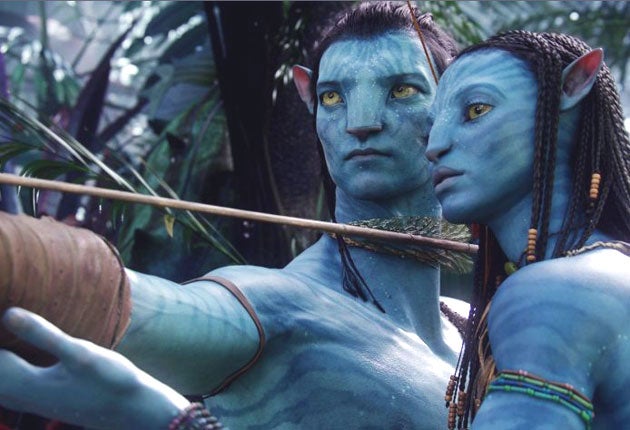
The technology is suddenly everywhere – heralded as the future of television and transforming cinema-goers' experience. This week rugby sponsors O2 announced that England's upcoming Six Nations matches with Wales and Ireland would be beamed live in 3D to 40 Odeon and Cineworld cinemas nationwide next month. Meanwhile James Cameron's Avatar is proving the most successful 3D movie ever made, with takings that have topped over $1bn, and Pixar's Up took $680m globally. In 2010 around 20 out of 170 movies will be made in 3D, double the number from last year. A 3D animated remake of the Beatles' Yellow Submarine, directed by Robert Zemeckis, is also in the pipeline. At last week's Consumer Electronics Show (CES) in Las Vegas all the major TV manufacturers unveiled 3D sets. BSkyB plans to launch a 3D channel later this year.
Haven't we seen all this before?
3D technology has been around for almost as long as cinema. In 1922, The Power of Love was the first feature film to be screened in 3D at the Ambassador Hotel Theatre in Los Angeles. The effect was achieved by projecting two films strips – one using reds, one using greens – on top of one another. Viewers watched the film using glasses with different-coloured filters in their lenses. The golden age of 3D was in the early 1950s, and began with 1951's Bwana Devil, an action-thriller set in Africa. Two prints were projected through polarising filters at the cinema screen, before being separated by glasses with differently-polarised lenses. The trend declined due to its expense. As well as duplicate prints, it required two projectionists
It was only a matter of time before the technology reached TV. In 2008 Samsung launched a £700 3D TV which requires glasses; specialist TV manufacturers like Alioscopy and Magnetic also already make glasses-free 3D screens.
So what's different now?
Digital technology. Instead of using film, digital cinemas project images from a computer's hard drive. Although 3D technology uses the same principles of polarising light used back in the 1950s, photography and distribution costs are much lower, meaning 3D is a much more worthwhile investment for Hollywood studios. Special adapters are fitted to conventional digital projectors that rotate the light several times per second, mimicking the effect of two projectors.
There are around 300 cinemas in the UK that can show 3D films. Traditionally, shooting in 3D required two cameras; now, especially in situations with limited post-production such as television sports events, "stereoscopic" cameras with two lenses are employed. A spate of films have ridden the 3D wave over the last year – among them Ice Age 3D and Journey to the Centre of the Earth 3D – re-igniting interest in cinema during a difficult economic climate. At CES, Panasonic unveiled a 152-inch plasma screen that produced a better image than many cinemas.
Isn't watching 3D going to cost us more money?
In the short term, yes. In 2008, the average UK ticket price was £5.18, but with their premium mark up, 3D films are generally up at around the £7 mark, even higher in West End cinemas, which can be as much as £14. Around 30p per ticket goes to RealD, who make the clip-on gadget that converts conventional digital projections to 3D.
With regard to televisions, US research firm Gartner says it only costs 15 per cent more to make a 3D TV than a regular flat screen. "At the moment 3D TVs are the same price as High Definition [HD] TVs were when they were first launched," says Stuart Cupit, a director at 3D production specialists Inition. "But when people start to buy them in large numbers the prices will come down. At the moment they are premium products."
So just how successful is 3D?
In the first weekend of January, Avatar took £4.9m from the UK cinemas with 3D screens, £713,000 from 418 D cinemas, and £282,000 from nine Imax sites. Individual cinema averages were as follows: £31,353 in Imax 3D; £16,340 in regular 3D; and £1,705 in D. That tells its own story, and the film helped UK box offices amass record gross takings of £1bn in 2009.
While all the broadcasters have been watching such trends closely, BSkyB is the only one to publicly commit to a channel launch. It is currently amassing enough 3D raw material to broadcast. The BBC says it is "exploring the possibilities in terms of multi-view capture and stereoscopic imaging" but says it is too early to say how popular 3D will be with audiences. The cinema and TV craze must be something of a surprise to computer games fans, who have been buying 3D games for years.
What's the verdict in the film and TV industry?
DreamWorks Animation chief executive Jeffrey Katzenberg has described 3D as "the greatest innovation in film since colour" while Intel CEO Paul Otellini told crowds at CES that, "I think that 3D... is the next thing that's poised to explode in the home." Cupit, who is helping to develop the technology to be used to broadcast the Six Nations, says: "3D creates a richer, more engaging experience than a D flat image. I think it will become the new standard. As the technology sorts itself out it will become more prevalent."
Ironically Cameron, who has necessarily been one of 3D's most ardent standard bearers, recently merely issued a guarded approval of 3D TV technology. "As 3D starts to come into the living room, and come in at higher frame rates, then we're gonna have to up our game again. 'Cause movies can't look worse than what you're getting at home," he told Variety magazine.
Does 3D annoy the cinema purists?
According to the US film critic Roger Ebert, "Every single frame of a 3D movie gives us something to look at that is not necessary." His main argument is that the more unbelievable shots of debris flying from the screen in 3D destroy the illusion that the viewer is a part of the action.
The British film critic Mark Kermode is also outspoken in disliking 3D, saying that "all the things that were impressive about Avatar had nothing to do with 3D...unless you're making a movie about sky-diving spear-chuckers there's a limited use of 3D." Kermode says that the 30 per cent colour loss involved with wearing 3D glasses during the film was not worth the 3D effect. "Avatar shows us exactly what stereoscopic cinema is capable of. And the answer is nothing."
So where does 3D technology go from here?
BSkyB has not confirmed an exact launch date for its 3D channel but says it plans to first launch its 3D service in pubs before marketing it to domestic users. Long-term developments are less clear. "It will probably be the technology that doesn't require glasses coming through," concludes Cupit. "It's the latest in a long line of incremental steps. First it was black and white, then colour, then HD. Eventually we'll have holographic images bursting out of your TV. But not so radical that you think it's science fiction."
Is 3D here to stay?
Yes...
* 3D has succeeded in buoying British cinema audiences in a challenging economic climate
* Most major broadcasters and TV manufacturers are investing in 3D technology
* The number of films being made in 3D has doubled over the last year, and the trend is set to continue
No...
* Prices of 3D TVs and cinema tickets continue to be more expensive
* While it might become the standard in cinemas and TVs, current stereoscopic technologies may soon become obsolete
* Historically, acceptance of 3D technology has risen and fallen; the latest phase may be yet another fad
Join our commenting forum
Join thought-provoking conversations, follow other Independent readers and see their replies
Comments
Bookmark popover
Removed from bookmarks