The Etruscan Roots of The Twilight Saga
Were there vampires in Volterra? Probably not, but the Etruscans had their own brigade of gods and demons representing night, death and resurrection.
'The Twilight Saga: New Moon' release fuels vampire mania around the world. While teenagers go completely nuts over the film's hunky vampire Edward (Robert Pattinson) – one wrote 'bite me' on her face as she queued with 5,000 others to see him in London last week – other die-hard fans of the Twilight books, written by Stephenie Meyers, are also descending on the small hill-top town of Volterra, in Tuscany, where some of the action of the film is set (even though filming actually took place in Montepulciano, 70 miles away). As a result, hoards of teenagers have been visiting Volterra – a town with Etruscan roots and its own heritage of Etruscan demons, gods and goddesses associated with death, resurrection and the night.
The Twilight Saga isn't the only vampire story to grace our screens lately. The popular US series True Blood – about a young woman in Louisiana who also falls in love with a vampire – based on the The Southern Vampire Mysteries series of novels by Charlaine Harris, also gathered cult status, adding to the growing body of vampire fiction on our bookshelves and on our screens. The nineties saw the likes of Buffy the Vampire Slayer, Interview with a Vampire, Bram Stoker's Dracula as well as From Dusk Till Dawn. The 21st century has seen vampire fever take over with Van Helsing, more Buffy and now Twilight and True Blood.
In fact, Dracula is the most often-portrayed fictional character in film. So what is it about vampires? There must be something about the blood-sucking, garlic-fearing, sun-dodging demons that strikes a chord with modern audiences – and indeed audiences since the early 18th century, when, following a vampire craze in the 1720s and 1730s, a poem called The Vampire, by Heinrich August Ossenfelder, was published in 1748. Vampires soon became a stock part of gothic fiction but they also had a romantic and erotic side to their personae, seducing women at night with their vampire's kiss of death.
To this day vampires are often portrayed as being quite sexy – think Robert Pattinson or True Blood's Stephen Moyer. However, the modern romantic vampire hero has more in common with figures from ancient mythology, rather than the vampire of Eastern European folklore (an altogether more corpse-like and unappetising kind of creature). The Incubus and the Succubus, dating back to the Sumerian kings of Mesopotamia (under the name of Lilu and Lilitu), were demons that appeared at night and seduced dreamers, often into erotic acts against their will.
Other figures from ancient mythology share some of the vampire's traits. In ancient Egypt, Sekhmet, the lion-headed goddess of Upper Egypt, was associated with blood-lust and with drinking blood (mythology has it that she drank a liquid resembling blood to quench her thirst for violence). The ancient Greeks and Romans also had their share of supernatural figures and demi-gods, including Hecate the witch-like figure and her daughter Empusa, who sucked the blood of the men she seduced while they slept. The Lamia was another demon in female form, renowned for sucking the blood of children and young men, while the Strixes were nocturnal bird-like creatures of Greek and Roman mythology, who ate human flesh and blood.
Closely connected with Greek and Roman mythology was the Etruscan pantheon, which also had its dark side. The Etruscans had several gods, goddesses and demons associated with death, the underworld, the night and resurrection. Some of the gods and goddesses included Artume, Vetis, Mania and Tvath. Etruscan demons of death include the Charontes, Tuchulcha (a grotesque demon from the underworld with donkey's ears and snakes for hair and hands) and Vanth (a herald of death with eyes on her wings).
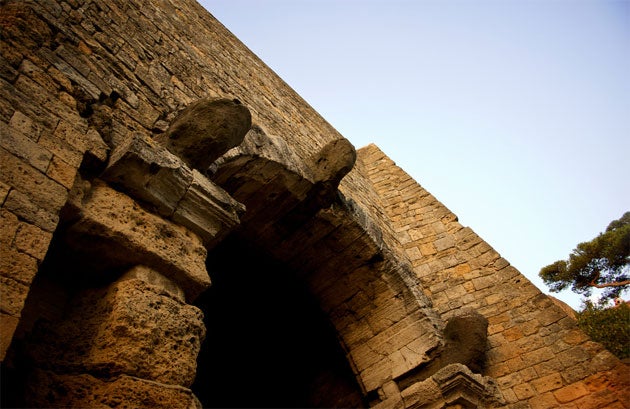
Given the rich Etruscan mythology with many figures associated with death and the underworld, it's fitting that Volterra – an important Etruscan centre, known as Velathri to the Etruscans – is the setting for the new Twilight film. Volterra was a settlement since neolithic times and was then colonised by the Etruscan Velathri during the 8th century BC, while the city wall was built in the fourth century BC. It became one of the 12 important Etruscan city states but in the third century BC came under Roman control. An impressive Augustan-era amphitheatre, some fourth century AD baths as well as an Etruscan acropolis, are some of the important heritage sites in Volterra.
Think vampires are scary? What about the demons from the Book of the Dead? http://heritage-key.com/blogs/sean-williams/book-dead-colloquium-2009-seans-top-ten-facts-theories

Watch Apple TV+ free for 7 day
New subscribers only. £8.99/mo. after free trial. Plan auto-renews until cancelled.
ADVERTISEMENT. If you sign up to this service we will earn commission. This revenue helps to fund journalism across The Independent.
Watch Apple TV+ free for 7 day
New subscribers only. £8.99/mo. after free trial. Plan auto-renews until cancelled.
ADVERTISEMENT. If you sign up to this service we will earn commission. This revenue helps to fund journalism across The Independent.
How Humans Invented Death http://heritage-key.com/publication/buried-soul-how-humans-invented-death
Join our commenting forum
Join thought-provoking conversations, follow other Independent readers and see their replies
Comments