Film festival pays tribute to 'blasphemous' masterpiece
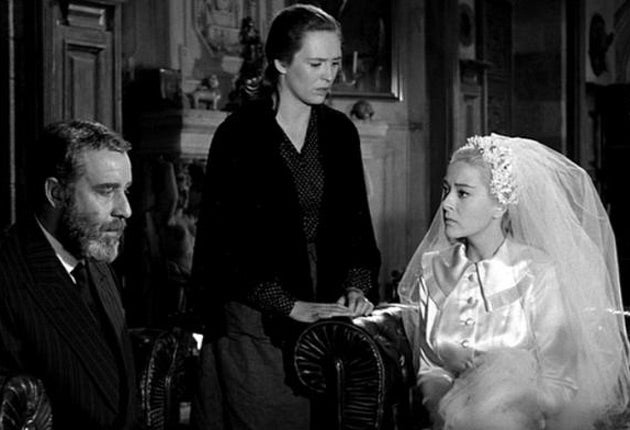
Viridiana, Spanish director Luis Buñuel’s masterpiece about a beautiful young nun and her brush with a lustful uncle, unleashed a storm in Spain when it was released in 1961.
The Vatican called it “blasphemous”. The conservative Catholic regime of the dictator, General Francisco Franco, banned it from Spanish cinemas. Spanish film buffs delighted in silence at the ironic barbs at the Church in clandestine viewings after it won the Palme d’Or in Cannes.
More than 40 years later, the film so appreciated abroad and loathed at home has received a hero’s welcome at this week’s Malaga Festival of Spanish Film. The festival paid tribute to the black-and-white tale of the nun’s near rape and awakening to the gritty real world with its Golden Film award. It was timed to mark 25 years since the death of the Spanish auteur who reportedly once said: “I hope I don’t go to hell. Imagine the table talk of all those popes.”
Watch a clip from the film
The celebration of this classic of Catholic Church controversy served as a good excuse for a reunion of surviving cast members and producers, such as the Mexican actress Silvia Pinal, who played the title role of the soon-to-be-disillusioned nun about to take her final vows, and the director’s son, Juan Luis Buñuel, an assistant on the set. “A film that so suffered in its lifetime, whose existence was threatened in Spain and abroad, has survived and moved us to admiration,” the festival organisers announced. “Seen in 2009, it continues to be a testimony of a social, ethical and religious vision very different from the politically-correct discourse. The tribute is more than compensation for its hardship. It is a true recognition of the creative values of this beautiful, difficult film.”
Sombre and surreal, Buñuel’s film spirals downward from the idealism of the fresh-from-convent Viridiana to a drunken orgy of grotesque beggars, who in gratitude for her charity revel at her uncle’s opulent estate to the tune of Handel’s Messiah. During the film, the young nun is drugged and nearly raped in her sleep by her uncle, who commits suicide. She then is left to share her uncle’s property with her naughty cousin and his lover. Along the way, she loses faith in her religious ideals.
The Vatican was furious. It was especially offended by a sequence of the film in which the beggars strike a pose at the uncle’s dinner table in which they mimic Da Vinci’s Last Supper. Immediately after the Cannes festival, Franco demoted the culture minister who failed to catch this affront to the regime’s Catholic code.
“Franco ordered that all the copies of the film be burned,” recalled Juan Luis Buñuel, the director’s son, during a press conference at the Malaga festival. “I took the negatives to Barcelona and hid it under the cape of a bullfighter to cross the border and I was able to develop the film in Paris.”
He recalls how his father tinkered with the end of the film to get past the censors. He symbolised a ménage à trois in which the would-be nun, her crown of thorns burned and her locks unleashed, decides to join her cousin and her cousin’s lover in the bedroom. For a game (ahem) of cards.
“Censorship is terrible, but in the end we won!” the director’s son told reporters. Although the film won the Palme d’Or at Cannes, it was not shown legally in Spain until 1977, following the death of the dictator. By that time, even the Communist Party was legalised and other former taboos had been removed.
Join our commenting forum
Join thought-provoking conversations, follow other Independent readers and see their replies
Comments