Hitchcock's forgotten silent films restored
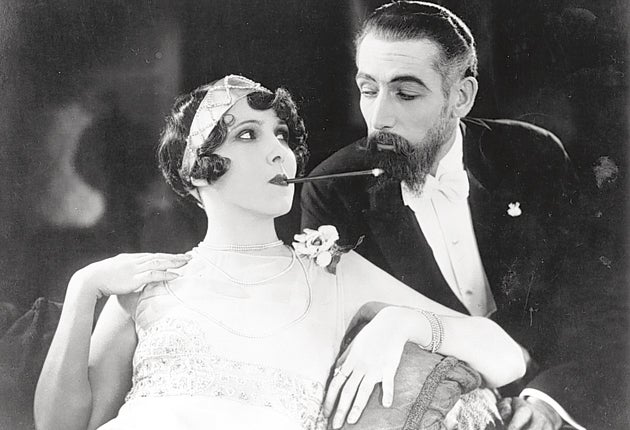
A nationwide Alfred Hitchcock retrospective featuring nine of the celebrated director's rare silent films, made at the start of his career, will be staged in 2012 in a series of public screenings.
The often forgotten collection of silent features made by the young Hitchcock and seen by almost nobody for decades, are said to display the stylistic features, camera work and suspense-filled plots developed in his later Hollywood works.
In 2012, the public will be able to see the footage for themselves. The surviving silent films are expected to be aired as part of the Cultural Olympiad – the arts programme running alongside the Olympic Games – although this is yet to be officially confirmed.
Some will be screened at the British Film Institute (BFI), while others may be set to live music by experimental modern bands on temporary stages and at musical festivals. Objects relating to the films will also go on display.
Eddie Berg, artistic director of the BFI, said it was appropriate to stage a Hitchcock retrospective in the Olympic year, not least because the film-maker was born in Leytonstone, near the Olympic Park in east London.
"One of the things we are trying to get off the ground is to restore the silent films. Most of the visual tropes in these titles appear in his later works. We want to look at his influence on the contemporary world. The season will look at his huge body of work and his influence in different ways," said Mr Berg.
The silent titles will form the heart of the retrospective, but the exhibition may also include the music of the American composer Bernard Herrmann, who collaborated with Hitchcock on the scores for Psycho, North by Northwest, The Man Who Knew Too Much and Vertigo. A staging of Douglas Gordon's 24-Hour Psycho, a 1993 artwork featuring a slowed-down version of the horror film, will also feature.
Amanda Neville, director of the BFI, said the initiative would "resurrect the [Hitchcock] films that are not on the tips of everybody's tongues".
Some of the films need critical restoration work, she said, and "three of them cannot go through a film projector – the level of damage to them is phenomenal."

Watch Apple TV+ free for 7 day
New subscribers only. £8.99/mo. after free trial. Plan auto-renews until cancelled.
ADVERTISEMENT. If you sign up to this service we will earn commission. This revenue helps to fund journalism across The Independent.
Watch Apple TV+ free for 7 day
New subscribers only. £8.99/mo. after free trial. Plan auto-renews until cancelled.
ADVERTISEMENT. If you sign up to this service we will earn commission. This revenue helps to fund journalism across The Independent.
Robin Baker, the BFI's head curator, said he was keen to discover the whereabouts of Hitchcock's silent movie The Mountain Eagle, which he called the "holy grail" of lost British films.
"It was made in 1926 and was his last silent film featuring a sexually vulnerable young woman and a case of miscarriage of justice," he said.
Hitchcock began his career in Britain as a designer of film title cards before directing a dozen silent films, including The Lodger, in 1926 and which the BFI hopes to restore and screen.
His first "talkie" film Blackmail, released in 1929, was shot as a silent feature and later converted to sound.
Early Signs: His Silent Gems
The Pleasure Garden (1925)
Hitchcock's debut as a director features elements that characterise his later work. The plot focuses on the lives of two dancers, one who ascends to great heights and another who ends up in a marriage with a dangerous womaniser. It also features Hitchcock's handwritten signature in the opening credits.
The Lodger (1926)
His third silent feature and first suspense thriller is about a mysterious lodger who might be a serial killer. Visually, it was deemed highly imaginative for its time, most notably in a scene in which Hitchcock installed a glass floor so he could show the lodger pacing up and down his room from below.
The Farmer's Wife (1927)
From a play by Eden Philpott, this semi-comic story of a widow trying to find a new wife was shot like a thriller. The director was cameraman in some scenes.
Join our commenting forum
Join thought-provoking conversations, follow other Independent readers and see their replies
Comments