IoS film review: Amour
An unflinching drama tackles the cinematic taboos of old age and degeneration
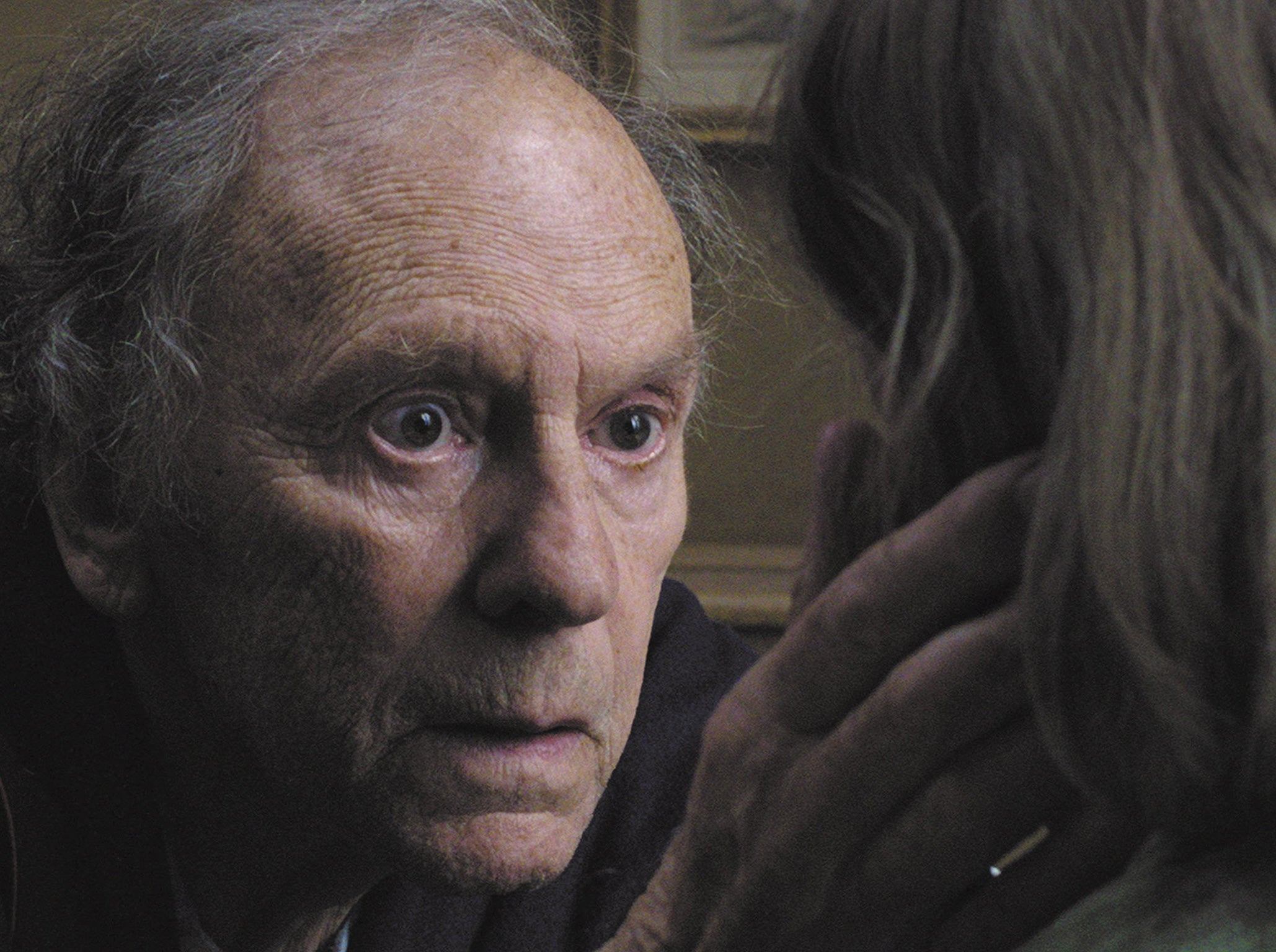
Austrian maestro Michael Haneke is sometimes thought of as a film-maker with a message to impart – a message that has variously been interpreted as "We're all under surveillance", or "Western culture is screwed" or "Mainstream cinema rots the soul". But in his new film, the message seems rather gentler than usual. This time, it might be summed up as: "Why don't you go and call your old mum?"
Amour is the latest in a series of indisputably great films from a director whose work, nevertheless, has at times felt like a bitter dose of medicine. Haneke's newest offering feels more compassionate than we're used to from him. Still, I'd recommend it with certain caveats. It's a film you might not care to see if you have elderly parents, or if you're old yourself, or unwell; or if you know, or ever have known, anyone who falls into these categories; or if you simply happen to be mortal. In fact, you might find Amour unbearably close to the bone if you're in any way affected by the human condition. Because there's no one on earth who isn't in one way or another affected by Amour's subject: ageing, physical frailty and death.
Daunting as it might sound, Amour is nonetheless an approachable and involving drama. It's about an elderly Parisian couple named – like so many Haneke couples – Georges and Anne (Jean-Louis Trintignant, Emmanuelle Riva). They're classical musicians, deeply at ease in each other's company and still in love after a lifetime together. One night they come home from a concert to find there has been an attempt to burgle their flat. It's no big drama – except that this attempted invasion is the first thing that disturbs their calm. It's the prelude to death knocking at the door.
Soon after, Anne suddenly goes into a momentary trance. This sequence is brilliantly orchestrated to the background sound of a running tap, proving that Haneke is an expert at quasi-Hitchcockian suspense. Things turn bad, then inexorably worse. Anne has had a stroke; she starts using a wheelchair; her wrists seize up. None of this is spelt out dramatically, but is indicated in jumps between episodes: we see a mechanical bed installed in the couple's room, then notice Anne's bedside table laden with pots, wipes and other medical impedimenta. Haneke once made a terrifying "home invasion" drama, Funny Games, and, in its way, Amour belongs to that genre: it's about a home invaded by mortality.
The subject might seem to allow no reassurance. Yet there's a consistent undertone of tenderness to the drama: as the title suggests, this is a film about love, enduring under siege. The film is note-perfect in evoking the couple's familiarity and the way that they still have surprises for each other; there are extraordinary intimate scenes in which Georges tells Anne some of his childhood memories, things that, after all this time, she still doesn't know. Or perhaps he's telling her them for the umpteenth time – the delicacy of the film is such that we never really know.
Trintignant, aged 81, and Riva, 85, have long, illustrious pedigrees in European cinema – Trintignant has worked with Rohmer, Costa-Gavras, and Bertolucci in The Conformist, while Riva was a radiant and cerebrally sexual presence in Alain Resnais's Hiroshima Mon Amour (1959). What they both bring to Amour, above all, is the history of their own bodies and beings.
Both actors give superbly modulated performances as cultured people suddenly confronted with the terrible reality of their corporeal decay. But it's nothing less than an act of extreme bravery on Riva's part to play Anne – to act out the physical ordeals that could beset anyone of her age. It's unsettling, and awe-inspiring, to see the candour with which Riva takes part in scenes (being washed, being lifted off the toilet) that involve the absolute vulnerability and exposure of the body in decline. Riva's enactment of physical indignity makes it all the more dignified a characterisation: her Anne is, in a realistic everyday context, as close as cinema gets to a female Lear.
Rigorously staged and soberly photographed by Darius Khondji, Amour is set almost entirely in the couple's flat, which seems to close in on them gradually. Haneke plays a few narrative tricks, but they are simple ones – disconcerting shifts of time, space and point of view.
As a theme, old age is virtually taboo in cinema, one that's rarely been addressed seriously: notable exceptions are Leo McCarey's 1937 melodrama Make Way for Tomorrow and Yasujiro Ozu's deathless Tokyo Story (1953).

Watch Apple TV+ free for 7 day
New subscribers only. £8.99/mo. after free trial. Plan auto-renews until cancelled.
ADVERTISEMENT. If you sign up to this service we will earn commission. This revenue helps to fund journalism across The Independent.
Watch Apple TV+ free for 7 day
New subscribers only. £8.99/mo. after free trial. Plan auto-renews until cancelled.
ADVERTISEMENT. If you sign up to this service we will earn commission. This revenue helps to fund journalism across The Independent.
But no one has gone quite as far as Haneke in exploring the topic, or done so with such unforgiving honesty. The tough message of Amour is that, finally, neither family nor culture, nor even love, will protect any of us from the solitude of the brink. (A characteristically brittle Isabelle Huppert plays the role of the couple's daughter; the audience is left to decide whether her character is that of a villain, a victim or a humanly complex combination of both.)
Amour does not make for comfortable viewing, but Haneke treats his audience as intelligent grown-ups in a way that no other film-maker does. If you're adult enough to watch it, then you'll find Amour a profound and bracing experience – and one that, like it or not, will tell you more about your life (yes, yours, sooner or later) than you'd imagine cinema would ever dare.
Critic's Choice
Ben Affleck dons a beard and the CIA's cloak of secrecy for his account of a bizarre but true 1970s hostage rescue mission in Argo. Paul Thomas Anderson's The Master is a mysterious masterpiece, with Philip Seymour Hoffman and Joaquin Phoenix superbly matched in the story of a cult leader and his damaged acolyte.
Join our commenting forum
Join thought-provoking conversations, follow other Independent readers and see their replies
Comments