Ghost Town: The song that defined an era turns 30
The Specials' biggest hit was eerily prophetic about inner-city malaise in Thatcherite Britain in 1981 - and went to number one just as rioting erupted throughout the nation. Hugh Montgomery charts the story behind the song, while Paul Bignell and Mike Higgins speak to the key players
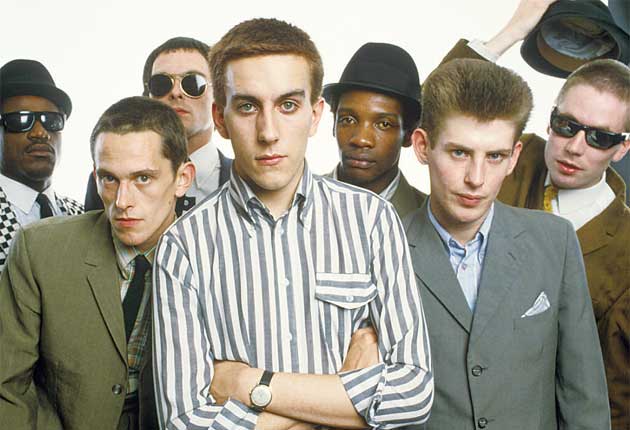
Strikers are taking to the streets. Youth unemployment is rife. The political and economic parallels between Britain in 2011 and 1981 may be self-evident, but musical reactions to today's tempestuous times are conspicuous by their scarcity. Thirty years ago, however, there was one anthem that defined that summer of discontent. On 11 July 1981, the Specials' "Ghost Town" hit the top of the charts, where it stayed for three weeks – the day before it reached No 1, rioting erupted across Britain. It was an elegiac portrait of the band's Coventry home town, but its message resonated far beyond the Midlands, chiming with a country feeling the bite of Thatcherite cuts and galvanised into unrest by April's Brixton riots. "Government leaving the youth on the shelf ... No job to be found in this country," Neville Staple and Terry Hall memorably sang to a backdrop of strident brass, haunted-house organ and loping bass, the groove's eerie Middle Eastern flavour as unsettling as the lyrics. Meanwhile, to compound the disquiet, the video offered a road trip through post-apocalyptically empty London streets.
The unrest contained within the song mirrored the band's own struggles. Formed in 1977, the group became pioneers of a cross-cultural sound that fused the languor of reggae music with the raw anger of punk. Meanwhile the founding by their chief songwriter, Jerry Dammers, of the 2 Tone Record label fermented the sound into a bona fide youth movement, snappily suited and multiracial. By 1981, however, and despite hits including "Gangsters" and "Too Much Too Young", they found themselves hobbled by internecine troubles, which came to a head just as "Ghost Town" peaked. Hall, Staple and Lynval Golding walked out on the group following an appearance on Top of the Pops.
Since then, the band has been through various incarnations and re-formations, though never achieving the same impact. In 2009 they embarked on a glowingly received 30th-anniversary reunion tour, but the hope of seeing the full, original line-up back together remains a distant one: Dammers and his former bandmates continue to be estranged. Their legacy, nevertheless, lives on, with the influence of their sound reaching far and wide, from Massive Attack to Lily Allen. Now here's hoping that some more acts see fit to pick up their political, as well as musical, mantle.
Lyrics
This town, is coming like a ghost town
All the clubs have been closed down
This place, is coming like a ghost town
Bands won't play no more
too much fighting on the dance floor
Do you remember the good old days before the ghost town?
We danced and sang, and the music played in a de boomtown
This town, is coming like a ghost town
Why must the youth fight against themselves?
Government leaving the youth on the shelf
This place, is coming like a ghost town
No job to be found in this country
Can't go on no more
The people getting angry
This town, is coming like a ghost town
This town, is coming like a ghost town
This town, is coming like a ghost town
This town, is coming like a ghost town
Jerry Dammers/2 Tone Records
Pauline Black: Lead singer of former 2 Tone band the Selecter
"It wasn't a surprise when it went to No 1 – most things 2 Tone became hits. 'Ghost Town' epitomised the 2 Tone idea that black and white can operate in the same unit and speak to the youth. And its sense of melancholy spoke clearly: there was [Operation] Swamp, the 'sus' laws, inner cities not functioning, racism dividing the working class. There was fighting at our gigs; there were lots of National Front people around. There was frustration about 2 Tone falling apart. We were 1970s bands in a time of two-man synth bands. The record companies were happy to leave 2 Tone's problems behind."
Pete Waterman: Former manager of the Specials
"I was the Specials' manager in 1978 and 1979, back when they were the Automatics: Neville and Lynval had been regulars at the Locarno [ballroom] where I was a DJ. Managing them was hard work: reggae was not supposed to be punk, and the industry didn't get it at first, but I knew they'd make it. 'Ghost Town' created a lot of resentment in Coventry at the time: there were outraged letters to the local paper saying 'Coventry isn't like that', which, of course, it bloody was! I remember if we put prices above 50p [at the Locarno], nobody would come in, because they couldn't afford it. Jerry's lyrics were modern poetry."
Tom Watson: Labour MP for West Bromwich East
"I was 14 years old – the summer after the notorious 1981 Tory budget. 'Ghost Town' spoke to me and every other teenage kid. I remember the school careers officer telling me that if I didn't smarten up I wouldn't get a job in the local carpet factory. My 'Ghost Town' was Kidderminster, but it could have been any Midlands town. We all wore our Fred Perrys and worshipped the Specials. A quarter of a century later, Conservative Sir Peter Tapsell said what Thatcher and Howe did in 1981 was 'financially and economically illiterate'. 'Fuck you,' I thought when the careers office door closed. I joined the Labour Party."
Les Black: Professor of sociology, Goldsmiths, University of London
"'Ghost Town' captures in minimal detail, but to profound effect, the urban decay of Britain in 1981. It is the death knell of industrial cities. It also showed, in the midst of this post-industrial world, a 2 Tone sensibility that drew on the rocksteady rhythms of Jamaican artists such as the Wailers, combined with the guitar-driven energy of punk. It is a record that so perfectly captured its moment that it became timeless. Little Richard's 'Lucille', released in 1957, has that quality, and the Sex Pistols' 'God Save the Queen' in 1977."
Paul Williams: Author of You're Wondering Now: A History of the Specials
"That 'Ghost Town' made it on to vinyl is an achievement, as it also encapsulates the violence and paranoia in the band. Jerry's a perfectionist and he wanted it done his way. The chorus was done in producer John Collins's flat in Tottenham Court Road in London. The music and backing tracks were done in Leamington Spa. The song was on a one-off EP, and never appeared on an album; that was the way they worked; they wanted to give good value. I saw them in Bridlington Spa: I was 13 and I remember all these giant skinheads. It was ferocious. But it made you dance. It made you think."
Alex Wheatle: Novelist
"I think I was in prison when it went to No 1, for affray during the Brixton riots. I was 18 that year, running sound systems. All my friends were unemployed. I was a reggae man – reggae addressed all kinds of problems. The risings in '81 were partly down to the dark lyrics of artists such as Peter Tosh, Dennis Brown, Barrington Levy. I thought the Specials were a bit tame. Then, all of a sudden, they were addressing my sort of issue. The lyrics of 'Ghost Town' are fantastic. I saw the Specials live two years ago; they rocked."Alex Wheatle's latest novel is 'Brenton Brown'

Enjoy unlimited access to 100 million ad-free songs and podcasts with Amazon Music
Sign up now for a 30-day free trial. Terms apply.
ADVERTISEMENT. If you sign up to this service we will earn commission. This revenue helps to fund journalism across The Independent.
Enjoy unlimited access to 100 million ad-free songs and podcasts with Amazon Music
Sign up now for a 30-day free trial. Terms apply.
ADVERTISEMENT. If you sign up to this service we will earn commission. This revenue helps to fund journalism across The Independent.
John Rivers: Recording engineer of 'Ghost Town'
"The recording of the three songs of the EP took about 10 days. I remember the producer, John Collins, making only one suggestion throughout the session, but he did do the mix, which is great. I had all the misery – there were problems with people being 'incapable'. I remember vividly that crazy vocal bit in the middle – when Jerry started humming that at us we thought he'd gone lunatic. But he was a determined man, and he was right. It's genius. And the flute part was recorded in the hall of my house. Horace [Panter], Brad [John Bradbury] and Lynval [Golding] were the greatest rhythm section I've worked with."
Jerry Dammers: Former Specials keyboardist and writer of 'Ghost Town'
"There was a riot in Brixton about a year before the record came out. I was writing the song partly about that. Also, Britain was falling apart. The car industry was closing down in Coventry. We were touring, so we saw a lot of it. Liverpool and Glasgow were particularly bad. The overall sense I wanted to convey was impending doom. There were weird, diminished chords: certain members of the band resented the song and wanted the simple chords they were used to playing on the first album. It's hard to explain how powerful it sounded. We had almost been written off and then 'Ghost Town' came out of the blue."
Horace Panter: Bass player in the Specials
"It was a reggae tune, but it had this kind of Middle Eastern melody on top of it. When it was released, Melody Maker thought it was great, but NME and Sounds thought it was not as good. It wasn't an instant hit – it was quite dark.
I'm thrilled that it was recorded in the small basement of a row of terrace houses in Leamington. It was around the time bands were going to Montserrat to record albums in 96-track studios. The Specials went to a little town in the Midlands and recorded on eight-track. The week after the song was released, there were riots and civil disobedience all over the country. It was a strange moment."
Simon Price: Rock critic, The Independent on Sunday
"Seventeen months separate the Specials' two No 1 singles, and a million musical miles. Their first, a live recording of 'Too Much Too Young', was essentially the Sex Pistols' 'Bodies' gone ska, but the intervening year saw the Specials ditch that punky-reggae template. Jerry Dammers experimented with lounge-noir on their second album, causing intra-band friction. 'Ghost Town' initiated a strand of spooked British pop that has lived on in Tricky and Portishead's trip-hop and the dubstep of Burial and James Blake.
Interviews by Mike Higgins, Paul Bignell and Hugh Montgomery; research by Alexandra Rucki
Join our commenting forum
Join thought-provoking conversations, follow other Independent readers and see their replies
Comments
Bookmark popover
Removed from bookmarks