Gil Scott-Heron is dead, but his unique voice and inspiring words will live forever
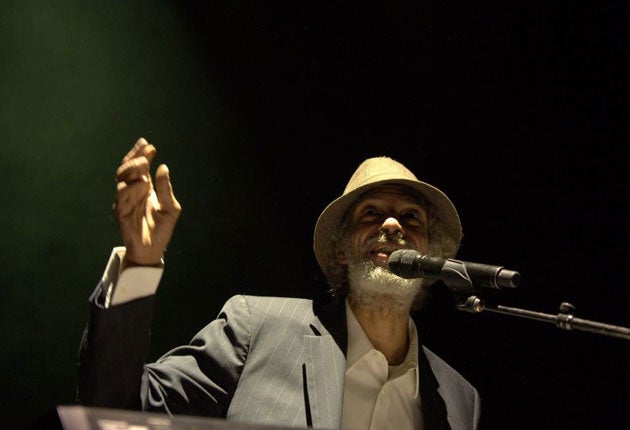
Poet, novelist, musician, spoken-word guru, campaigner, thorn in the side of the establishment, victim of his own weaknesses: Gil Scott-Heron, who died in New York at the weekend, was a multi-faceted figure, one of the definitive African American voices of the past 50 years, alongside James Brown, Curtis Mayfield, Toni Morrison, Marvin Gaye, Stevie Wonder and Prince.
Like many people of my generation, I first heard Scott-Heron's distinctive, compelling delivery and free-flowing words on The Bottle, a US R&B hit and a worldwide club favourite in the mid-seventies.
A hip British friend soon turned me on to Winter In America, the epochal album the single came from, and the first release that gave equal billing to Scott-Heron's musical sidekick, the pianist and flautist Brian Jackson, who co-wrote the tour de force track Rivers Of My Fathers, a striking blend of jazz, blues, soul and lyrical metaphors about slavery and the road long travelled.
Their partnership had come together on Pieces Of A Man, the second of three albums Scott-Heron made for Bob Thiele's jazz label Flying Dutchman, two of which included versions of his most memorable, mordant and potent song, The Revolution Will Not Be Televised, included alongside Bob Marley's Redemption Song and Gaye's What's Going On? in a list of the Top 20 Political Songs published by the New Statesman last year.
Scott-Heron declaimed over a stark backing that echoed the Black Power group The Last Poets and anticipated hip-hop by nearly a decade. On Pieces Of A Man, he sang about "Lady Day and John Coltrane", and painted a vivid picture of junkie life in Home Is Where The Hatred Is, poignantly prescient in view of his subsequent descent into drug addiction and eventual imprisonment in the early 2000s.
He also created a neo-soul, nu-soul template that still serves as the blueprint for a host of today's R&B and rap stars, from Dr Dre to Common via Mos Def and Chuck D of Public Enemy.
In 1974, Scott-Heron became the first act on Arista Records, the label launched by the former CBS head honcho Clive Davis, the man who had signed Janis Joplin, Santana and Earth, Wind & Fire, and who told Rolling Stone magazine: "Not only is he an excellent poet, musician and performer – three qualities I look for that are rarely combined – but he's a leader of social thought."
Scott-Heron made nine albums for Arista, most notably From South Africa To South Carolina – whose opener Johannesburg paved the way for the Special AKA's Free Nelson Mandela – but left the label under a cloud in the mid-eighties.
He was hailed as the Godfather of Rap but, on Message To The Messengers, included on his 1994 album Spirits, he took a typically trenchant view of the artists he had supposedly influenced.

Enjoy unlimited access to 100 million ad-free songs and podcasts with Amazon Music
Sign up now for a 30-day free trial. Terms apply.
ADVERTISEMENT. If you sign up to this service we will earn commission. This revenue helps to fund journalism across The Independent.
Enjoy unlimited access to 100 million ad-free songs and podcasts with Amazon Music
Sign up now for a 30-day free trial. Terms apply.
ADVERTISEMENT. If you sign up to this service we will earn commission. This revenue helps to fund journalism across The Independent.
"They need to study music," he said at the time. "I played in several bands before I began my career as a poet. There's a big difference between putting words over some music, and blending those same words into the music. There's not a lot of humour. They use a lot of slang and colloquialisms, and you don't really see inside the person. Instead, you just get a lot of posturing."
A natural radical, Gil Scott-Heron never postured, and he injected plenty of humour in Re-Ron and B-Movie, the Reagan-baiting tracks he talked about at length when I interviewed him in a nondescript West London hotel in the mid-eighties.
The cocaine addiction that blighted his career through much of the nineties was yet to take hold, and he told me his life story in great detail, recalling the grandmother who raised him in Jackson, Tennessee, after his parents separated when he was two, and talking about his Jamaican-born father, Gil Heron, a professional footballer who briefly played for Celtic and was nicknamed "The Black Arrow". His intellect shone throughout our long conversation that also touched on the novels he published in the early seventies – The Vulture, The Nigger Factory – and his campaigning alongside Stevie Wonder to turn the birthday of the civil rights leader Martin Luther King into a national holiday in the US.
In the 2000s, he was jailed for possession of cocaine and again for violating the terms of his parole but in 2007 he began performing and recording again.
Last year's I'm New Here album, for XL Recordings – and its recent remix edition We're New Here in conjunction with producer Jamie xx – surpassed many people's expectations and introduced Gil Scott-Heron to yet another generation of fans. His unique voice and inspiring words live on.
Join our commenting forum
Join thought-provoking conversations, follow other Independent readers and see their replies
Comments