New music - tipped today, gone tomorrow?
Every year the music press and the BBC anoint the new messiahs of pop. Yet all too often these new stars burn out more quickly than a damp firework
January is a month where nothing much happens in music. Sales are at an annual low, artists put their feet up, and live music all but grinds to a halt. But, for those working behind the scenes, there's not a moment to lose in sorting the musical wheat from the chaff, and deciding who will be bestowed with that dubious title: the Next Big Thing.
This is because January is a time when music business marketing departments go into overdrive, blowing their budgets on thrusting campaigns with the hope of bringing their latest crop of acts into the public consciousness. In fact, much of their work in this area begins well before Christmas, as they deluge magazines, newspapers, radio stations and TV producers with the music that they hope will swell their coffers over the next 12 months.
It would be nice to report that those at the receiving end of this onslaught respond with a reasonable amount of scepticism, and give a fair hearing to all the bands hoping to make their mark. But that would be wishful thinking. The media is now largely complicit in this strange and increasingly pre-ordained ritual, being spoon-fed so-called "priority acts" from record companies and duly heaping hyperbole upon artists upon whose recording contracts the ink is barely dry.
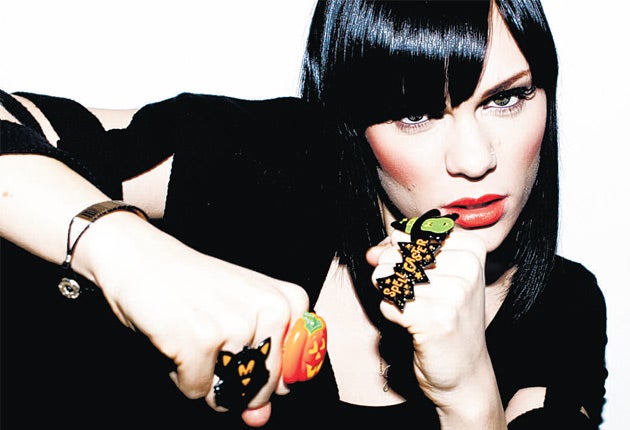
Currently leading the charge in the drive to unearth the stars of the future is the BBC with its "Sound Of" list of new music (this year the child actor-turned-Essex popster Jessie J has come out on top). This has gone from being a once diverting and useful guide to the year's possible contenders to a hugely anticipated and increasingly definitive roll call of the industry's imminent cash cows.
Such is its cachet that the short-listed acts are instantly sucked into a vortex of interviews, record-store signings and television appearances. For the artist who makes it to the No 1 spot, success is pretty much a given, even if, in some cases, it is only fleeting.
The 2008 winner Adele went from obscurity to ubiquity in a matter of weeks despite having not yet released any music, and by February had already bagged a Brit award. With buoyant sales and success in America established, she has subsequently managed to maintain her career, though the same cannot be said for Little Boots, who topped the poll in 2009 and who, after a couple of months in the limelight, seemed to disappear completely from view.
But we can't heap the all blame on the BBC for this new-year propaganda, since its Sound Of poll simply follows in the footsteps of the music press which, faced with the problem of how to fill its pages every January, has long engaged in a race to predict who will be the year's winners. These forecasts are rife with uncertainty – I should know, I've attempted a few myself – with the critics in question caught between their desire to flag up the most innovative and interesting music on offer and the requirement to tip those most likely to succeed.
When it comes to fabricated hype, the worst perpetrator over the years has been the NME, a magazine so keen to be seen at the vanguard of the latest scene, and on first-name terms with the hot new artists, that it has killed many a career stone dead. For evidence one need only look at the fates of Birdland, The Unbelievable Truth, Ultrasound, Menswear, S*M*A*S*H, Gay Dad, Terris and The Datsuns – all bands that were breathlessly declared pop's new messiahs by the NME but whose music failed to connect with the record-buying public, prompting them to sink swiftly into oblivion.
How exactly does an artist who hasn't released a note come to be the name on everyone's lips come January? The answer lies in the power of PR. With the music industry struggling to turn a profit, gone are the days when publicists and pluggers could brazenly bribe music editors and radio and TV producers with swanky lunches and trips abroad in return for coverage of their acts. Nowadays it is more a case of persistent persuasion, with publicists sending out music samplers months ahead of release and following them up with a series of cajoling phone calls and emails to discover the verdict. As a journalist, you can be fairly sure that the more phone calls you receive in relation to a particular artist, the more money has been invested in their success.

Enjoy unlimited access to 100 million ad-free songs and podcasts with Amazon Music
Sign up now for a 30-day free trial. Terms apply.
ADVERTISEMENT. If you sign up to this service we will earn commission. This revenue helps to fund journalism across The Independent.
Enjoy unlimited access to 100 million ad-free songs and podcasts with Amazon Music
Sign up now for a 30-day free trial. Terms apply.
ADVERTISEMENT. If you sign up to this service we will earn commission. This revenue helps to fund journalism across The Independent.
Of course, as any good PR knows, it isn't music alone that gets a journalist's pen twitching. It has to be the right kind of artist with the right kind of story. Take Adele: with her big voice and retro-soul leanings, in early 2008 she was the perfect candidate to fill the space vacated by Amy Winehouse, and this is just how her marketing team sold her to the media.
You can see why this year's BBC artist du jour Jessie J would have looked good on paper, with publicists making the most of her sub-Gaga styling, her pseudo-feminist stance and, of course, her child-star beginnings. Add a celebrity endorsement – "she is the best singer in the world," declared Justin Timberlake – and, before she has released a note, a pop sensation is created.
It may seem cynical, perhaps even mean-spirited, to be critical of a process which is essentially supportive of fresh talent. The quest to discover something new is a very human instinct, particularly at the start of a new year. On the face of it, the practice of tipping new bands provides a service, acting as a reference point for consumers with an interest in the latest music trends but who haven't the time or inclination to root them out for themselves.
But practised on the hysterical levels that we see today, it also creates hype, a speeding up of the natural pop process that means the acts in question barely have time to draw breath before being proclaimed the future of pop and the saviours of Western civilisation. So drenched are they in hyperbole that their audience will inevitably be disappointed when their album finally arrives.
Such frenzied attention can also be disastrous for an artist's long-term prospects, robbing them of their chance to develop and gather the required experience – and valuable hard knocks – that come from a prolonged period on the road.
But let's look on the bright side. Whatever the industry predicts for the coming year, there are always the less anticipated and invariably more interesting bands that manage to break into the public consciousness, propelled not through hype but through the more organic process of building interest through word of mouth, low-key releases and the live circuit. Last year both Midlake and Mumford & Sons took off on a large scale with only modest industry and media backing while, the year before, few predicted the commercial potential of lo-fi American indie acts such as Fleet Foxes and Bon Iver.
So who will be the real stars of 2011? Will Jessie J turn out to be the new messiah? The great thing is that, despite the efforts of record company marketing teams, media corporations and fortune-telling journalists, no one can know for sure. Ultimately, it's for the public to decide, and they will do so in their own good time.
Heroes and zeros: stars the music press have wished upon us
Little Boots
Where are you, Victoria Hesketh? She is Little Boots, winner of the BBC's Sound Of poll in 2009 and the great new hope of futuristic pop. Sales of her debut album 'Hands' failed to match expectations, the media flurry dissipated, and the hordes of acolytes never materialised.
Gay Dad
A pseudo-glam rock band fronted by a journalist from 'The Face'? Clearly, it was never going to work, though at the start of 1999 this didn't stop the music press at large from proclaiming Cliff Jones and co to be the future of rock. The public proved immune, their record flopped and the following year the band members were back in their day jobs.
The Datsuns
Part of the great garage-rock revival in the early 2000s, New Zealand's The Datsuns were hailed as the reincarnation of AC/DC by the music press. Apparently, no one told them that AC/DC were still going strong and that their rehashed version was, in fact, superfluous.
S*M*A*S*H
This Welwyn Garden City punk trio were compared by the 'NME' to the Stone Roses, hailed as the leaders of a genre called New Wave of New Wave, and made cover stars in 1994 . Their first single went to No 26, their album was panned, and the scene that they supposedly spearheaded died a death.
Join our commenting forum
Join thought-provoking conversations, follow other Independent readers and see their replies
Comments
Bookmark popover
Removed from bookmarks