Say hello again to the new romantics
Richard Strange's avant-garde Cabaret Futura altered the landscape of Eighties clubland. Elisa Bray welcomes its return
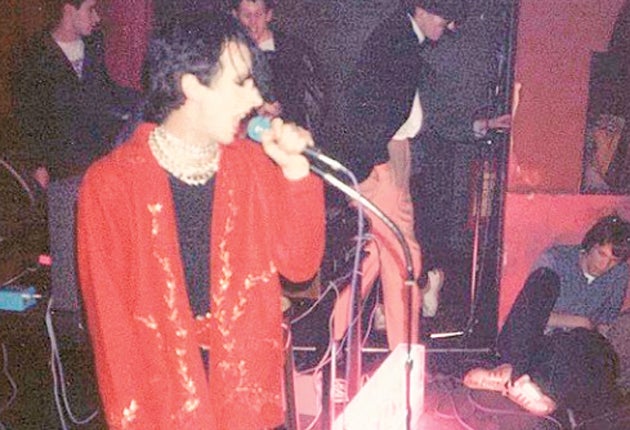
Back in 1980, a new event breathed life into the world of entertainment. Neither a music club nor a comedy club, Richard Strange's Cabaret Futura brought thinkers and artists together for monthly nights of refreshing, uncategorisable entertainment. Now Strange is re-launching the event next month.
Strange was already known in London as an influential character, since his first proto-punk band, The Doctors of Madness, were supported by The Sex Pistols, Joy Division and The Jam in the 1970s. His club night is for the gig- goer, the book-reader, the poet, the musician, the thinker – anyone interested in the arts. If, like me, you've found yourself unable to see the band on stage, and if, like me, you've found yourself getting an encore when you never asked for one in the first place, you can rest assured that none of this will happen at Cabaret Futura. The setting is tables and chairs at a north London gastropub, the atmosphere is genial, and all performers must stick to the house rule: "do not be boring".
It's for people who want an element of the unexpected in their night out; for those bored of the gig formula and the reverential atmosphere that greets so many bands; and for those who want an evening combining non-conformist entertainment with meeting like-minded people.
"I want people talking about books, about performance art, about dance, film, poetry, new media and fashion, in a convivial atmosphere – tables and chairs, drinks and conversation. It will be a place to network, to be inspired, and to relax," says Strange.
Having spent many a happy time in Manhattan's performance-art spaces, Strange returned to London in 1980 yearning for something similar close to home. He recalls: "I just thought, 'This is a great time. After all the cynicism and nihilism of late punk, art is cool again'. It was a case of needing somewhere for myself to play and, since it didn't yet exist, inventing it. I told the journalist Simon Fellowes at the time, 'Rock clubs pride themselves on the pathetic perpetuation of crass rituals and stale values, which are of no use to me'."
The first night, which Strange held in December 1980, was anything but boring, and set the standard for future events. Richard Jobson read poetry he had adapted from Sylvia Plath and Marguerite Duras; there was the two-piece synthesiser band Blancmange; a mime artist; and the then stand-up comedian Keith Allen performing naked with a steak and kidney pie which he fashioned into a glove-puppet. Strange himself performed a four-minute dance performance of the D M Thomas novel The White Hotel, for which he had written some music. It was a great success.
Cabaret Futura went on to become legendary in the history of rock gigs. As well as showcasing the first shows by the likes of Keith Allen, bands such as Depeche Mode, Soft Cell and The Pogues played their earliest sets there, to a regular crowd which included Malcolm McLaren, Derek Jarman, Vic Reeves and Siouxsie Sioux.
The night was also influential because it created a new live-music scene. Still fired up from his defunct punk-rock band The Nips, Shane MacGowan set about performing gigs with his renamed band The New Republicans, featuring Spider Stacy, Jem Finer and Ollie Watts, the prototype Pogues. They played at Cabaret Futura in early 1981. Legend has it that their set of Irish rebel songs did not go down too well; they were pelted with chips, and the club's management pulled the plugs, assuming the band were from the IRA.
At a time when gigs and plays are put on in the most unusual locations (toilets, forests, libraries to name a few), it seems we are not just satisfied with going to see a show. We want an event. Cabaret Futura looks set to be just that.

Enjoy unlimited access to 100 million ad-free songs and podcasts with Amazon Music
Sign up now for a 30-day free trial. Terms apply.
ADVERTISEMENT. If you sign up to this service we will earn commission. This revenue helps to fund journalism across The Independent.
Enjoy unlimited access to 100 million ad-free songs and podcasts with Amazon Music
Sign up now for a 30-day free trial. Terms apply.
ADVERTISEMENT. If you sign up to this service we will earn commission. This revenue helps to fund journalism across The Independent.
Cabaret Futura begins a monthly residency at Paradise By Way of Kensal Green, London W10 (Theparadise.co.uk) on 21 June
Join our commenting forum
Join thought-provoking conversations, follow other Independent readers and see their replies
Comments
Bookmark popover
Removed from bookmarks