We should celebrate Britain's role in clubbing
Dance culture may have become mainstream, but it hasn't always been that way. Wayne Hemingway, the founder of the Vintage festival, gives a personal history
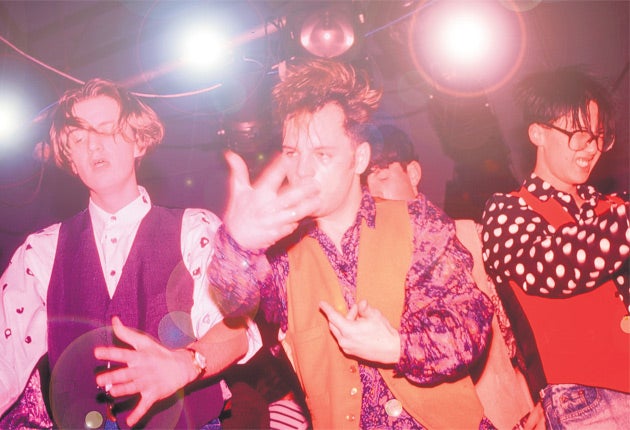
Club culture in the UK is now a multi-million-pound industry, with the likes of once-underground club Ministry of Sound appearing all over our tellies selling the distinctly non underground Running Trax CDs to the fitness community, while DJs and dance producers who have grown out of a clubbing background contribute to the UK's balance of payments by performing and producing internationally.
As we enter the final decade of the first 100 years of British club culture, I thought we should celebrate the contribution that this culture has made to our lives, at the Vintage at Southbank Centre festival at the end of this month, and attempt to assemble the most complete collection of seminal DJs ever.
When I was growing up in Morecambe in the early 1960s, with my mum working for the telephone exchange, my nan a cleaner, and my pop tending his strawberries in the garden and making toys for me in his shed, I had no idea that I was growing up surrounded by clubbers and ex clubbers.
Only as I became an adult and started to go through the boxes of family pictures and talk to my family about their youth did I realise that my years spent in Northern Soul, disco, punk, New Romantic and acid-house clubs in the 1970s and 80s were only following on from a British club culture that has its origins in the 1920s. Some of the most recognisable venue names of recent times were all nightclubs in the 1920s – The Trocadero, Cafe de Paris, The Embassy, Kit-Kat Club – where a post war, pre-Depression youth would take advantage of new late-night licensing laws and dance the shimmy, heebie-jeebie, and job-rot until the police did their obligatory "raid". Public smoking, drinking and the freedom to indulge in casual relationships were the activities of choice for feisty females during the decade, alongside which went a desire to look fashionably fabulous. By the end of the 1920s there were more than 50 licensed nightclubs in London.
The "Bright Young Things" who frequented clubs were written about disparagingly, but it wasn't an outraged press that calmed the wild clubs of the time down, it was the outbreak of the Second World War.
Yet it didn't take long before the dancing started again as jazz and swing bands, often featuring exiled West Indian musicians, got Britain jitterbugging and lindy-hopping in the kind of numbers that would only fit in large town halls and the ballrooms of the big hotels.
The DIY ethic of gravy browning to create faux stocking seams, coupled with the proto-"up-cycling" of old clothes and furnishings into dance dresses, could be seen as nascent punk. Even that bastion of punk, London's 100 Club, was operating in the 1940s as an underground "dive".
I have it on good authority from my mum that going to clubs was an integral part of life in the 1950s. Club culture had even come to little old, isolated Morecambe, in the form of Brubeck's (named after beatnik music god Dave Brubeck).
The jazz clubs frequented by beatniks, the jukebox caffs, and Mecca dance-halls frequented by Teds, are enduring and much documented images of the 1950s. Teddy boys and rock'n'roll brought a much wider working-class swagger to youth culture, and an extreme style that was to influence their children almost two decades later when glam, and then punk, made club culture such an exciting place to be for me and my peers.

Enjoy unlimited access to 100 million ad-free songs and podcasts with Amazon Music
Sign up now for a 30-day free trial. Terms apply.
ADVERTISEMENT. If you sign up to this service we will earn commission. This revenue helps to fund journalism across The Independent.
Enjoy unlimited access to 100 million ad-free songs and podcasts with Amazon Music
Sign up now for a 30-day free trial. Terms apply.
ADVERTISEMENT. If you sign up to this service we will earn commission. This revenue helps to fund journalism across The Independent.
But, before that, the 1960s sowed the seeds of so much of today's club culture. Modernists ("mods" to you and me), with their understated yet recognisable and almost nerdy attention to detail, popularised black American soul music (making Motown more popular in Britain than it was in the US), Jamaican ska, and the negative, drug-taking, side of club culture, with their predilection for popping purple hearts and amphetamines to keep dancing at all-nighters at clubs like The Flamingo.
Discothèques proliferated in the 1960s ,with even George Best opening the infamous Slack Alice's in Manchester. It was the 1970s, though, that really made Britain the centre of the club-culture universe, and is the decade that has left us with a legacy that lives on today in the clubs of east London, Manchester's Northern Quarter and, arguably, New York's Lower East Side and Berlin's Mitte district.
As a teenager growing up in the 1970s, long before ID cards were needed to get into clubs, there were seemingly no age restrictions (well at least not for this teenager, who could sport bum fluff above his lip that a cat could probably have licked off). I didn't know where to turn. After seeing David Bowie's Aladdin Sane tour at Blackburn King Georges Hall in 1973 I wanted more of this wonderful eye candy, this infectious music, and I wanted to dress up. I got it soon after, at the amazing Pips in Manchester, and the Lodestar (just outside Blackburn) and the plastic-palm-tree-adorned Blackburn Mecca. A club where you would glam up to the nines and then be able to choose Roxy/Bowie, punk, soul, funk, disco or pop rooms, Pips is one of the main inspirations for our Vintage at Southbank Centre Festival.
These clubs fuelled my appetite for clubbing, and even a lad living in Blackburn was blessed with an embarrassment of riches. In the years leading up to the punk revolution of 1976 and 1977, the Highland Room at Blackpool Mecca was a symbol of Britain's enduring ability to discover and popularise the great dance music of black America. After the Highland Room played its last track every Saturday night, many of us would hot-foot it over to the all-nighter at Wigan Casino (a scruffy ballroom, long since demolished, but with a Northern Soul legacy that year by year grows in stature and seems to inspire a movie or play every couple of years) and then onto the Ritz Ballroom in Manchester for an all-dayer.
When punk came along, The Russell Club, a scruffy club in Manchester's yet-to-be regenerated Moss Side, created an urban hardcore club aesthetic where the likes of Slaughter and the Dogs, Buzzcocks and Warsaw (to become Joy Division) put Manchester music on the map.
The world was looking at Britain as its youth pogoed and danced. Soul boys became punks and punks danced to disco and reggae. In London, an often outrageously dressed cool soul crowd descended on Ilford and Canvey Island to clubs like Lacy Lady's and inspired kids from the suburbs to experiment and, in turn, go up to town to the likes of The Roxy and The Vortex, two short-lived clubs now marked down forever in history as seminal.
I met my wife Gerardine at a Northern Soul night at Angels, Burnley, in 1980 and we were soon shacked up in London in the halcyon days of London Club Culture. What a ride it was.
The iconic Blitz Club, and then Club for Heroes, presented by Rusty Egan and Steve Strange, spawned New Romantic. Our favourite club ever was Le Beat Route (made famous in the first Spandau Ballet hit "Chant No 1") where Boy George was on the door picking out those with the coolest hair and coolest clothes (and, yes, I had hair then, and I did get in every week). The eclectic dress-sense of the crowd, from lasses dressed as Little Bo Peep to lads with psychobilly hair piled a foot high, matched the hugely eclectic music-policy of Latino funk, rockabilly, and disco. The Wag Club opened in 1981 with host Chris Sullivan welcoming a colourful designer crowd, including Jean Paul Gaultier and John Galliano getting down to rare-groove and the likes of Tom Tom Club.
The centre of gravity was spinning across to Kings Cross where warehouse parties suited the "hard times" aesthetic being championed by now-sadly-missed The Face magazine. The DIY attitude to partying was at its peak and summed up this time of young folk "having a go" at starting magazines, starting designer labels in Kensington Market and selling second-hand clothes in Camden. London was moving at a rapid pace and experimentation reached perhaps both its nadir and zenith in the mid-1980s with the drug-addled Taboo Club.
Taboo was a bit too hedonistic for Gerardine and me. We were drawn to the "new disco" that was acid-house. Shoom, Trip at The Astoria, and The Hacienda again showed how British club culture could take black dance music and make it its own.
Then for too long things went all "superclub" and corporate, but something now is in the air. The DIY attitude is back and, as live bands become ever more expensive and festivals seem to roll out the same headline acts, the cooler kids are again becoming club kids. Drawing on Britain's wonderful club and music heritage, and working with closed social networks, the likes of Low Life, Love Fever and Electric Minds are hosting word-of-mouth events in galleries, loft spaces, dingy basements and venues like Corsica Studios in London. You can't hold British club culture down for long.
Vintage at Southbank Centre, London SE1 (www.vintagebyhemingway.co.uk) 29 to 31 July
Classic cuts: 5 highlights of vintage
Norman Jay
Starting his career as a presenter on Kiss FM when it was still a pirate station, Notting Hill-born Jay has taken his legendary Good Times Sound System around the world. One of the world's top DJs, he was around in the late 1970s for the rise of early disco and he and his famous Shake'n'Fingerpop party crew, alongside Judge Jules's Family Funktion collective, were pioneers in the new underground dance phenomenon that took over London in the 1980s.
Andrew Weatherall
The world famous London DJ, writer, and producer has remixed a number of stars from Manic Street Preachers to Siouxsie Sioux to Björk. He produced Primal Scream's seminal album 'Screamadelica' and for Beth Orton, co-founded Boys Own Recordings and he was always at the forefront of acid-house.
Percy Sledge plus Booker T
Legendary soul man Percy Sledge makes his only UK appearance at the Vintage Festival. Alongside Booker T he'll be performing soul classics with an orchestra. The Atlantic Records star from Alabama was a hospital orderly by day when he began playing clubs and frat parties in 1965. He soon rocketed to fame when his first single, 'When a Man Loves a Woman' went to the top of the US Hot 100 and he was inducted into the Roll and Roll Hall of Fame in 2005.
A Guy Called Gerald
The record producer from Moss Side in Manchester was a leading light in acid-house in the late 1980s, frequently appearing at the Hacienda nightclub and underground clubs. He is most famous for his 'Voodoo Ray' track and his latest mix album was released last year.
Sunday's Hit Parade
Marking 60 years since the first Hit Parade, stars including Sandie Shaw, 10cc, Jocelyn Brown and David McAlmont will perform British hits from the past seven decades. Expect '(There's) Always Something There to Remind Me' and 'I'm Not In Love' with orchestra.
Join our commenting forum
Join thought-provoking conversations, follow other Independent readers and see their replies
Comments
Bookmark popover
Removed from bookmarks