After the Dance, NT: Lyttelton, London
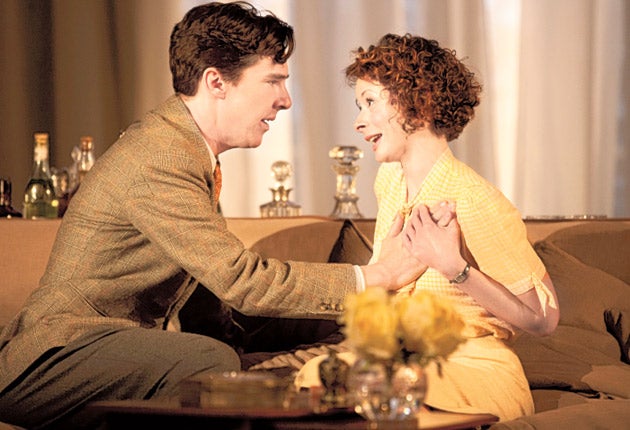
It's 1938 and the Bright Young Things of the Twenties are neither as young nor as bright as of yore. One of them plans to throw a gas-mask party, until she realises that, although too amusing for words, such head-gear categorically prevents you from downing a drink, and that would defeat the object of the exercise.
Alcoholic hedonism has helped this generation to blot out the traumas of the First World War, and now they use it to blank out the looming prospect of the Second. A steady intake has just about anaesthetised David Scott-Fowler, a rich, dilettante historian, to the gnawing sense of his own pointlessness. But potential redemption lands in the sylph-like shape of a young female zealot who has fallen in love with the idea of saving him and is quite prepared to destroy his marriage in order to achieve her mission.
That's the scenario of After the Dance, a Terence Rattigan play that has become a "cause" in itself. First produced to critical acclaim in June 1939, it was a victim of the changing mood, closed a couple of months later and has rarely been seen since. If Thea Sharrock's handsome, shrewdly conceived and expertly acted revival does not establish the piece as a lost masterwork, it reveals a powerfully affecting, flawed, and fascinatingly imbalanced early study of an enduring Rattigan theme: the emotional repression in the English psyche that often turns heterosexuality into a love that dare not speak its name.
The production vividly evokes the tawdry vapidity of the lost, between-the-wars generation. There's a particularly haunting touch when the poseur-guests at the climactic party eerily materialise round the figure of Benedict Cumberbatch's compelling David, as he stands lost in thought and with gin bottle raised at the end of the preceding scene. His emotional isolation and the bleak self-disgust that festers under his disguise of testy arrogance are desolately exposed as he's forced to snap seamlessly out of his reverie and into shallow social mode.
But the play presents no attractive alternative to these wastrels. As represented by Faye Castelow's determined slip of a Helen – a toxic mix of perkily implacable persistence and childishly flustered need for forgiveness – youthful idealism is about as desirable as rabies. You never for a moment want David to sign up to her programme of reform or to divorce, for her sake, Nancy Carroll's lovely, stoically jaunty, not-waving-but-drowning Joan. For fear of being thought unfashionably and burdensomely "serious" in the eyes of the other, the married couple have masked their devotion in a relationship of mutual, just-good-pals flippancy. Carroll and Cumberbatch perform the scene in which they belatedly confess their tragic misunderstanding with an aching, understated intimacy.
The most likeable character is John, beautifully portrayed by Adrian Scarborough. As the bibulous court-jester and parasite-in-residence, he, too, is caught up in a routine of bluff, singing for his supper through witty mock-complaints about his lot. But Scarborough touchingly suggests the reserves of wisdom and affection in this layabout that make him the play's penetrating truth-teller-in-chief.
In rep to 11 August (020 7452 3000)
Join our commenting forum
Join thought-provoking conversations, follow other Independent readers and see their replies
Comments