Used subtitles to watch The Wire? The writer says that's just criminal
So you thought the subtitles button was the best way to decipher the acclaimed US crime series? Wrong. You've turned genius into comedy, its writer tells Arifa Akbar
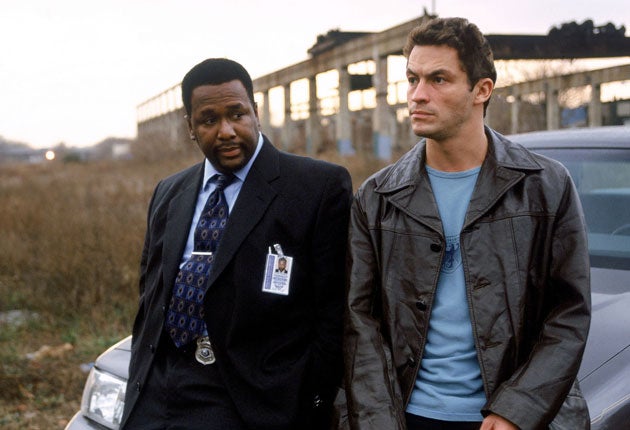
Ever since drugs lord Stringer Bell picked up his burner and ordered a re-up for his corner hoppers, bemused Brits addicted to the Baltimore-based police drama The Wire have been reaching for the subtitles button to figure out what on earth is being said.
The series may have garnered critical recognition for its unflinching realism and searing dialogue, but the street argot spoken by its characters – most of whom are black American drug dealers and street-wise detectives – has left many viewers straining to make sense of the dialogue.
Now, one of the central writers of the show has lashed out at those who turn on the subtitles, rendering the show a "comedy" rather than the gritty, intelligent drama he intended it to be.
The seasoned detective fiction writer George Pelecanos, who has worked extensively on The Wire – which was originally an HBO series but is currently being shown on BBC2 – said those who watched with subtitles in order to comprehend every sentence spoken were missing the point entirely.
"We wrote it so audiences would have to work at it!" he said in an interview with The Independent.
"We were not going to compromise in making it immediately accessible for everyone.
"It [subtitling] kind of reminds me of scenes from that [1980 disaster film spoof] comedy, Airplane!, when two black guys speak, and subtitles appear on the screen."
Pelecanos, an American of Greek origin worked most intensively on the second of the five series programme which is based around longshoremen and the Greek mafia. He was brought aboard by the show's creator, David Simon.
When The Wire was first aired on BBC2 earlier this year, a flurry of middle-class commentators criticised the impenetrable dialogue and admitted seeking help.
The columnist India Knight wrote: "I have friends who have been addicted to The Wire for ages but I didn't see the point, despite having watched the pilot twice, because I could never understand what anyone was saying... Then someone lent me a box set and suggested I turn on the subtitles."
Ms Knight went on to effuse about the show, but added a note of caution: "I implore you to watch it... but please take my advice and turn on the subtitles – they make all the difference."

Watch Apple TV+ free for 7 day
New subscribers only. £8.99/mo. after free trial. Plan auto-renews until cancelled.
ADVERTISEMENT. If you sign up to this service we will earn commission. This revenue helps to fund journalism across The Independent.
Watch Apple TV+ free for 7 day
New subscribers only. £8.99/mo. after free trial. Plan auto-renews until cancelled.
ADVERTISEMENT. If you sign up to this service we will earn commission. This revenue helps to fund journalism across The Independent.
A Daily Mail critic, meanwhile, observed the "mumbled patois of the Baltimore dealers", adding: "Most people I know – and these are people in their mid 30s – prefer to watch The Wire with the subtitles switched on."
Even some of the characters have had difficulties with mastering the script. In the "extras" section of the show's box set, several actors admit to problems understanding the Baltimore drawl in some interviews.
JD Williams, the New York actor who plays a character, Bodie Broadus, who "runs a corner" (facilitates the open air drug market), said he found some of the phraseology confusing.
And the Eton-educated lead actor Dominic West, who plays the detective Jimmy McNulty, said in an interview earlier this year that his late father, who was alive for the first two years that The Wire aired, "couldn't handle the language" in the show, "so he didn't really watch it".
West added: "My mum managed five minutes. My wife has managed 10 minutes of episode one about five times and falls asleep."
The BBC, which began broadcasting the series at the end of March this year, makes subtitles available for viewers, but a spokeswoman said this was the case for every programme broadcast by the Corporation, in order to help deaf viewers.
The last episode of the final, fifth series will be broadcast on BBC2 later this week.
Baltimore talk Lost in translation?
*The hopper from Balmer carrying a burner
A child drug dealer from Baltimore is carrying a disposable mobile telephone used by drug dealers to stop the police monitoring their conversations.
*Crew up with corner boys for a re-up
An instruction to form a team of young men who can sell drugs on a street corner when a re-up, or a re-stock package from drugs wholesalers, arrives.
*The G pack
A wholesaler's package of 100 vials of cocaine
*He's a Yo
Police term for a corner boy.
*The civilian's carrying weight
An ordinary person who is neither a drug dealer nor an addict who has been served a custodial sentence.
*The Game
Life of a drug dealer in which the dealer accepts a distinct set of ethics in which even apparently minor transgressions may be punishable by death.
*There's been a humble
An arrest or search of a corner boy on flimsy or no evidence, intended merely to humiliate.
*Stash house
A heavily guarded property in which drugs are stored and cut.
*Those Red tops/blue tops/yellow tops are worth a lot of cheese
The colour-coded vials of cocaine (use to identify quality) are worth a lot of money.
*He's not a fiend, he's slinging
He's not a drug addict, he's selling drugs.
*Walk-around money
Petty cash used by corrupt politicians for the purposes of persuasion on election day.
Join our commenting forum
Join thought-provoking conversations, follow other Independent readers and see their replies
Comments