Last Night's TV - Storyville: New Kings of Nigeria, BBC4; The Big Personality Test: a Child of Our Time Special, BBC1
Still living the African dream
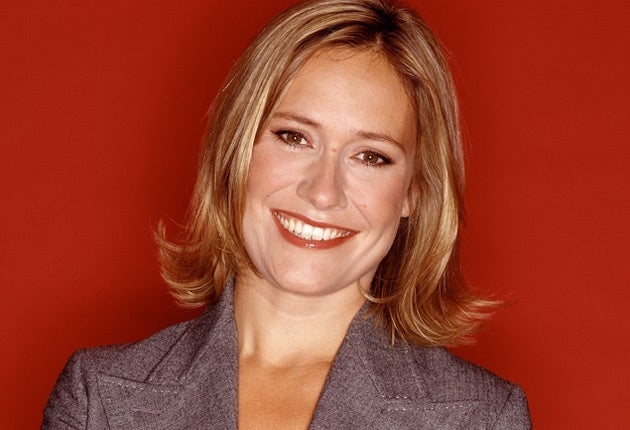
It's customary to describe the historical moment we're living through as one in which power and influence are migrating east and southward, mainly because of better economic stewardship there. That is a very wonderful thing, though you can tell from the picture above I'm biased.
Of all the demographic niceties produced by this trend, two were singled out and synthesised by Storyville: New Kings of Nigeria. The first was the emerging professional middle class in what we probably ought still to call the developing world. The demands of these well-educated and newly affluent people are pulling the world out of recession, and in two decades' time they will be world leaders.
The second was the presence in the affluent West of first- and second-generation migrants, carried to rich countries by the whiff of liberty and good education, who now look at their motherlands and think they're missing out on something exciting. They ask themselves two questions (or at least I do). Did I leave just when I should have stayed? And, should I go back?
Storyville personified these dilemmas, and this demography, in a chap named Walter, whose answers were No and Yes respectively. (I'll tell you mine another time). His great grandfather was the glorious King Jaja, who escaped a life of penury as a slave in rural 19th-century Nigeria to become a great leader, only for the British to capture and imprison him. This tale was told through a beautifully produced animation, narrated by a Nigerian teacher conveying the story to his pupils with open vowels and booming voice.
The teacher was given his due, shots of his face interspersing the animation, and it's hard to think of any sight more inspirational than that of the attentive schoolchildren in Lagos, listening intently to a man equipped only with chalk, chalkboard, and virtue.
They were the real stars of the show, a prize whose acquisition was made easier by Walter's not being very likeable. A public schoolboy in England, his voice jarred, oozing entitlement. Inspired by Jaja's story, and claiming "I've been cheated of my inheritance", not least because "I know more about Henry VIII than Nigeria", he left England to join a new professional elite in Lagos, embarking on a kind of reverse migration.
With fabulous disregard for irony, he signed up for Nigeria's version of Big Brother, where he became... Big Brother. That retro Geordie accent on Channel 4's original show was thus updated for a Nigerian audience, who were presumed receptive to his posh English. The granular images of him struggling to command a microphone while attempting to embody Orwell's dystopia were a masterclass in incongruity. So too was his curious efforts at securing wives through traditional mechanisms, and his management on a family compound of security guards whose bleary eyes lit up at a machete.
These injected welcome moments of comedy into a sober narrative about pressing issues. To that extent they were welcome, if only because they pre-empted the final victory for Walter, the viewer, and the programme's makers, achieved not when he worked on The Apprentice Africa, but when he met a boy named Samuel in a slum. Their coming together was deeply moving, stirring in Walter a sense of obligation we didn't know he was capable of, and showing two chapters in Nigerian history engaged in conversation. The interlocutors were separated prosaically by age, but poetically by a noble, liberating idea – migration – and the human ambition therein. It seemed unbearably cruel that one should dwell in poverty while the other enjoyed the trappings of English privilege. But that Walter grasped this himself was some consolation, and counteracted a lingering sadness as the credits rolled, which stemmed from the realisation that both Walter and Samuel are children of our time. It's just our "time" is a historical moment of shifting power and stubborn iniquities.
All of which made the travails of the 10-year-old lab rats on the BBC unbearable. Halfway through its 20-year experiment, Child of Our Time has caught up with some 250,000 people. Monitoring children born in the year 2000, its basic ambition is to discover the extent to which our personalities are determined by our environment. To this extent, that venerable public servant Robert Winston and that under-rated broadcaster Sophie Raworth were engaged in a noble endeavour. But two things made their experiment painful to watch.

Watch Apple TV+ free for 7 day
New subscribers only. £8.99/mo. after free trial. Plan auto-renews until cancelled.
ADVERTISEMENT. If you sign up to this service we will earn commission. This revenue helps to fund journalism across The Independent.
Watch Apple TV+ free for 7 day
New subscribers only. £8.99/mo. after free trial. Plan auto-renews until cancelled.
ADVERTISEMENT. If you sign up to this service we will earn commission. This revenue helps to fund journalism across The Independent.
First, I don't know if you have many dealings with 10-year-olds, but since I don't, I'm pleased to inform you that 10 is the age at which children are at their most annoying. Not yet equipped with a sense of duty, but fully engaged in discovering their expensive tastes, and having lost the cuteness of babies, they are miniature, personified irritations.
Second, ever since reading Steven Pinker's The Blank Slate, I've felt uncomfortable with the notion that behaviour is partly inherited and not just a product of wider influence, because in politics that idea has been abused for the benefit of barbarism. Yet a major if predictable conclusion of this programme was that our behaviour is the product of environment, but it is also to a large degree inherited. Our future is partly pre-determined at birth. We are not wholly masters of our destiny.
That is a counsel of despair, I know. If it wasn't for those classroom children in Lagos, I'd have said this was a terrible bank holiday night.
Join our commenting forum
Join thought-provoking conversations, follow other Independent readers and see their replies
Comments