Climate change casts a cloud over nation's stately piles
Floods and heatwaves are damaging some of our most significant buildings
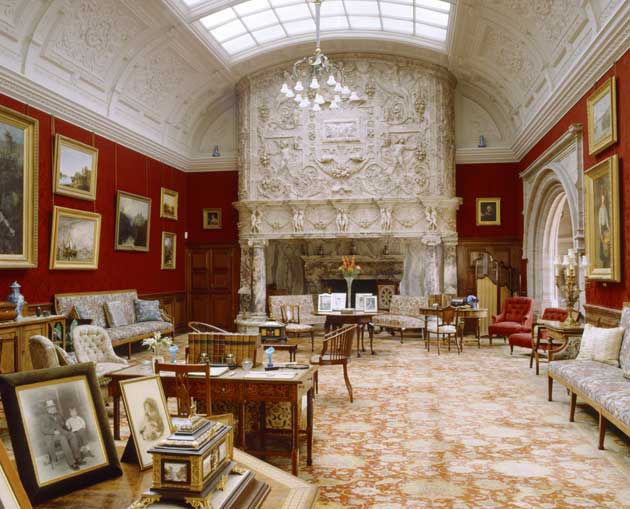
They have withstood centuries of war and decay and the fluctuating fortunes of their once super-wealthy owners, but now Britain's stately homes face a potentially more destructive force: climate change.
The National Trust says at least seven historic stately homes – some up to 600 years old – have been damaged by climate-change-related incidents, such as flooding, over the past five years, with repair costs running into millions of pounds.
These include 300-year-old Calke Abbey in Derbyshire, The Vyne, a 16th-century house in Hampshire, and Coughton Court, a Tudor stately home in Warwickshire, which were all damaged by flooding in 2007.
Last year heavy rainfall caused extensive damage to Cragside, a unique Victorian manor house in Northumberland built in 1870. It was the first building in the world to use hydroelectricity, and all the house's power comes from a turbine fed by a nearby stream.
Last year's heavy rainfall flooded the newly refurbished pump house, and left the ground floor under water, damaging the iron fireplaces and an early billiard table, which took months to dry out.
Floods have also destroyed some of the Trust's historic gardens – such as Westbury Court, on the River Severn, which was wiped out by salt water – as well as causing extensive damage to the Cornish village of Boscastle, which the Trust administers, in 2004. Warmer weather also means more insects, as well as algae in artificial lakes, such as at Stourhead in Wiltshire, where a mirror-like surface designed to reflect the house became a soupy sludge in 2006. Drought also means traditional plants will no longer grow.
"Buildings have been built and gardens have been gardened according to weather patterns of the past centuries," said Sarah Staniforth, the Trust's historic properties director. "Now, the Trust finds that it needs to adapt to the climate changes that are occurring and to cope with their impact.
"We are on the threshold of having a climate that will allow termites to survive in the UK. They are as far north as Paris, and there have already been two colonies in Devon."
Last year experts from around the world met in London to discuss the perils of climate change for museums, artefacts and historic buildings. The panel was the brainchild of Jerry Podany, the director and chief conservator of antiquities at the J Paul Getty Museum in Los Angeles, who said: "I think we need to take a hard look at our alternatives."
The Trust says it has to work on adapting its conservation work on its 300-plus properties.
"We've now linked up with the Met Office to get early warnings, so we can move stuff upstairs," Ms Staniforth said.
"We have to increase the resistance of the properties to extreme weather events, making sure that water is less likely to get in by increasing the capacity of drainpipes where water has got into places, such as Calke Abbey."
Join our commenting forum
Join thought-provoking conversations, follow other Independent readers and see their replies
Comments
Bookmark popover
Removed from bookmarks